
Because this city simply draws you in. Vibrant street art mixes with thousand-year-old tiles on the streets, and you can get a Prada replica just as easily as a handmade rug in the bazaar. The foodie scene is brutal: Harira leaves, tagine, fresh orange juice, and the best part is you're not spooning it all up in a boring restaurant, but on a hot, bustling square. On the rooftop terraces in the evening, everyone is there – without alcohol, but the sunset is still an instant wow.
Enough of the silence, enough of bowing our heads. Dignity is not a luxury item, but our air.
sings L7a9d the Moroccan Moroccan rapper and human rights activist
Guide to Real Experiences
Menara Airport is modern, but the pace of bureaucracy and controls is old. Expect at least 2 hours You will be spending time at the airport. It's not you who is slow, but the system.
A tourist tsunami is arriving, and the border guard is thoroughly checking everyone. Data collection is strict upon entry (sometimes they still ask for your exact accommodation address and phone number, have it ready).
In Morocco, security is a top priority, so your luggage may go through several checkpoints and X-rays before departure, before you actually leave the building.
Finance: Cash vs. Revolut
Marrakesh is still fundamentally a cash-based society in 2024, especially in the Medina (old city). You can only pay with cards in more expensive restaurants and fixed-price shops.
Official bill of exchange
Is it worth exchanging a small amount (or the whole amount) at the official airport counter, so you have some with you MAD (Moroccan dirham) a taxi, water, and initial expenses. The exchange rate is official, there's no major scam here, but you have to factor in waiting in line.
Revolut: the most cost-effective trick
If you don't want to carry a lot of cash, Revolut is your best friend:
- Pay in advance: Open a ... before the trip MAD drawer Within the Revolut app, transfer as much money as you intend to spend on the trip from your HUF or EUR allowance. You can do this at any time during your trip.
- ATM Usage You can withdraw money anywhere in the city, but ATMs have a fixed fee (typically 3€ / 30-35 MAD) will charge for each transaction, regardless of Revolut's own fee-free limit.
How to stay online without breaking the bank on roaming charges
Getting lost in the medina of Morocco is a quintessential experience, but if you don't want your roaming bill to be more than your plane ticket, do this: look for the nearest small GSM shop (there's one on every corner). Buy a SIM card (Maroc Telecom or Inwi are the safe bets), top it up 10 euros - tea, and boom: you have a stable internet connection for a week. If your phone has two SIM card slots, just put it in the second slot and you're done. Otherwise: Then the card replacement remains, but don't worry, the guy will pop it in and set up the APN for you in one go before you can even say Thank you. I start the adventure in all non-EU countries like this.
Travel insurance
This is basic knowledge. In a foreign environment outside the EU, insurance is the only guarantee of safety. Saving money on it is risky and unnecessary. A severe stomach upset (salmonella or other infection) can easily land you on an IV drip. Without insurance, private hospitals are prohibitively expensive, and public healthcare can be shocking to a European eye. In case of trouble, your insurance company's assistance is the only place where you can get immediate help in Hungarian or English and they will organize your treatment. Without it, you'll be left alone in a chaotic system.
Getting out of the airport
You'll find fixed prices on the boards for taxi-drosztons, but the drivers will try to haggle. The most hassle-free solution is to have your hotel/riad concierge call one for you.
Modern Marrakech: Hybrid Lifestyle
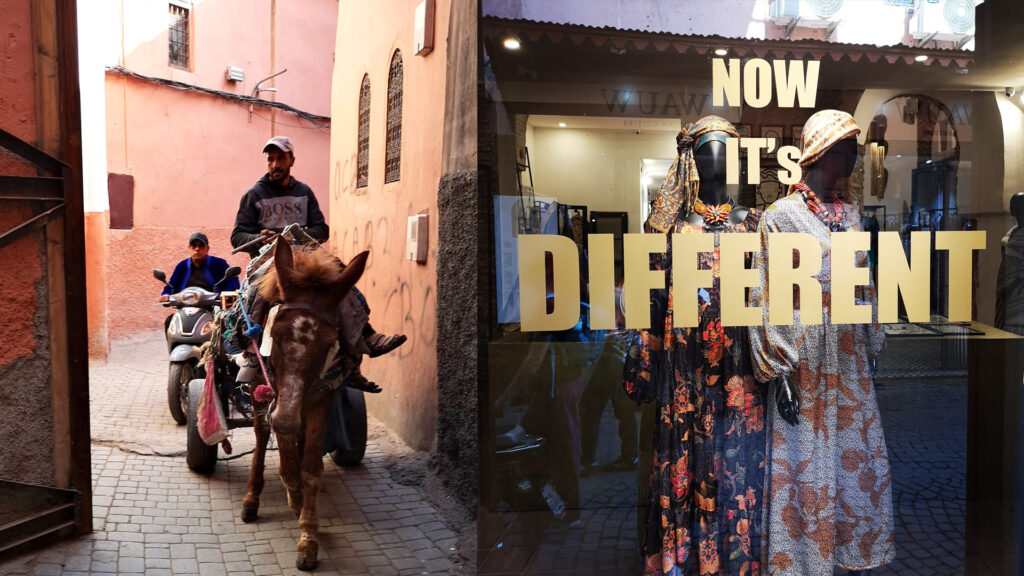
The narrow streets of the medina still hold the Middle Ages, but a newer energy has also arrived: digital nomads on the riads' rooftop terraces, young people in vintage sneakers, and electric scooters by the bazaar.
Modernity doesn't mean anything goes. The heart of Marrakech is community, faith, and tradition. The locals are open, yet they proudly preserve centuries-old rules—this is what makes the city truly unique.
Alcohol: The Freedom of Prohibition
If you expect to be sipping Aperol Spritzes in the main square, you'll be disappointed. Although public alcohol consumption is strictly forbidden and socially stigmatized in Morocco, the reality is more nuanced. You can get wine and beer in hotels and rooftop bars, but in the eyes of locals, drinking is a private matter. The price of alcohol in Morocco is accordingly high in local stores due to taxes.
Among the younger generation, drinking is of course a kind of as a hidden culture there is a sharp dividing line between the day, conservative streetscape. Disco and nightclubs: These places are islands of freedom. In the exclusive clubs of big cities (such as Casablanca, Marrakech, or Agadir), young people freely consume alcohol. Here, Western-style parties replace religious regulations, but all of this is strictly within between four walls, takes place away from public view.
Discretion is strongly advised: authorities do not take kindly to public intoxication. In Marrakech, public drunkenness is a criminal offense.
The penalty is: It could take a whole month's salary! Whoever appears drunk on the street – be it Local resident or foreign tourist –, can expect serious consequences. Police action is often accompanied by an on-site fine of around €200 (approx. 2200 dirhams) that comes out to be a huge amount locally.
Pro: You'll never stumble upon drunken revelry. Con: If you equate freedom with immoderate drinking on a Friday night, you need to re-evaluate what true freedom is.
Security, rules, relationships
Marrakech is safer than many European big cities, harassment is rare, you need to watch your belongings, and take the rules seriously.
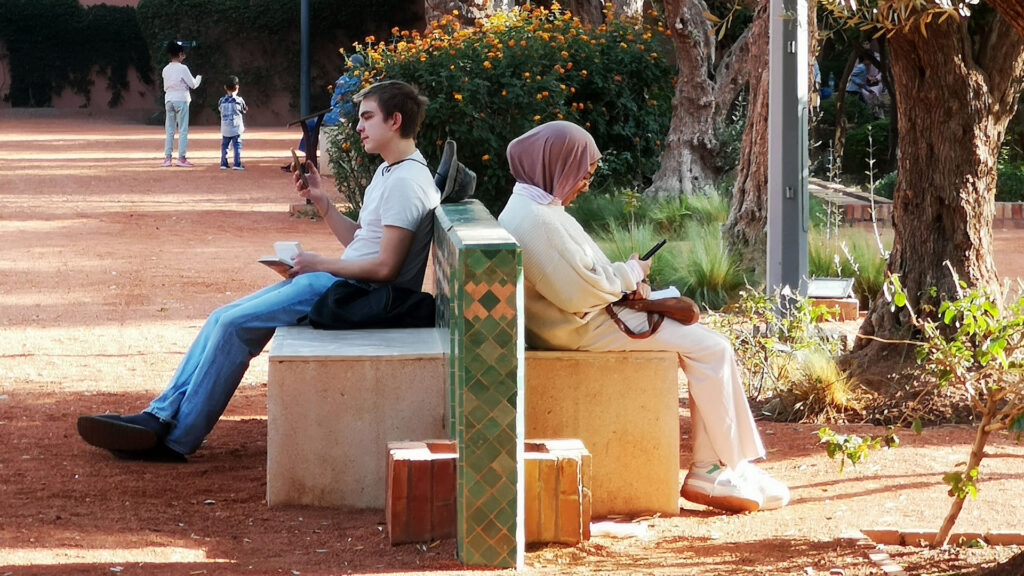
The issue of male-female relationships remains strict. Public contact is taboo, and relationships tend to exist in the private sphere. The lack of physical contact does not hinder but makes the dynamics creative.
Girls seen on the street are not approached because it would be considered harassment in the eyes of the community. Instead, their profiles are sought out based on mutual acquaintances. Private messages are the real meeting places for dates. Young people go to places where they can remain invisible in the crowd. They talk for hours under the more secluded olive trees in Menara Gardens or in the food courts of larger malls. There is no hand-holding, but the intensity of body language and eye contact reveals everything.
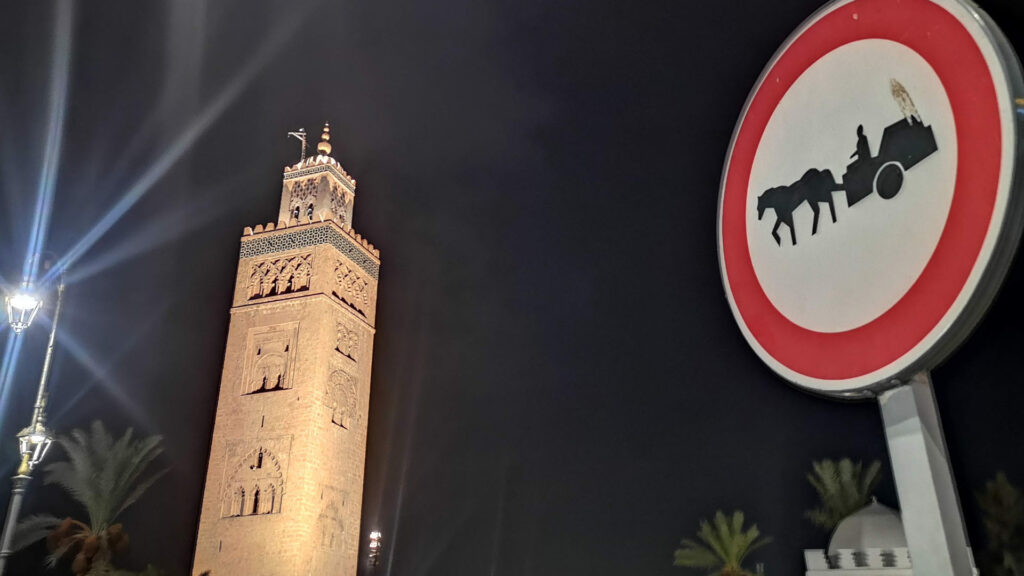
Mosques are exclusively accessible to members of the Muslim community. This is the limit of tradition: there are places that are only for locals.
As a woman, it's worthwhile to dress modestly: long dresses/pants, a scarf in your bag. This way, you show respect for the local culture, and locals will appreciate it and treat you like family.
The sights
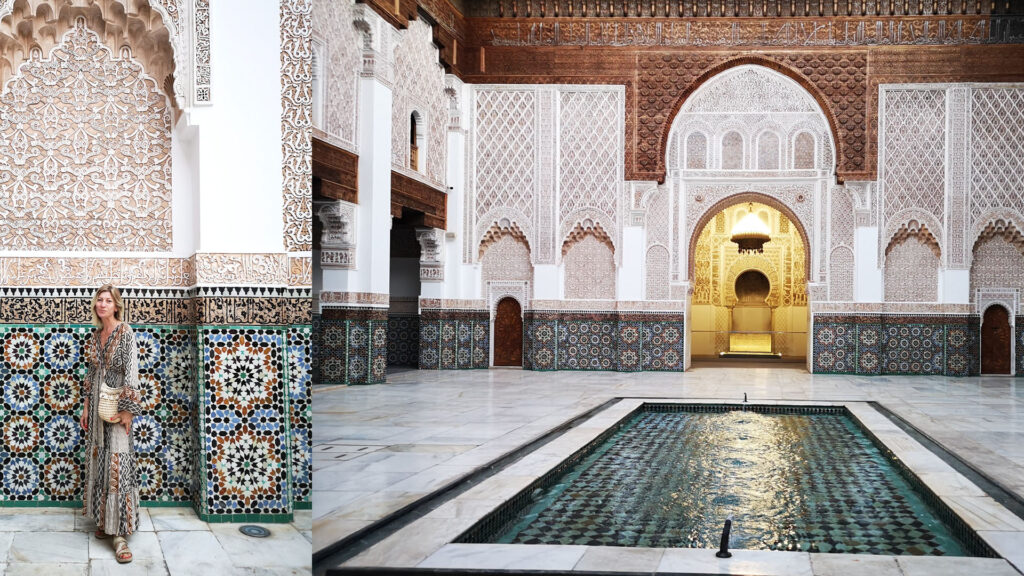
A Majorelle Garden, a, Ben Youssef Madrasa or a Jemaa el-Fna must-see attraction.
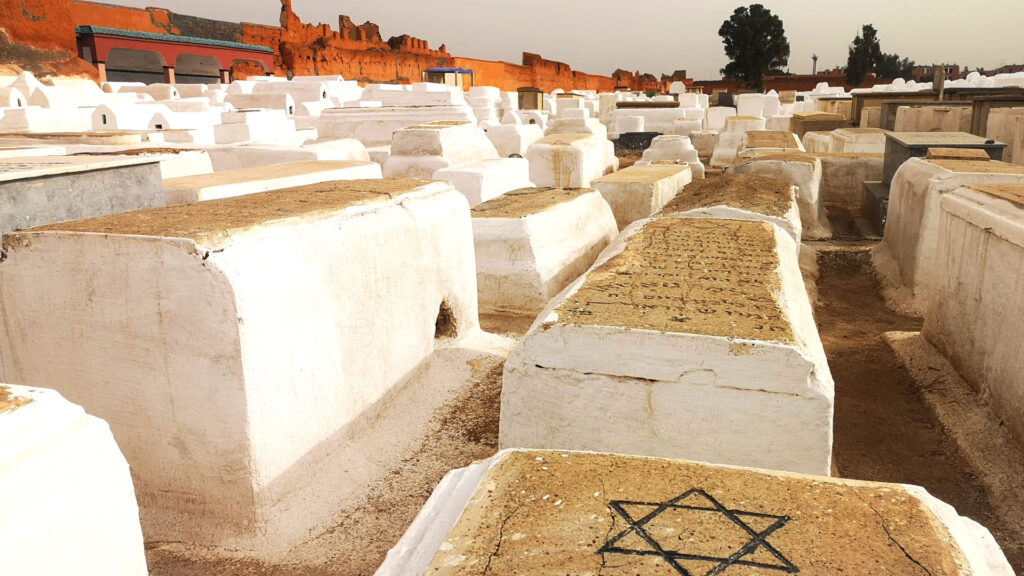
One of the most exciting parts of the side streets is the Mellah, the old Jewish quarter. Here you see that Marrakech has always been multicultural: Jewish merchants, Arab artisans, Berber market vendors – together, yet separate.
Walking among the white graves of the Jewish cemetery, you feel that this city does not forget, it only reinterprets.
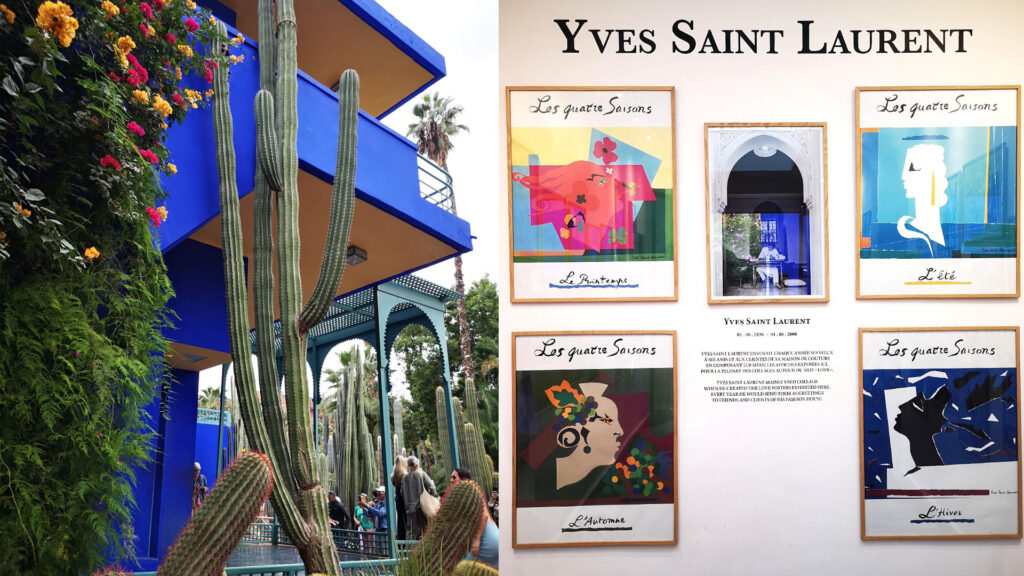
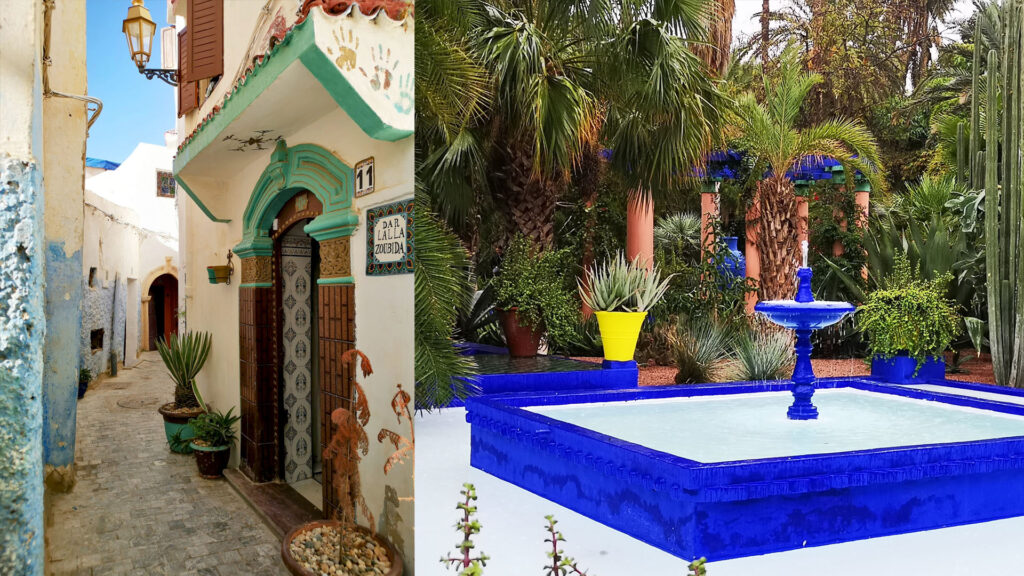
A Majorelle Garden It's not just the Yves Saint Laurent story that makes it iconic. The blue walls, the cacti, the bamboo groves – a vibrant, modern sanctuary from the city's noise. Every year, new installations and art projects are born here, making Marrakech both past and future.
Local cuisine: street food, slow living
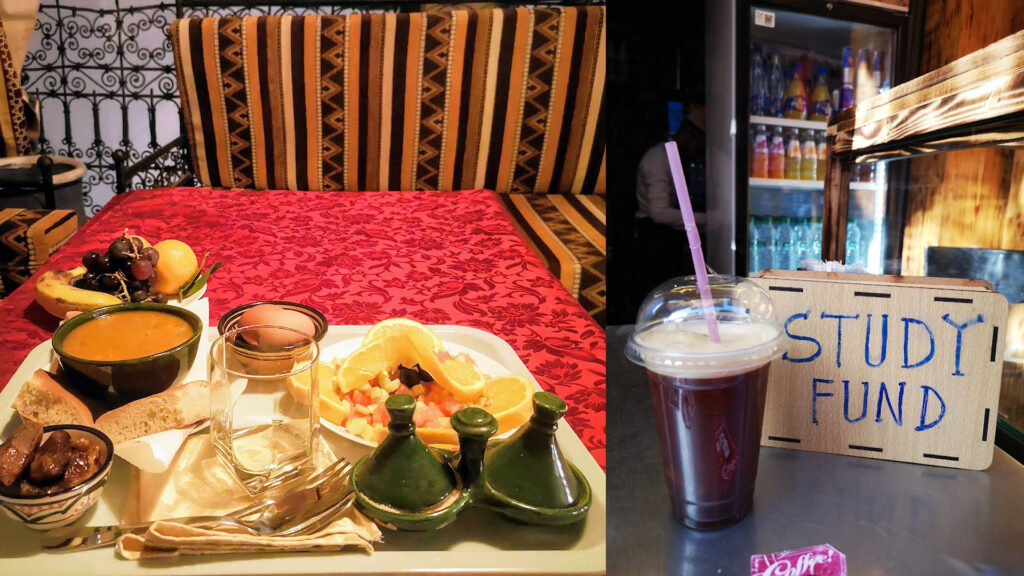
Moroccan cuisine is like Marrakech itself: spicy, layered, and unexpected. The tagine almost a ritual. The Harira the breaking of the Ramadan fast, that is, the iftar It is the symbolic and practical center of attention. After a day of fasting and thirst, the body needs nutrients that provide fast-absorbing, yet sustained energy. The soup contains chickpeas, lentils, tomatoes, often meat (lamb or beef), and spices (ginger, turmeric, cinnamon), making it a complete meal. It is also served in a vegetarian version. Traditionally, it is not eaten by itself; with dates and chebakia-val (honey-sesame cake) are served. The contrast between sweet and salty flavors helps to quickly restore blood sugar levels.
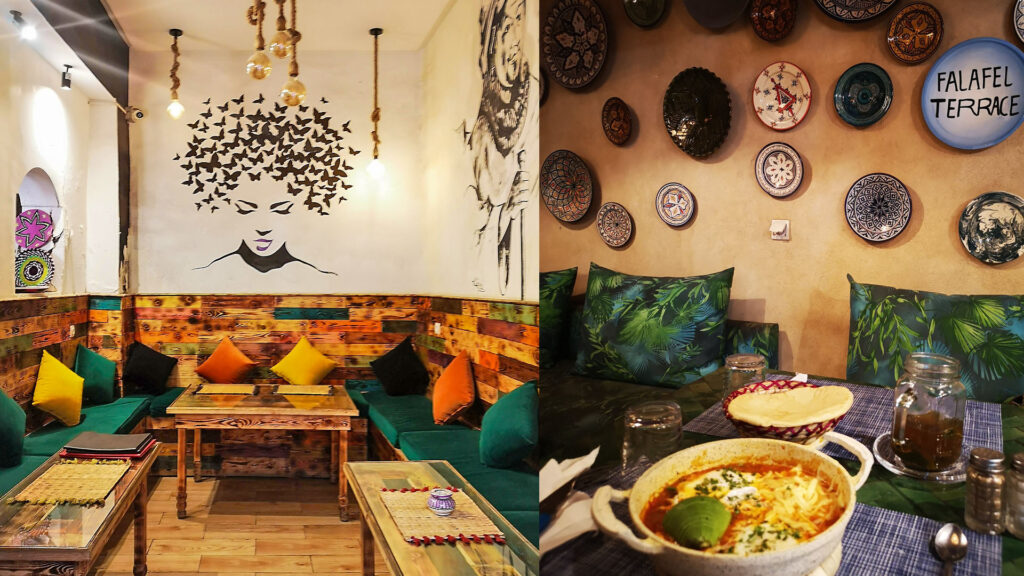
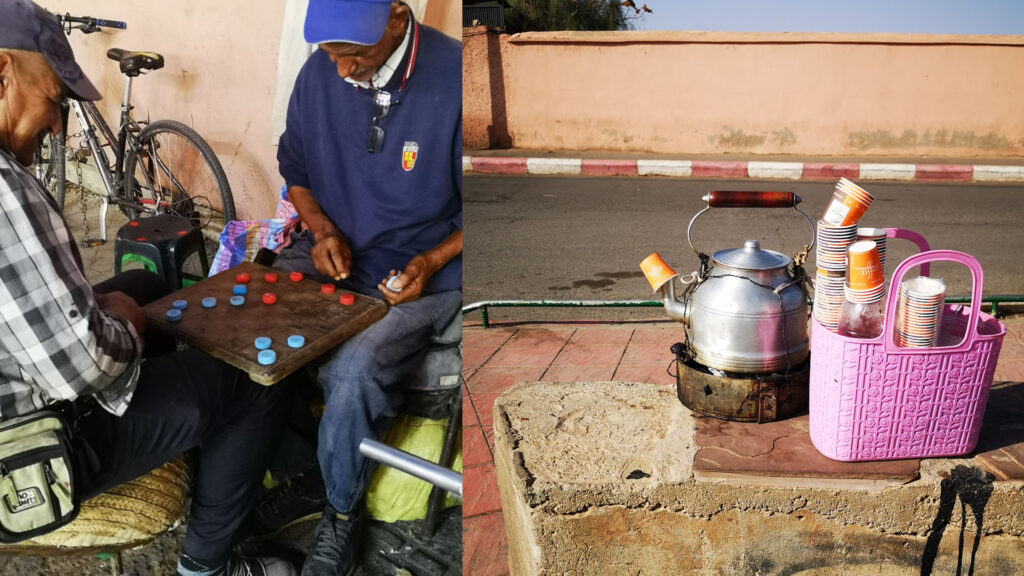
In the hustle and bustle of Jemaa el-Fnaa, next to the smoky, hot grill stands, you can get real Moroccan street food: chickpea soup, lamb brochette, fresh orange juice. But the best bites await you in the hidden courtyards of the medina, where the locals also eat.
How to survive Marrakech
Marrakesh transportation unique ecosystem, Here, traffic is a 24-hour extreme sport where the pedestrian is at the bottom of the food chain. I could tell you to take a taxi, but then you'd miss the point. My entire philosophy is based on this: We get to know the world through walks.
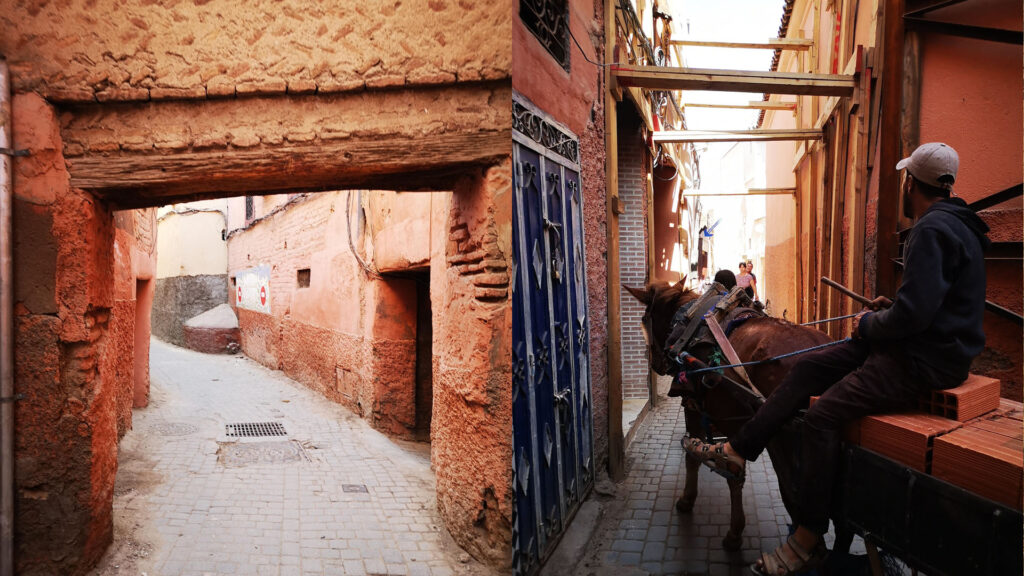
Marrakesh is best understood on foot; walking connects you to the city. You should expect to walk at least 15 kilometers a day. The Medina is a labyrinth that will draw you in and won't let you go for hours. Sturdy shoes are a must. Due to the cobblestones and constant movement, sandals or delicate footwear are unsuitable. You need shoes that can withstand wear and tear.
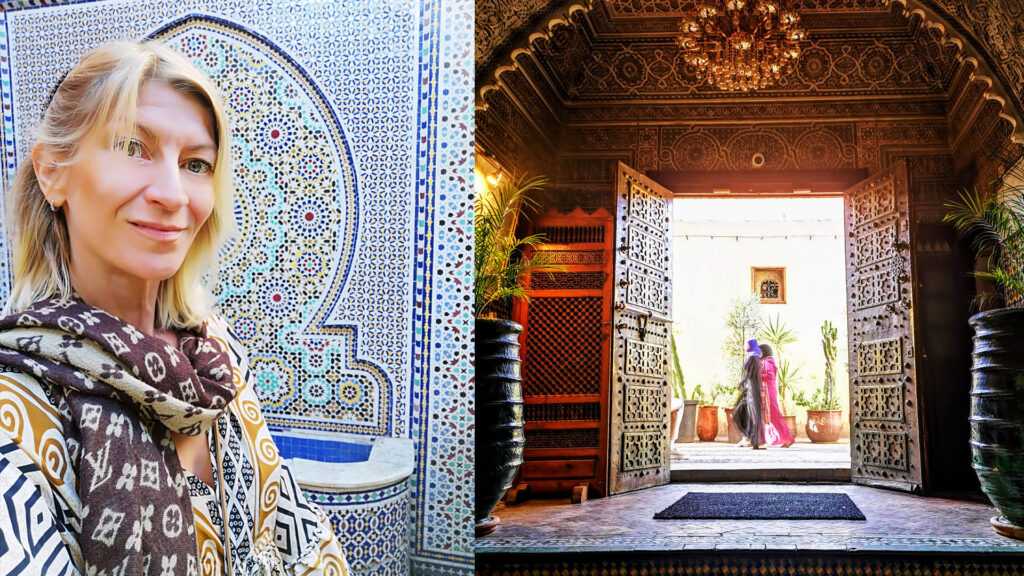
The city is developing spectacularly; within the historic city walls, modern galleries and sustainable initiatives now operate. This environment inspires curiosity and offers visitors new perspectives.
The city's pulse is captivating, but unprepared, you can easily find yourself in situations that detract from the experience. The following points will help you see situations clearly.
In Marrakesh, the golden rule is simple: Never follow anyone who calls out to you on the street. There is no Berber market „open only today,” no street „that is closed,” and no „helpful local” who wants to show you a hidden path out of pure goodwill. Anyone who approaches you has a financial motive.
A firm no: A brief, no-eye-contact „La, shukran” (No, thank you) and continued movement is most effective. If you stop to explain, it's seen as weakness and an opening for negotiation.
Don't accept directions: If someone starts lecturing you uninvited, or stands in front of you to say „you're going the wrong way,” don't change direction. They want to steer you into a labyrinth where you'll have to pay to get out.
Get your information from your own sources: If you are truly lost, only ask someone who cannot move from their spot: a shopkeeper sitting in a store, a waiter in a restaurant, or the receptionist at your accommodation.
The namesake color
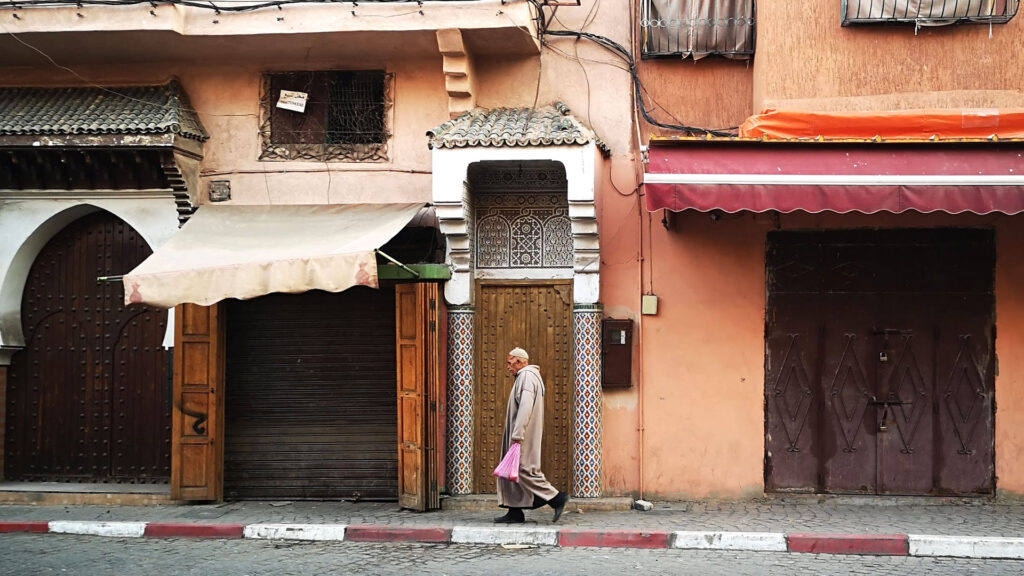
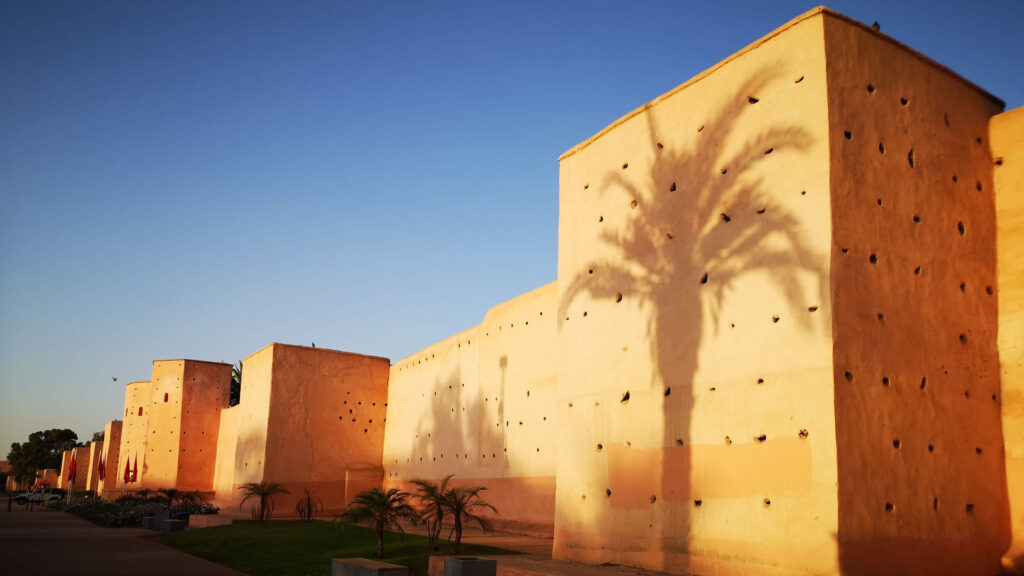
Marrakesh is called the „Red City” because in the 12th century, during the Almohad dynasty, the city was surrounded by Haouz Plain reddish clay was used for construction. This was the most practical and cheapest solution. Clay and sandstone are excellent insulators, which is essential for survival in the Moroccan heat. Tradition is now law. The city authorities strictly prescribe the color code, ranging from peach to terracotta to deep red. Only the doors and windows (often green or blue) and decorative tiles (zelligecan break the unity.
Although Marrakech is red, other cities in Morocco have their own color codes. For example Fez of its yellowish-white hues, Chefchaouen as it is known for its world-famous blue walls.
Learning as a Breakthrough Point
Morocco continues to struggle with educational problems. One of the biggest issues remains that many people still cannot write, few women are studying, and there are language barriers.
In Morocco, a diploma is a survival kit. A 25-year-old local guy or girl doesn't want to haggle in the bazaar, but wants to find a job as a software developer or engineer in the modern districts of Casablanca or abroad. University education is a matter of prestige: those who get into state universities sweat blood for their exams. English is also a tool for practicality – although French is the official language in the state education system, they are also opening up to the global market alongside it.
Gueliz: Marrakesh, where you don't need tajine
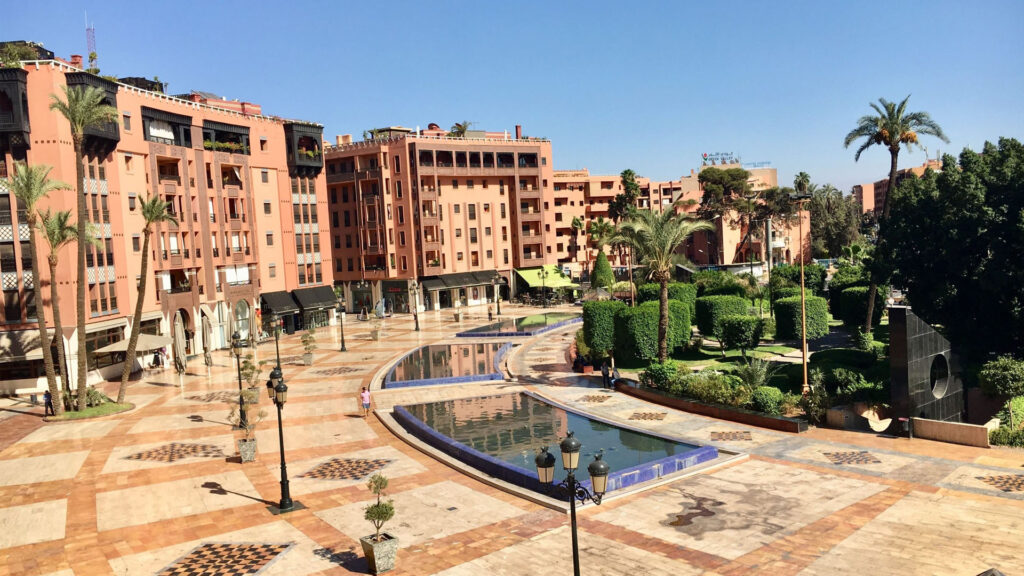
If you're tired of the Medina's maze and the „special price for you” haggling, Gueliz is your lifesaver. Gueliz is the contemporary art center of Morocco today, with its modern, design-focused, and livable metropolitan vibe. MACAAL (Museum of African Contemporary Art Al Maaden) or smaller private galleries (e.g. Gallery 127) provide a visual experience that is a fundamental benchmark in the world of social media and modern aesthetics.
The core of the neighborhood is made up of contemporary art galleries. Gallery 127 and Mining Counter African photography is showcased in brutal industrial spaces that would hold their own in any European capital. Gueliz is also the city's tech hub. Here you'll find the best co-working spaces and cafes.
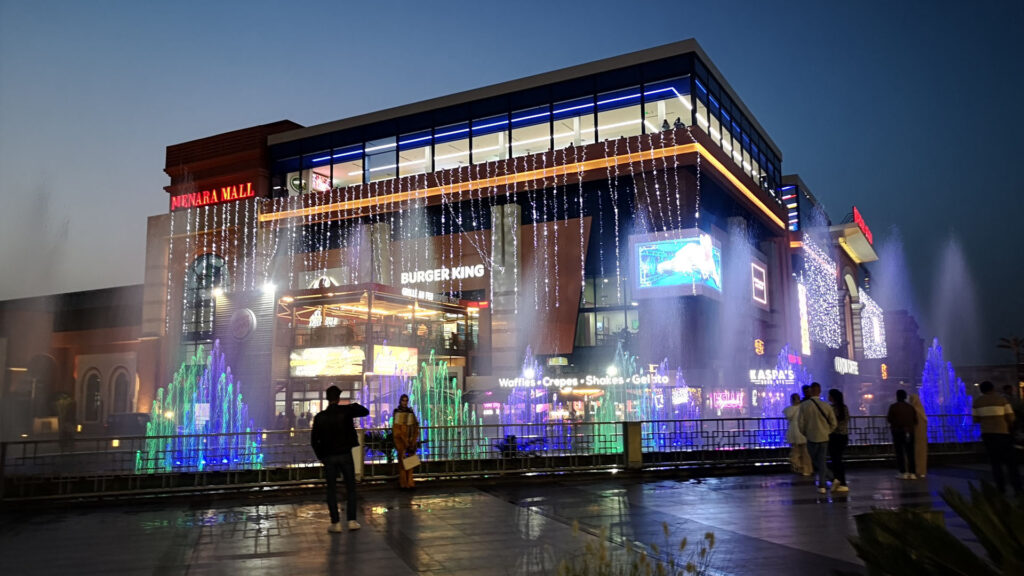
Forget the tourist traps. Gueliz is the domain of rooftop bars and specialty coffee shops. Plus 61 or a Kechmara it offers exactly what a modern traveler is looking for: a sleek interior, fusion cuisine, and an urban vibe. While the old city is about history, Gueliz is about the present. If you want to see how the Moroccan creative scene lives, you need to spend your day here. This neighborhood is Marrakech's answer to global trends, without any kind of esoteric waffle.
If you're interested in Marrakech, read the tour itinerary, where I'll guide you point by point through the city's most exciting, no-frills locations.