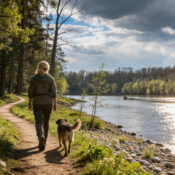


One of the first lessons of hiking is what NOT to bring with you. Because every gram counts here.
What's superfluous to you is tiring. What isn't yours holds you back. And this isn't spiritual blah blah, it's practice. Very much so. The question isn't what makes a perfect hike, but what you need. You don't have to copy your life from other people's videos – but step into your own rhythm.
For example, I believed for a long time that I could manage without a hairdryer... but my hair thought differently: „Don't fool yourself, sweetie.” Since then, my mini hair dryer has been with me on every trip – sometimes drying socks, sometimes drying self-esteem.
Packing is actually a question of self-knowledge
The Camino will rearrange your priorities anyway: what you thought was indispensable, you'll easily leave behind on a pilgrim's shelf. What you missed will appear – if not elsewhere, then in the next small village in an unexpected gesture.
And when you first experience this, you realize: not only does the scale show less, but your life breathes easier when you finally unload everything you don't really need.
Be yourself – just a lighter version!
A good backpack doesn't just carry stuff – it filters. It clarifies who you are, what you can handle, and what you truly need. Leave the rest on the shelf – or in the past.
When choosing a backpack, it's not enough for it to look good or fit everything. Your tribe's length is what truly matters - not your height. Keep in mind that the design of the chest strap and waist belt is different for women and men. The right-sized backpack is crucial for a comfortable hike.
Steps for measuring trunk length
- C7 vertebra Feel the prominent vertebra at the base of your neck; this is the first measurement point.
- Top of the hip bone The second point where your hand naturally rests on your hip.
- Trunk length: The distance between the two points determines your torso length, which is crucial for choosing the right backpack size.
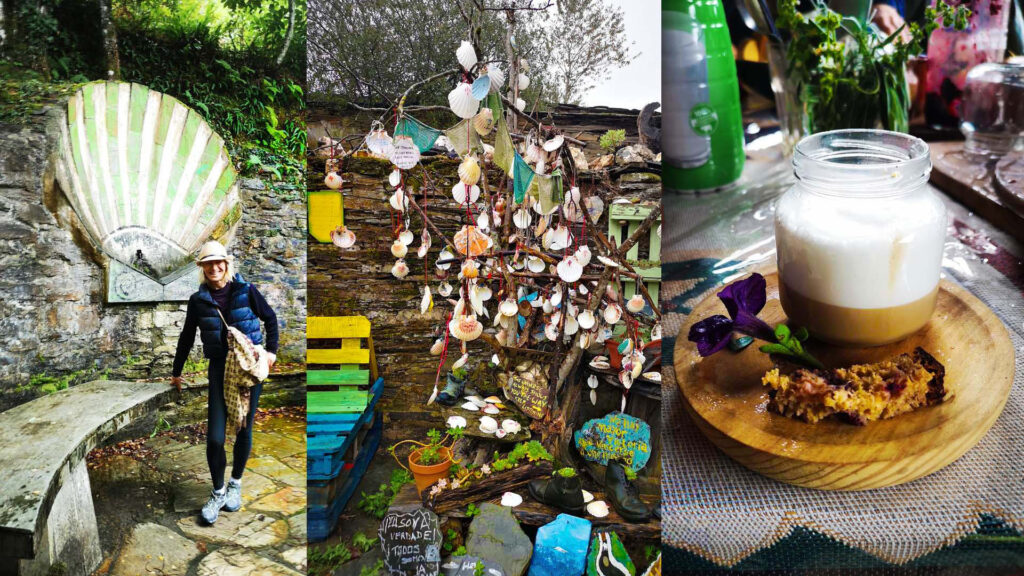
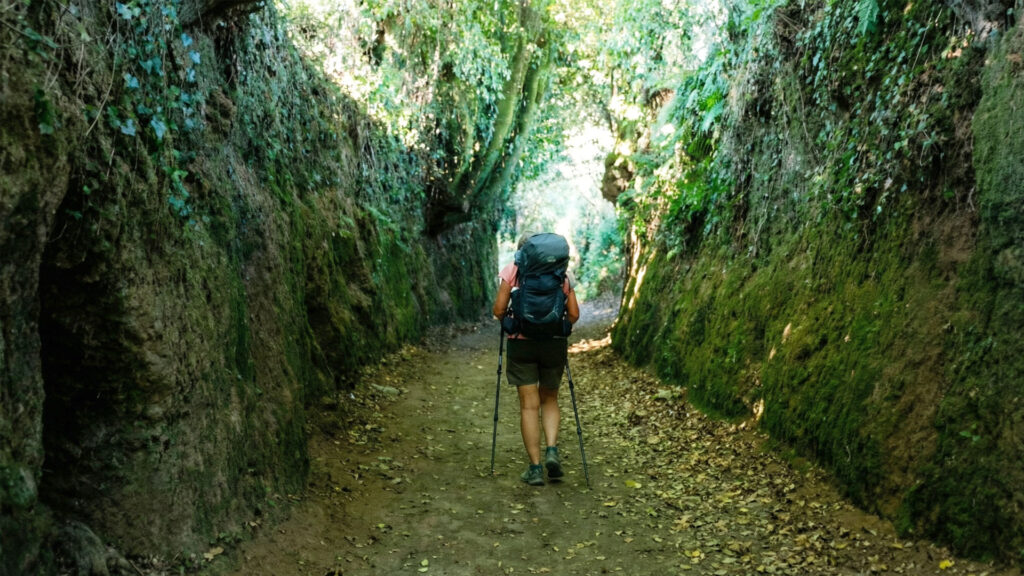
Ideally, the body weight 10%-a it can be the weight of your backpack. Instead, my luggage weighed 9 kilos, and my shoulder felt every gram of it. Extra padded shoulder straps are recommended for a backpack!
The importance of hiking shoes
After ten years of hiking experience, I have no doubt: your hiking boots should be your crown jewel. A sturdy ally, with a battle-ready sole and a pampering interior. The princess isn't heading to the castle – she's heading all the way across the Iberian Peninsula!
Reinforced toe construction for dirt resistance, padded ankle collar for comfort, deep-lugged, thick, durable rubber sole for excellent traction, and an anatomical footbed for lasting comfort.
Stay on your feet - on any terrain
| Property | Why is it important? |
| Fitting | You can't tuck your toes in! Your toes should not touch the front of the shoe (otherwise they could get injured going downhill). |
| Appropriate size Holding, protection | While walking, make sure your heel doesn't slip and stays stable. Try it with hiking socks and well-tied shoes! |
| Good ventilation | It wicks away moisture, reducing the chance of blisters. |
| Strong, ribbed sole | It doesn't slip, it dampens, it provides stability on rocky, muddy roads. |
| Water-repellent | It will protect you if it rains or if you walk through puddles. |
| Lightweight | It should be easy to wear and carry! |
| Insole | It is important for comfortable support. That's why it's recommended to choose shoes a size larger. |
| Recommended brands | Hoka, Salomon, Merrell, On, Columbia, KEEN |
Tuned for rain
Most jackets are either beautiful or useful – but sometimes a miracle happens: ultra-lightweight, waterproof, packable into its own bag, and you don't look like a fishing tent in it. More comfortable than a poncho, it doesn't stick to you, and you can even breathe in it: this is already Camino smart casual.
Stylish, waterproof jackets that can also handle the Camino.
| Brand | Why is it good? |
| RAINS www.rains.com | Scandinavian minimalism is also present in the fashion world. Waterproof, clean, and capsule wardrobe compatible. |
| Patagonia eu.patagonia.com | The Torrentshell jacket is particularly popular: it's sustainable, waterproof, well-fitted, and available in multiple colors. |
| Tretorn www.tretorn.eu | Less known, but very fashionable and functional The brand, especially their urban raincoats, is beautiful. |
| The North Face www.thenorthfaceshop.hu | The Dryzzle or Antora models have a more feminine design and are available in various colors. |
| Quechua, FORCLAZ www.decathlon.hu | In the Raincut series, you'll also find more feminine cuts and brighter colored pieces, with a water-repellent coating. |
Spend wisely: Premium stuff for a fraction of the price!
I have a secret tip: Don't pay full price if you don't have to! Sustainability is the new luxury – buying secondhand is the best way to stay stylish without overconsuming. Before you pay full price, check out Vinteden, a, Marketplace-en you are Dispute – and I managed to snag a brand new, tagged RAINS jacket for a fraction of the original price!
The tour guide: the companion, if you were to get lost
The trekking pole is sexy, but it knows a lot. It spares your knees, maintains balance, and dictates the pace as if it wrote the Camino metronome. Don't lug it from home – you can buy one there and then pass it on at the end, like a well-concluded relationship. If you're still attached to your own foldable one, be prepared: it can only fly with you as checked luggage at the airport.
Here's how to properly adjust your trekking poles
Stand up straight with your arms bent at a right angle – this is the ideal pole height.
Thread your hand up through the wrist strap from underneath: this provides stability, unloads the wrist, and offers security if you were to release the pole.
What makes a good trekking pole?
| Property | Description |
| Telescopic, adjustable | Length: 120–140 cm, easily adjustable |
| Light material | Aluminum or carbon, durable, lightweight |
| Double sealing system | Twist and flip-lock secure, won't budge |
| Comfortable grip | Cork or cork, sweat-free, wristband |
The sock is the secret!
The Camino is not a path of grand gestures, but of small decisions – for example, you don't buy cheap socks. A good technical sock It’s a cushion, it ventilates your feet. And if your feet are well, you’ll feel better about yourself too.
| Property | Short description |
| Material composition | Merino, Coolmax, nylon - good ventilation |
| Seamlessness | No rubbing, fewer blisters |
| Zoned cushioning | Underfoot extra shock absorption for heel/sole/toe |
| Compression zone | Shoulder and ankle support |
| Leakage | Mesh panels for heat and sweat dissipation |
| Recommended brands | Injinji, Kiprun, Darn Tough, Balega, Drymax |
Move on without pain!
The hydrocolloid patch is the best friend of a foot with blisters. It cushions, protects, and soothes like a second skin—before the pain even asks for entry. Brand name? It doesn't matter. Function does. Always keep some with you!
Celebration solutions
The popular, multifunctional scarf worn on the Camino and during hikes is most commonly Buff-is its name. Although this is a brand name, it has become the general term for similar seamless tubular scarves. It is extremely versatile to wear.
Hikers love hiking hats – we women like them too, as long as we don't look like we're in a safari ad. A light straw hat or a well-chosen baseball cap is more than enough – it offers sun protection and can even earn you compliments.
Insurance: When the plan changes
Headwear – but don't just protect yourself from the sun! The EU Health Insurance Card (EHIC) is at least as important as good shoes before you set off. Coming from outside the EU? Then good travel insurance is your Camino luxury accessory – invisible, but life-saving.
The Camino is magical, but sometimes you get a shock not only from the scenery but also from unexpected ankle pain or sunstroke. Here are the most common problems that don't ask permission, they just show up.
| Category | Possible Problems | What could cause it? |
| Foot problems | Blisters, ankle sprains, tendonitis, heel pain, stress fractures | Strain, poor footwear, inappropriate socks, ground conditions. |
| Digestive disorders | Stomach upset, diarrhea, constipation | Changed water composition (tap water), unknown foods, changes in eating habits. |
| Respiratory | Cold, sore throat, cough | Virus spread. |
| Skin irritations | Sunstroke, sunburn, insect bites | Strong sunshine, stink bugs (in some accommodations). |
| Musculoskeletal complaints | Fever, shoulder, back, knee and hip pain | Continuous physical exertion, stress on joints. |
| Other | Headache, dehydration, allergic reactions | Heat, fluid loss, unknown pollens/foods. |