

Teljes Camino Fisterra – Irány a világ vége
4 DaysThe Call of the Ocean: The Camino Finisterre – Muxía
Arriving in Santiago de Compostela is for many the beginning of a new chapter. Following medieval traditions, the journey continues to the edge of the once-known world, to the dramatic cliffs and the monumental meeting with the Atlantic Ocean. These four extra days are a condensed version of physical pilgrimage and spiritual rebirth. After the protective forests of the inland, you finally arrive at the infinite.
Along your journey, you leave behind the pulsating center of the pilgrim community. You traverse the wild and mystical Galician mountains, where medieval stone bridges, hidden waterfalls, and legends tucked deep in the forest accompany your steps. This leg of the trip is a time for deep, inner quietude. The silence of early morning hikes through the woods by headlamp, paired with the awakening rhythm of coastal fishing villages, reshapes everyday life perfectly.
The trail leads from the inner mountainous sections to the dramatic and wind-swept cliffs of the Coast of Death. From the mountain ridge, you catch your first glimpse of the ocean's blue stripe, and as you walk along the soft sand of wild coastal beaches, your boundaries permanently dissolve. Fisterra's 0.0 kilometer stone is the site for letting go of the past and ritually leaving objects behind. Muxía's wave-swept rocks and the legend of the stone boat bring a true, cathartic rebirth. The coastal solitude and the ocean sunset burned into your retina serve as a mystical final chord, after which you leave your inner burdens on the shore for good. What's more, you can complete these four days completely independently, separate from the main Camino de Santiago route, whenever you crave a special and rejuvenating getaway by the ocean.
Fun Fact
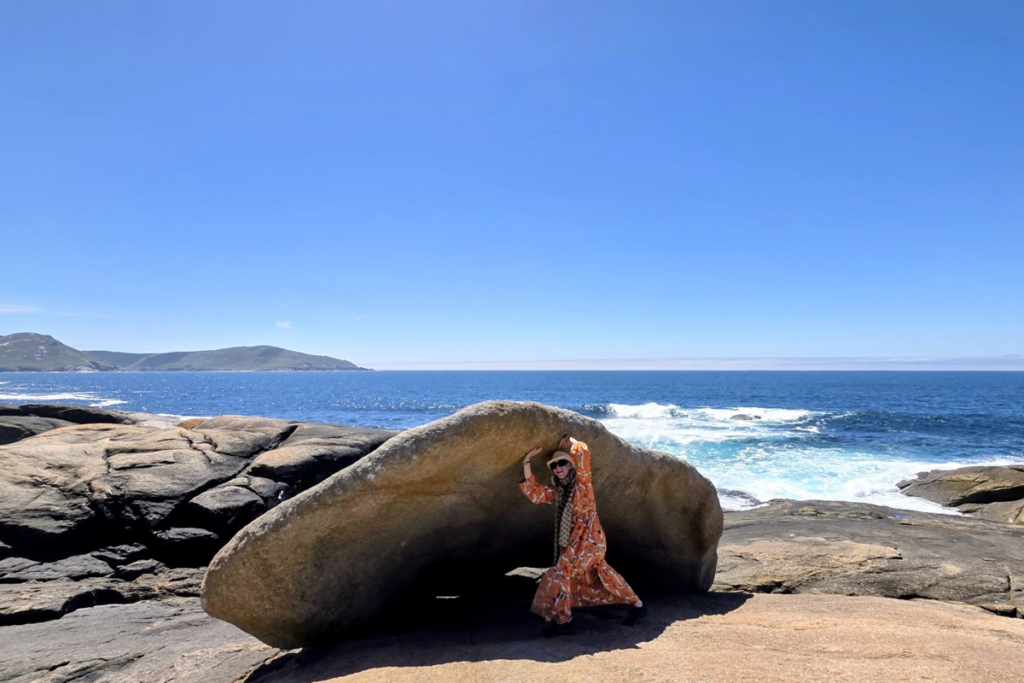
The Rocking Stone Giant (Pedra de Abalar)
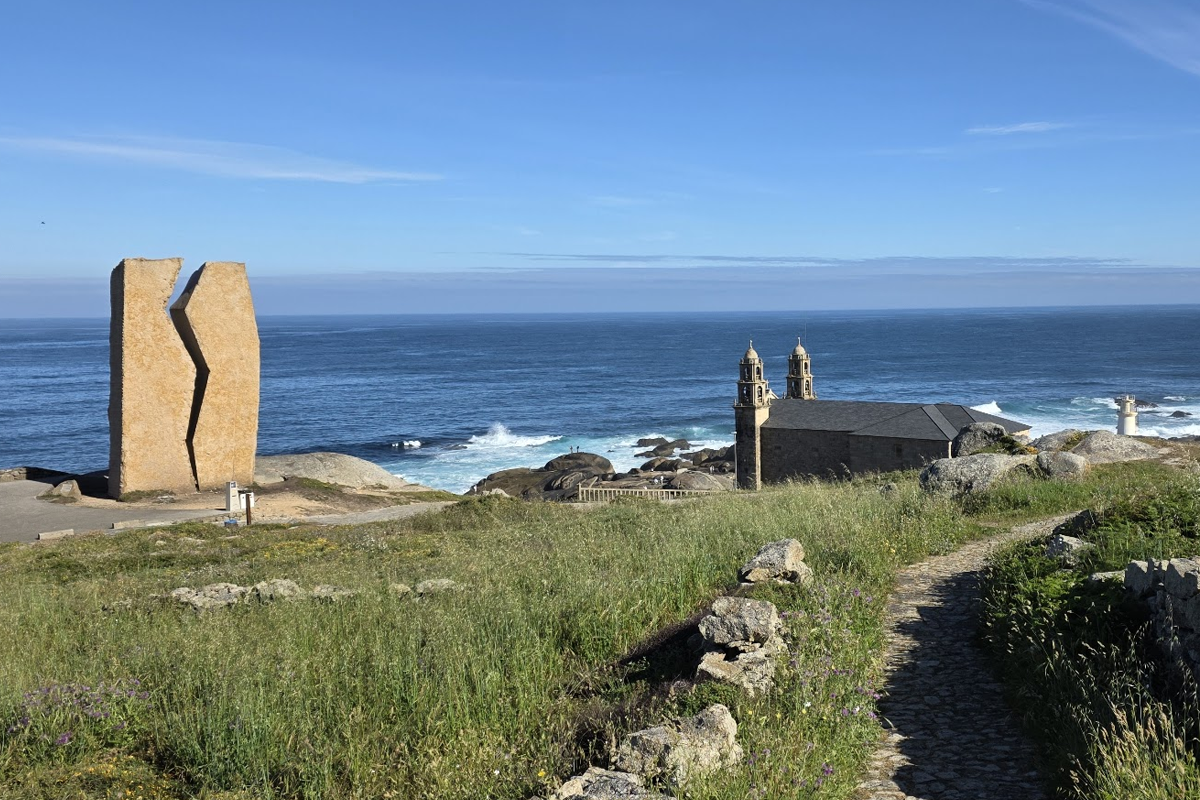
According to legend, the massive, flat rocks lying in front of the sanctuary in Muxía are the remains of the Virgin Mary's stone boat. The most impressive among them is the Pedra de Abalar (the rocking stone), which was the boat's sail. This monolith balances so perfectly on the edge of the rock that if you stand on the right spot, you can move and rock the multi-ton block with your mere body weight! According to locals, the stone only moves for pure-hearted pilgrims (or when a great danger threatens the coast).
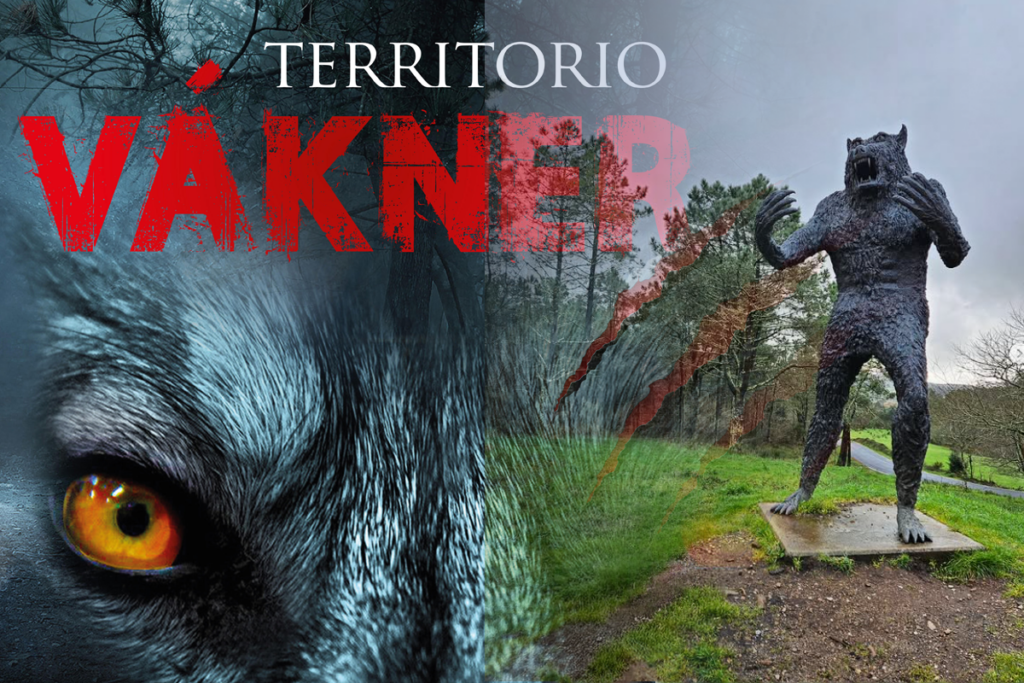
Spain's only werewolf in the forest
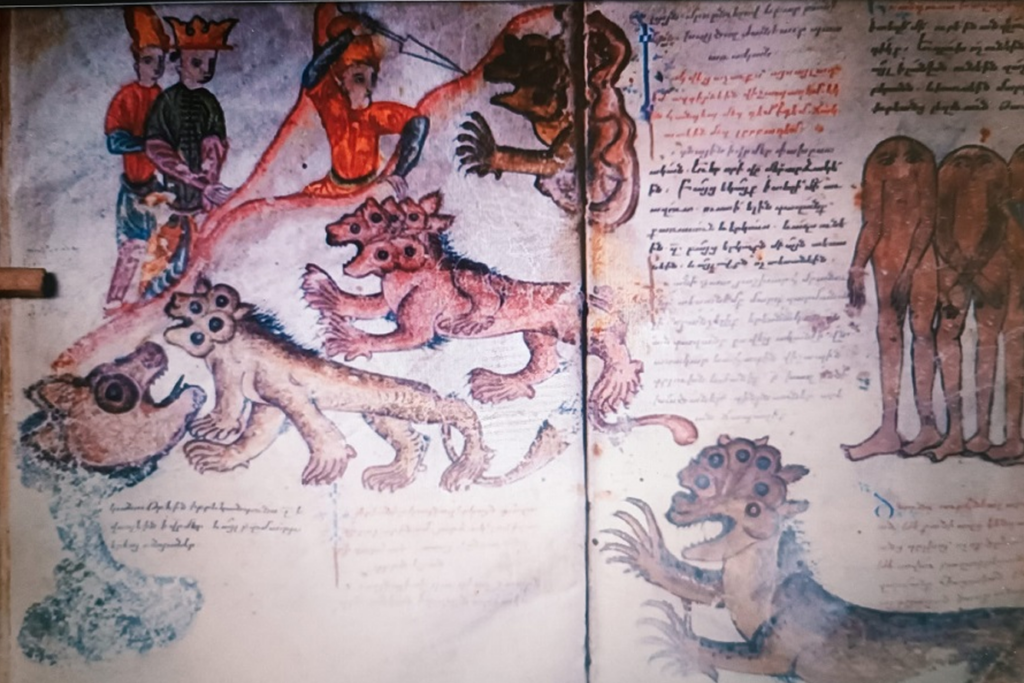
Near Dumbría, standing at the edge of the dark forest, the impressive Vákner statue is Spain's very first and only official werewolf monument. It was modeled after the accounts of medieval pilgrims, who swore terrified in their journals that a giant monster with a human face and a wolf's body chased them through the thicket on their way to the end of the world.
Ara Solis | Moses' Commandment at the End of the World
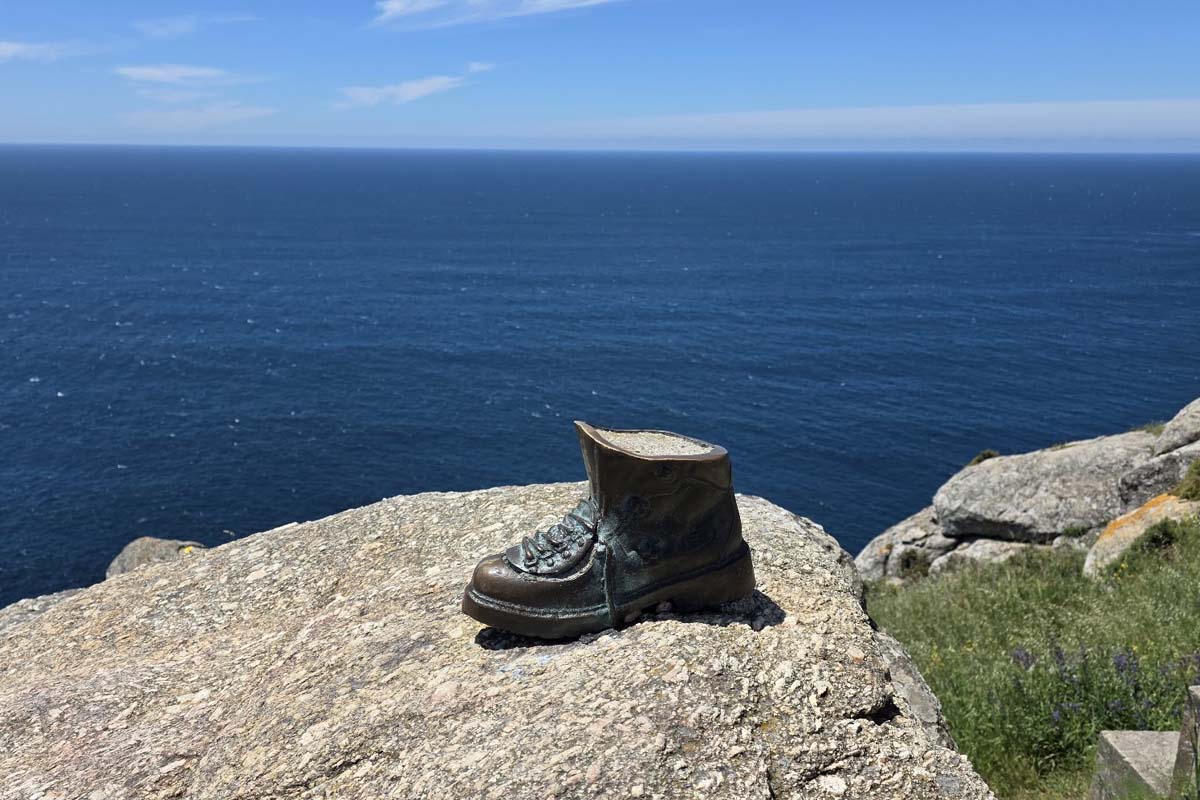
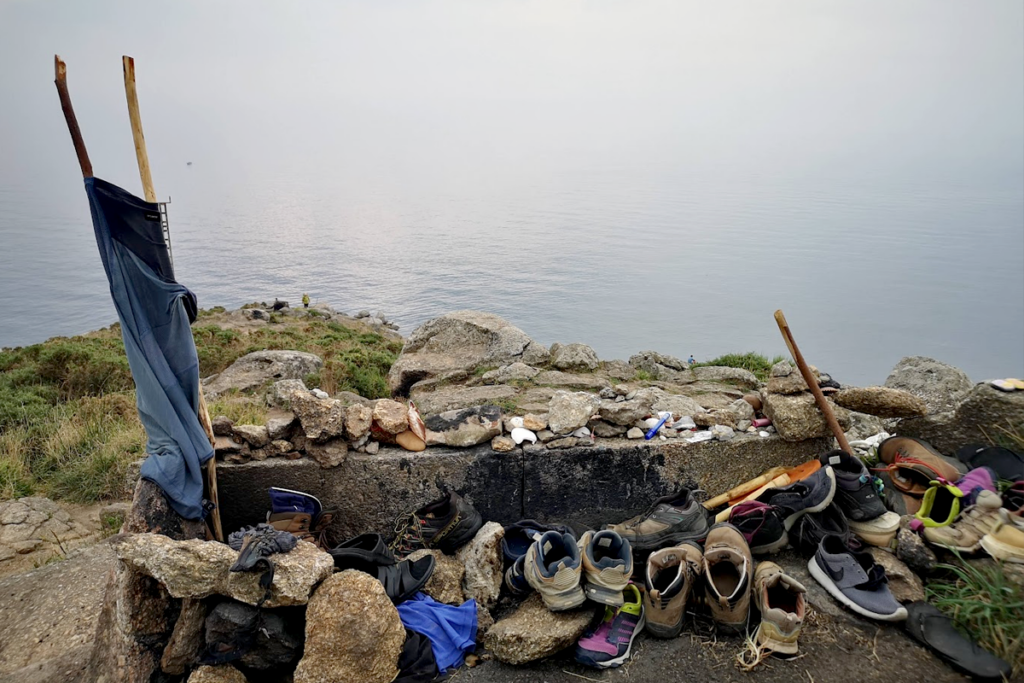
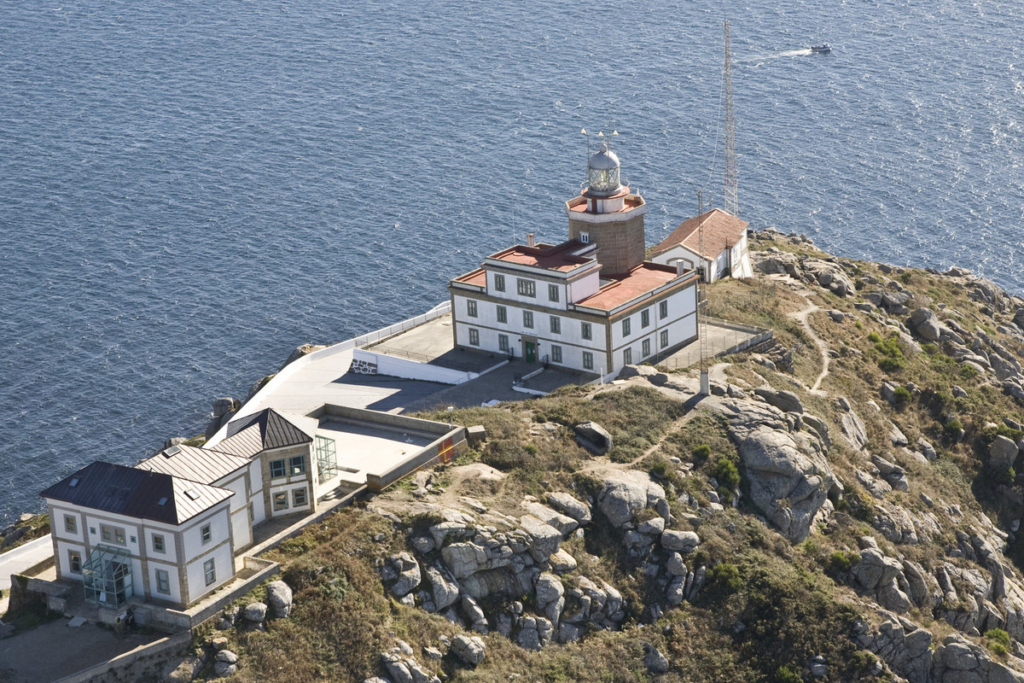
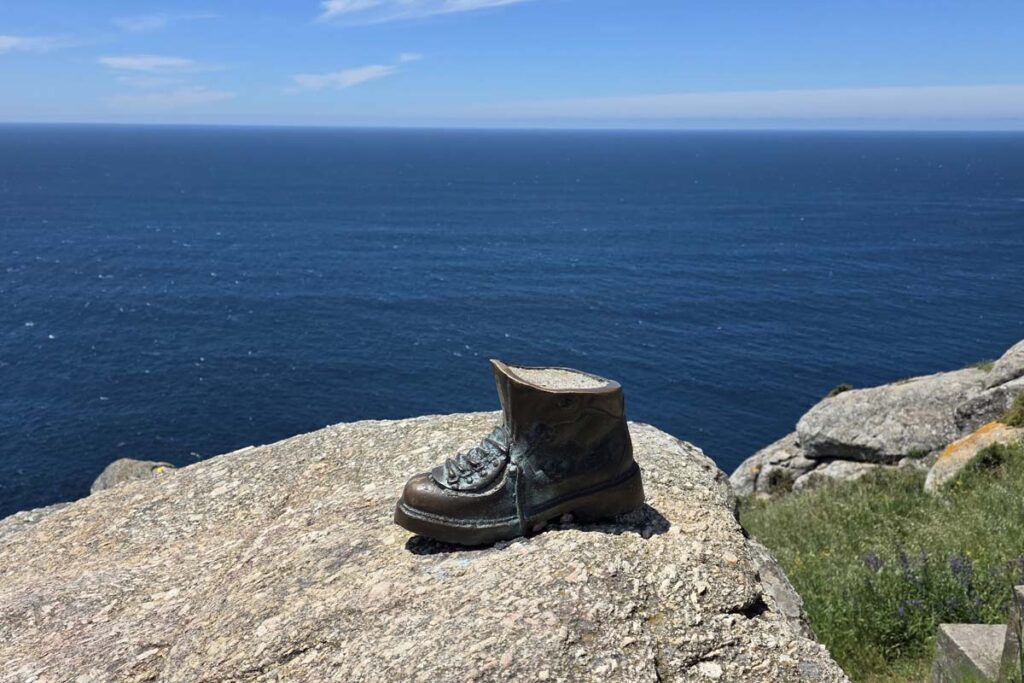
At the Fisterra lighthouse, pilgrims sit on the rocks for hours watching the sunset, repeating an ancient, pagan Celtic and Roman ritual—often completely unaware. On this very cliff once stood the Ara Solis, or the Altar of the Sun. The worship of Sol, the sun god, was the most important cult of Imperial Rome, but when Emperor Constantine made Christianity the official religion, pagan traditions were gradually replaced by new symbols. Although the ancient altar is no longer there today, the spiritual power of the location and the rite of release remain unchanged. Following the pattern of times past, pilgrims still leave their boots or a personal object here as a way to close the past, just as the Celts burned their clothes on this spot at the beginning of a new life. This gesture is also deeply rooted in Judeo-Christian culture: when Moses stood on Mount Sinai to receive the Ten Commandments, God's first command was to take off his sandals, because the ground he stood on was holy. The worn pilgrim shoes cast off on the rocks of Fisterra thus remain, to this day, an overarching symbol of arrival and showing reverence before holy ground.
Top Attractions/Essential Gear
Don't miss it
- Santiago de Compostela
- St. James Cathedral (Catedral de Santiago)
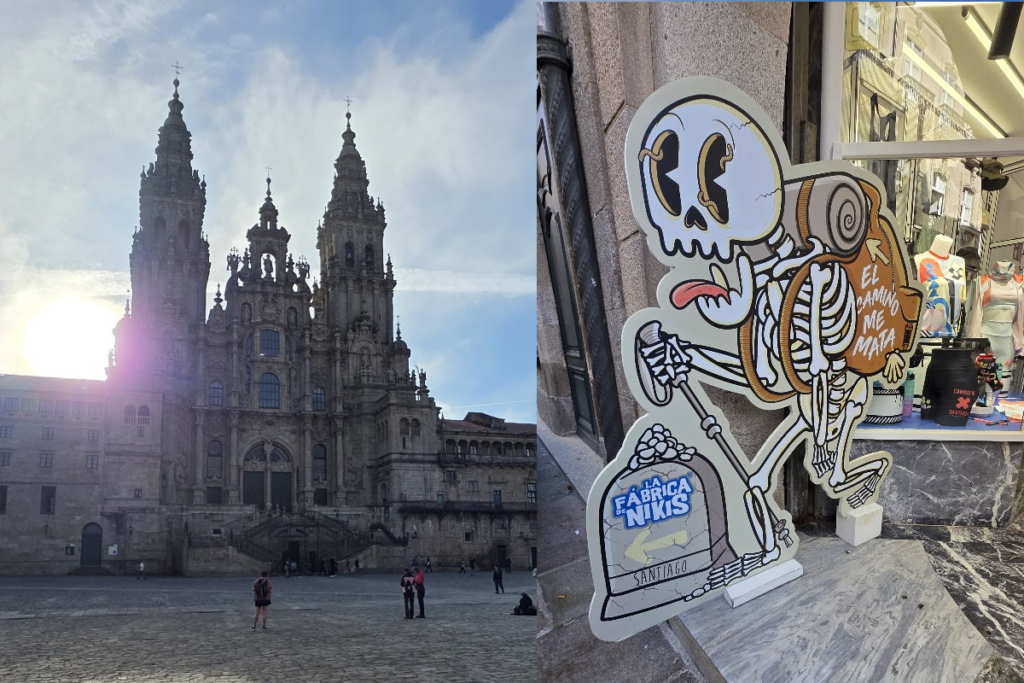
- Plaza del Obradoiro
- Day 2: Santiago – Negreira (A Pena)
- Ponte Maceira
- Day 2: Negreira (A Pena) – Logoso
- Monte Aro
- Hospital River (Pozasi and its waterfalls)
- Day 3: Logoso – Finisterre
- Capilla de San Pedro Mártir
- Cruceiro da Armada
- Corcubión óvárosa
- Playa de Langosteira
- Faro de Fisterra
- +1 Day: Finisterre – Muxía
- San Martiño de Duio templom
- Playa de O Rostro
- Iglesia de San Estevo de Lires
- The Ferida Memorial
- Santuario da Virxe da Barca
What should you bring with you
- 1-1,5 l water
- Naptej, Kalap
- Hiking shoes
- Elsősegély, gyógyszerek
- Kitartás
Travel Info
-
Santiago de Compostela
-
6-7 h/nap
-
Albergue, Hostel
-
Szállásokon, kávézókban elérhető
-
Étterem, Kávézók
Time to explore
What you will love.
- The Finisterre and Muxía Coastline: Arriving at the ocean's edge, where rugged cliffs meet the endless expanse of the Atlantic Ocean.
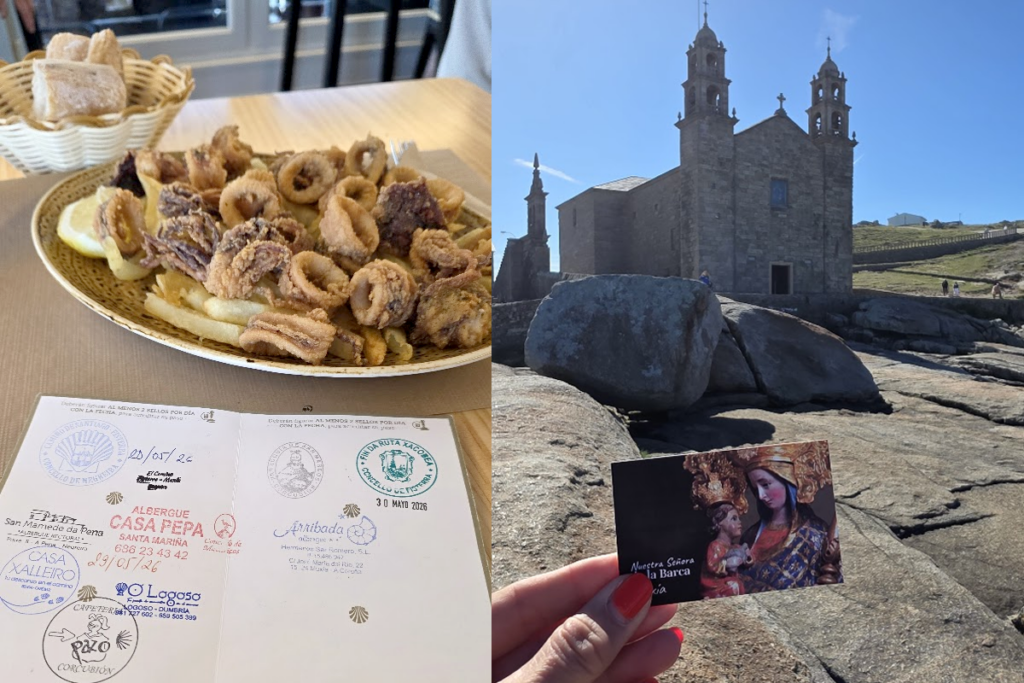
- The Sanctuary of Muxía (Santuario da Virxe da Barca): Sitting on the wave-swept rocks below the seaside church and soaking in the peaceful sense of completion.
- Coastal Delicacies: Savoring fresh Galician seafood, especially local mussels and traditional empanada in the small taverns of authentic fishing villages.
Stages
Route: Santiago de Compostela – Sarela da Baixo – Alto do Vento – Lombao – Augapesada – Trasmonte – Ponte Maceira – A Chancela – Negreira – Camiño Real – A Pena
The Camino Finisterre (or Camino de Fisterra) is a truly unique route among the Way of St. James trails: it is the only section that starts in Santiago de Compostela and leads west toward the Atlantic Ocean. In pre-Christian times, it was believed to be the end of the known world (Finis Terrae). Pagans made the pilgrimage here to the myth-shrouded Ara Solis altar to pay homage to the setting sun, which in their belief brought the worlds of the living and the dead closer together. For modern pilgrims, the sight of the ocean stretching along Galicia's dramatic, rugged coastline (along the infamous Costa da Morte, or Coast of Death) brings true inner closure, reflection, and renewal. Although the journey can be completed at a more comfortable pace over 4 days, sportier pilgrims often cover the distance in 3 days.
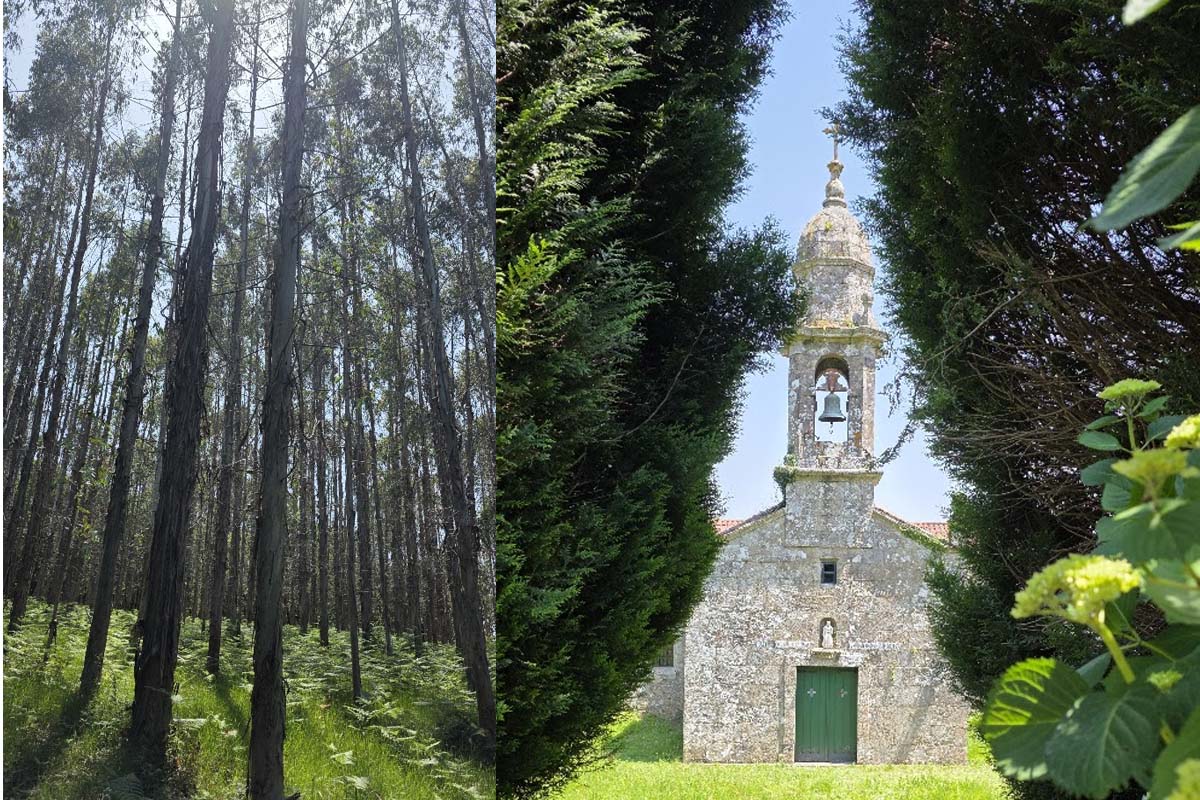
Physical challenge: Although this route is significantly quieter and more intimate than the final stretch of the French Way, it is physically demanding. You must prepare for days as long as 33 kilometers, including continuous 20-kilometer uphill climbs. Up until the town of Cee, the path runs inland through eucalyptus forests and quiet villages, only veering out to the coastline from that point on.
After yesterday’s euphoria in Santiago and the celebrations in front of the cathedral, the morning departure brings a sharp contrast. You cross the river over the medieval stone bridge of Ponte Sarela, where the Galician countryside opens up immediately beside the ruins of an ancient watermill. If you set off early in the morning, be sure to stock up on coffee and snacks beforehand, as the reality is that you won't find a single open spot for the first 7-10 kilometers. Starting out without caffeine will literally have you praying for a roadside cafe, but on the flip side, it guarantees a heavenly experience when you finally stumble upon the first one.
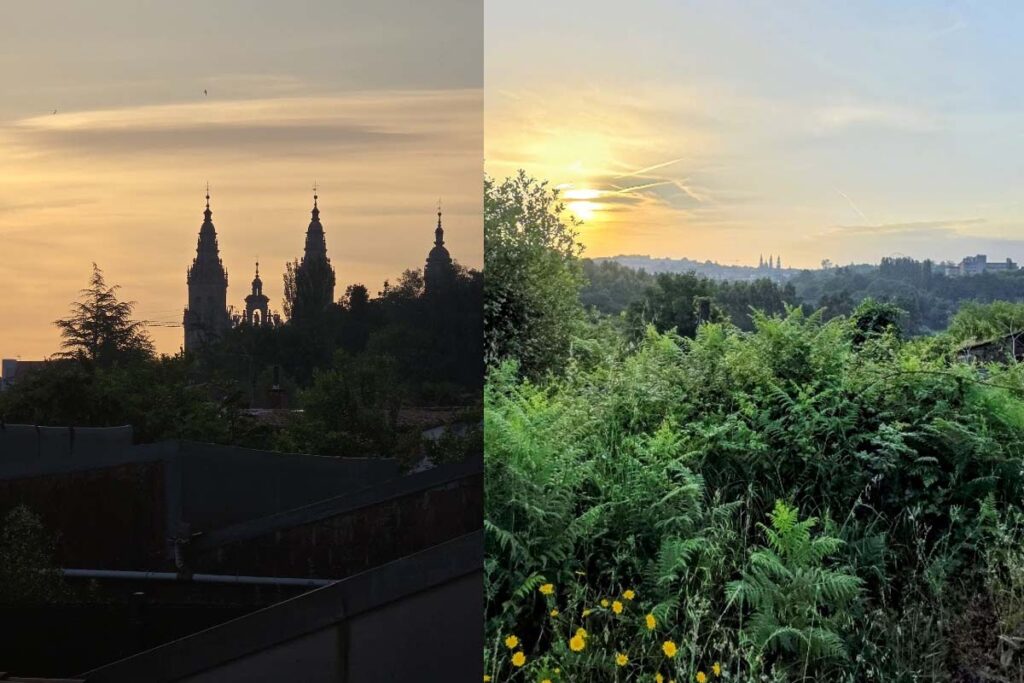
Walking toward Sarela de Abaixo, it's worth looking back on the climb, as the cathedral's towers can be seen one last time through the tree canopy. From here on, the west dictates your path as you head toward the ocean. Compared to the French Way, the silence is striking. The surging wave of pilgrims disappears, and the sparser clicking of walking sticks makes room for your own thoughts. Those who press on here are looking for true reflection and are ready to do the inner work. Around O Carballal, near the bus stop and the traditional hórreo, you need to watch the trail markers closely, as traffic on the main road can easily distract you. If you miss the turn at the big stone wall, turning right and then left at the next opportunity will quickly bring you back to the yellow arrows.
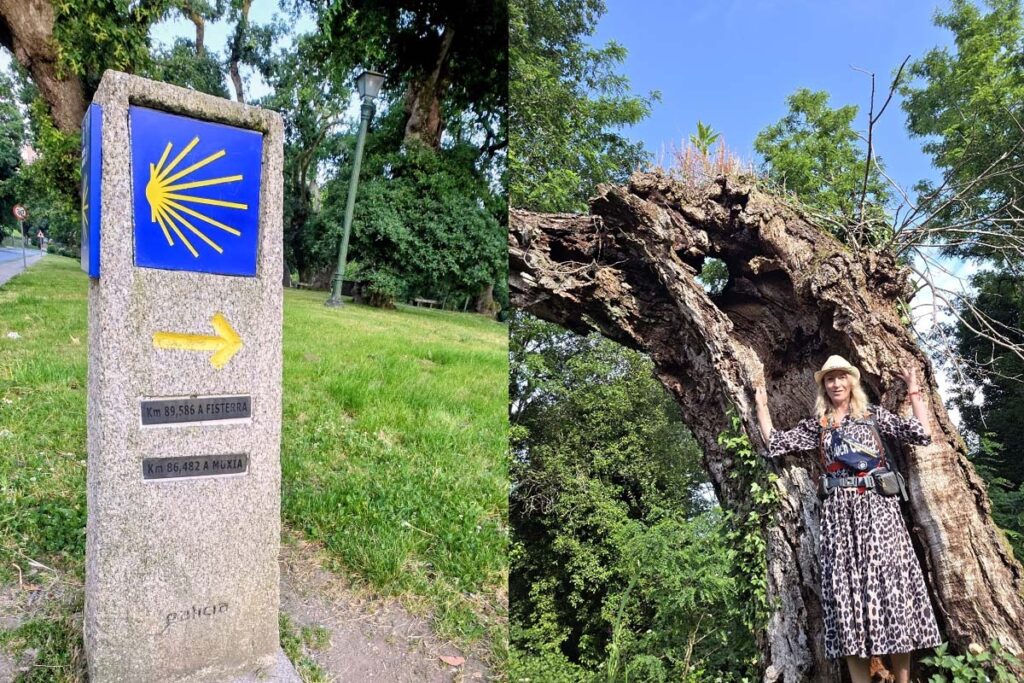
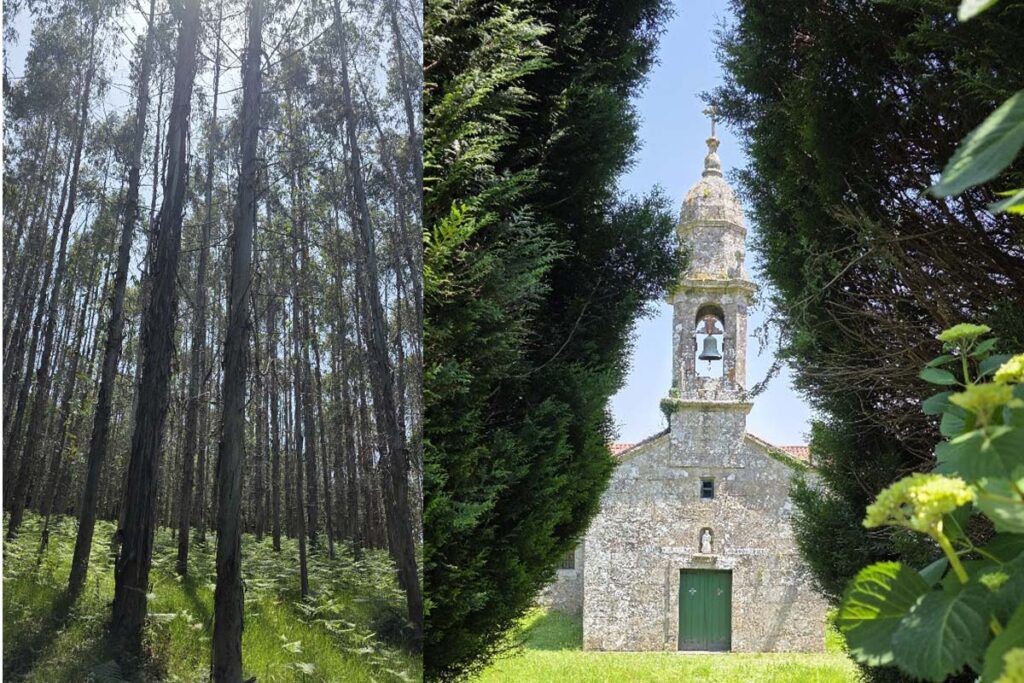
Alto do Vento offers the first reliable, saving grace of a rest stop on a cafe terrace, followed by the day's major physical challenge after Aguapesada. From here, the path leads up the steep climb of Alto do Mar de Ovellas into the eucalyptus forest. The lung-busting ascent and the tart, resinous air shift the rhythm of the hike. Due to the smaller group size, pilgrims naturally rely on one another, and surface-level greetings quickly give way to meaningful, deep conversations about life's big questions.
FYI: Originating from Australia, the fast-growing eucalyptus serves as the primary raw material for Spain's paper and pulp industry, as well as a key energy source for biomass power plants. The branches and leaves left behind during logging are distilled into valuable eucalyptus oil, which pharmaceutical and cosmetics companies procure for cough remedies, creams, and wellness products. Furthermore, local beekeepers take advantage of these forests: the dark, bold honey produced from eucalyptus blossoms is exceptionally popular in Galicia.
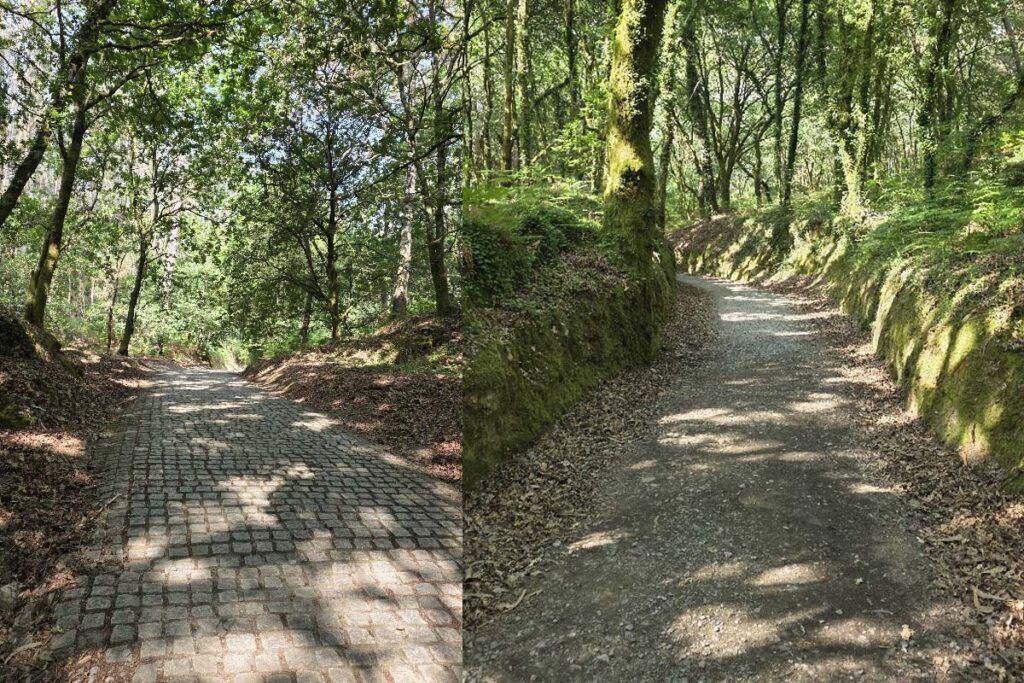
On the other side of the mountain, passing through the stone-built villages of Trasmonte and Burgueiros, you reach the medieval bridge of Ponte Maceira over the Tambre River. According to legend, divine intervention caused the bridge to collapse beneath the Roman soldiers pursuing the disciples of Saint James—a moment commemorated in Negreira's coat of arms. Sitting in the grass along the riverbank, soaking their feet in the cool water, pilgrims and locals alike savor the sense of arrival.
In the 30-degree summer heat, the location's present-day purpose brings a whole different, very tangible form of salvation. Thanks to the dense vegetation and the shade of the riverside trees, the microclimate here is noticeably cooler than on the open, paved stretches. The clear water gushing through the riverbed and the natural pools formed near the dams create a perfect oasis. Pilgrims and locals sit side by side on the grass or rocks, wading knee-deep into the river—an instant refresh for tired feet after a long walk that provides a massive surge of energy for the final kilometers leading toward Negreira.
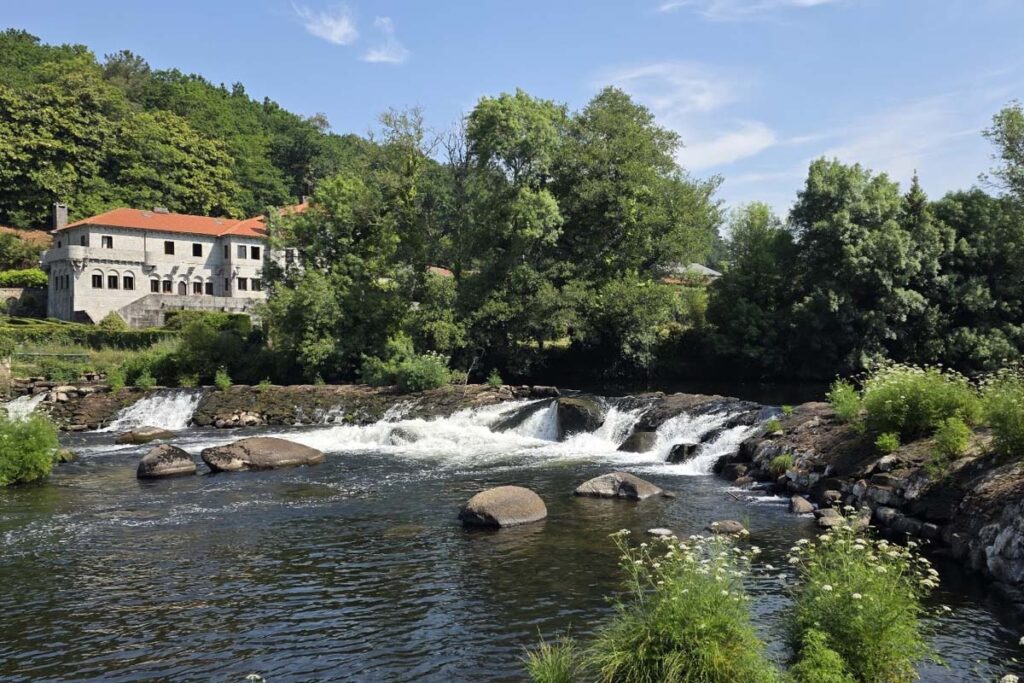
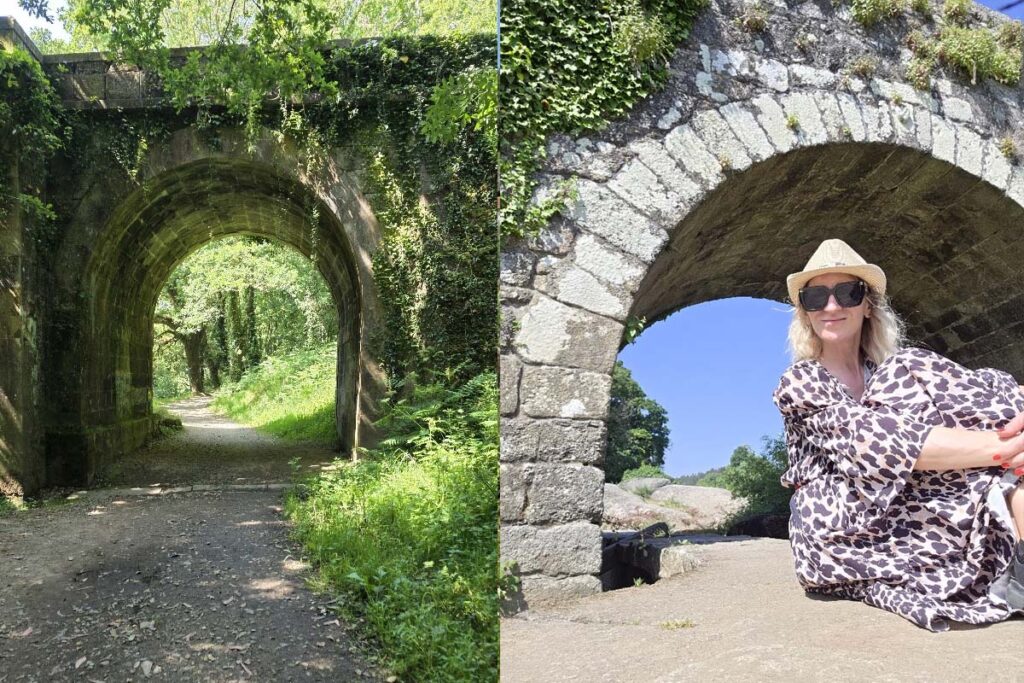
Negreira is the first major base, where the monumental gate of the 14th-century Pazo do Cotón welcomes you. This countryside also inspired Ernest Hemingway in his novel For Whom the Bell Tolls. Beyond the town, the trail bends into a dense eucalyptus forest, where a unique, mystical twilight prevails under the canopy of trees even in broad daylight. The real challenge here is a substantial, sustained incline that thoroughly works your legs under the shade of the thick vegetation. After the tiny houses of Zas and the refreshing spring of O Rapote, as you near the hilltop, you arrive at today's final destination, the village of A Pena.
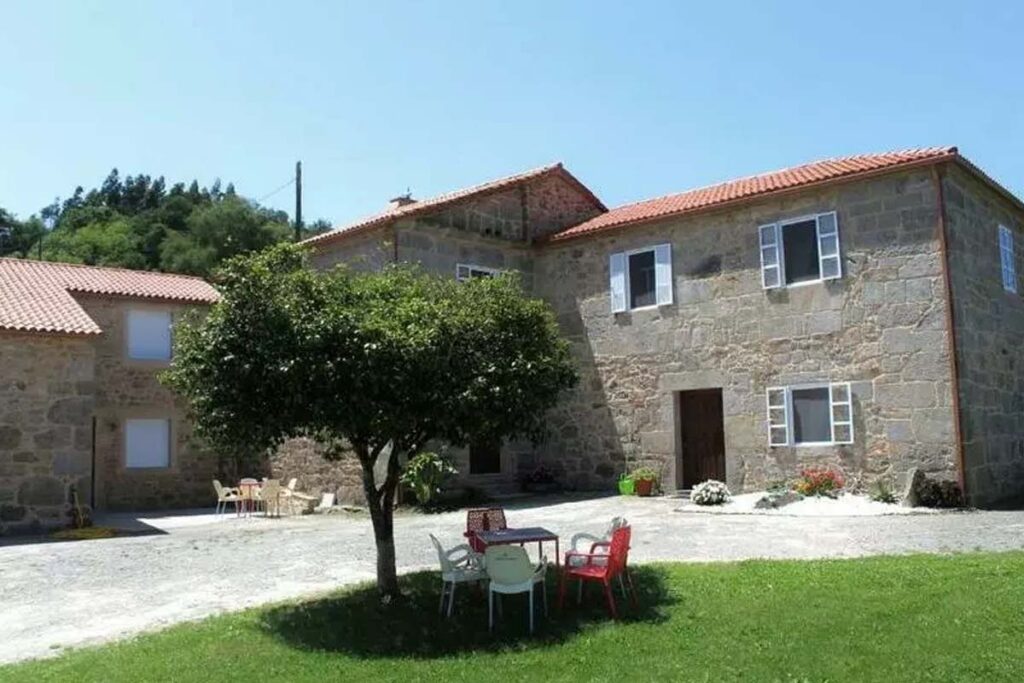
A Pena is a tiny, quiet, authentic Galician village that offers a perfect sanctuary after a marathon walk. Located on the edge of the village, at the top of a few steps, the local albergue and bar welcomes weary travelers with an instantly cozy atmosphere. Since few end their day here, a truly quality, close-knit, and family-like group gathers by the evening. Over a shared dinner, pilgrims who met along the way become friends, and the stories shared over a glass or two of wine and hearty food lend the journey its true inner depth.
Route: A Pena – Portocamiño – Vilaserío – Cornado – Maroñas – Santa Mariña – Vilar do Castro – Monte Aro – Abeleiroas – Corzón – Mallón – Ponte Olveiroa – Olveiroa – Logoso
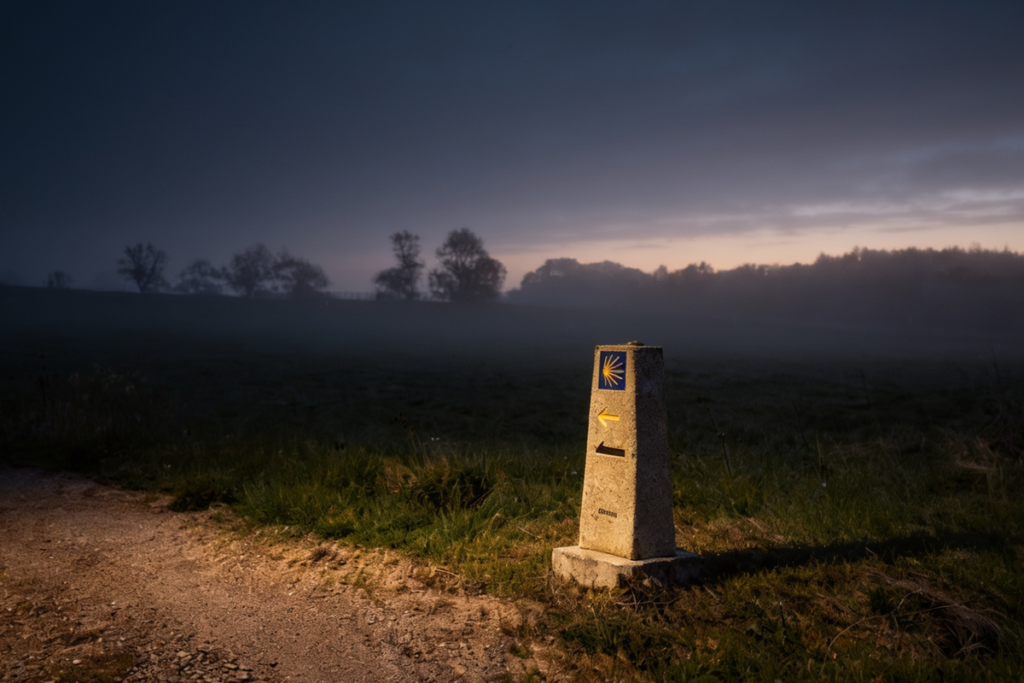
You set off at 6:00 AM in the Galician dawn, leaving the first eight kilometers behind you to arrive in Santa Mariña, where Casa Pepa, opening at eight, arrives as literal salvation with its breakfast. The tostada con mantequilla y mermelada is the absolute favorite: they don't toast thin, store-bought sliced bread, but instead put massive, thick slices of proper European bread into the oven, and the generous butter and jam serve as brilliant fuel for the empty kilometers ahead.
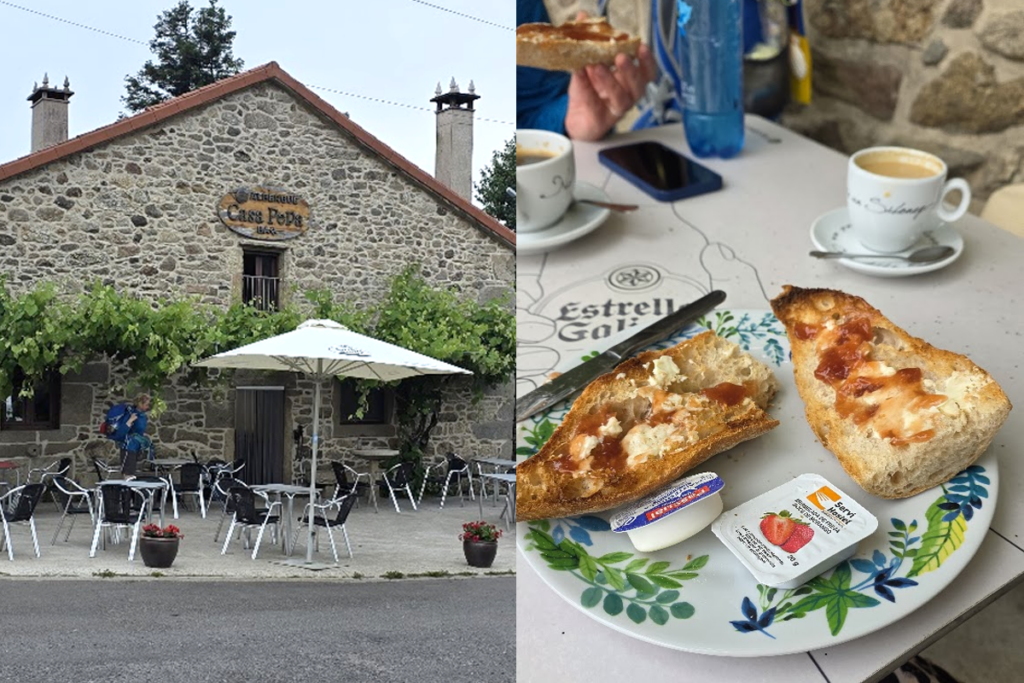
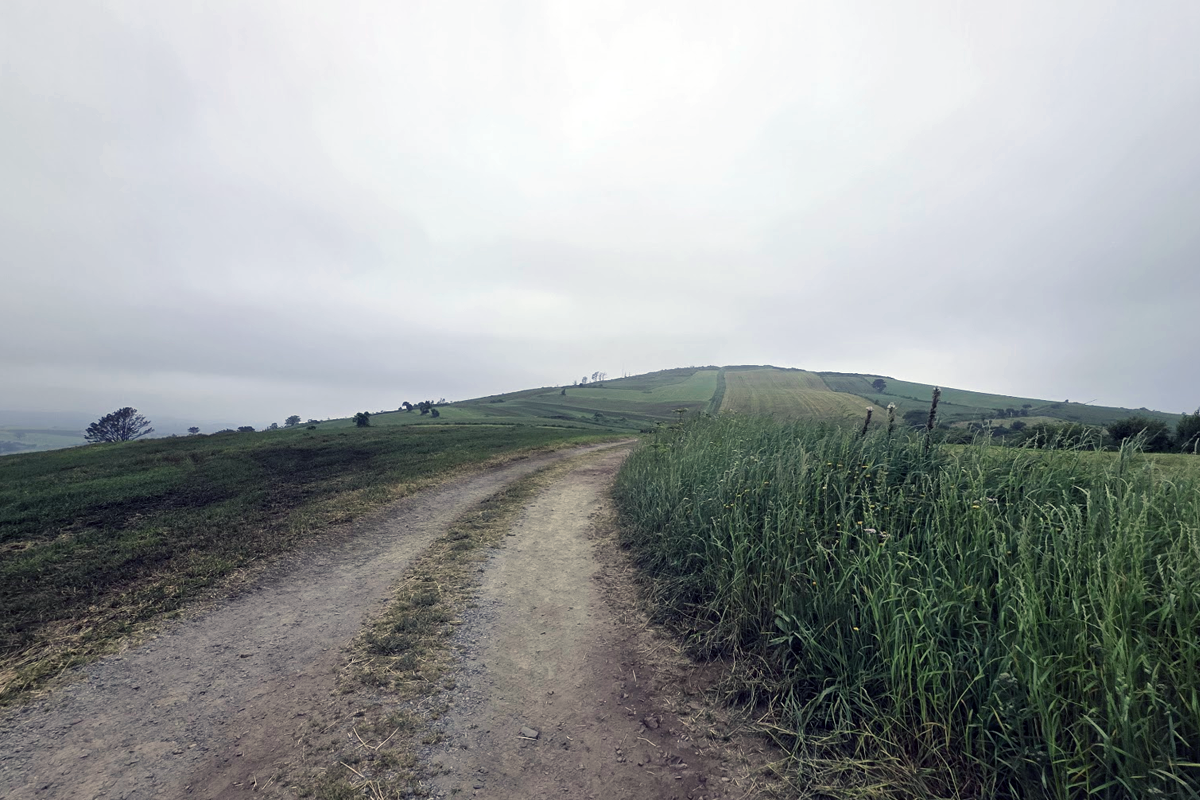
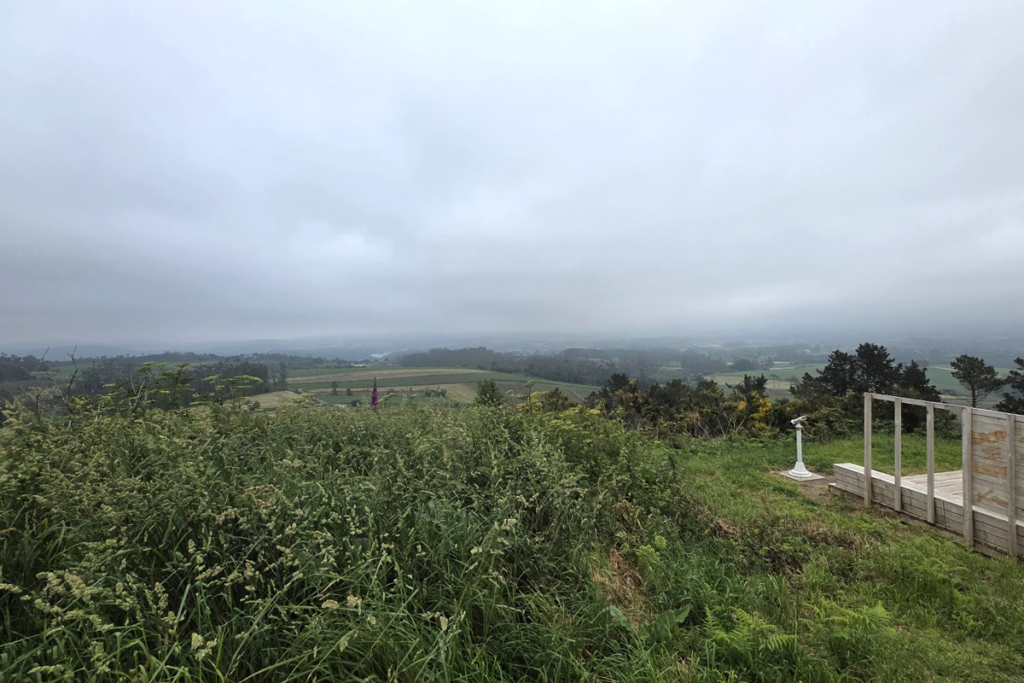
The first third of the day shows the Galician countryside at its finest, with vast green cornfields and gravel agricultural roads alternating with one another. The peaceful walk comes to a sudden end after A Gueima, giving way to a serious, sweaty climb. Reaching the 483-meter-high lookout point of Monte Aro, the panoramic view makes up for the effort. From here, a gentler descent brings you to the village of Lago, where the Albergue Monte Aro, complete with its charming terrace, serves as the perfect spot for a rest and a good lunch.
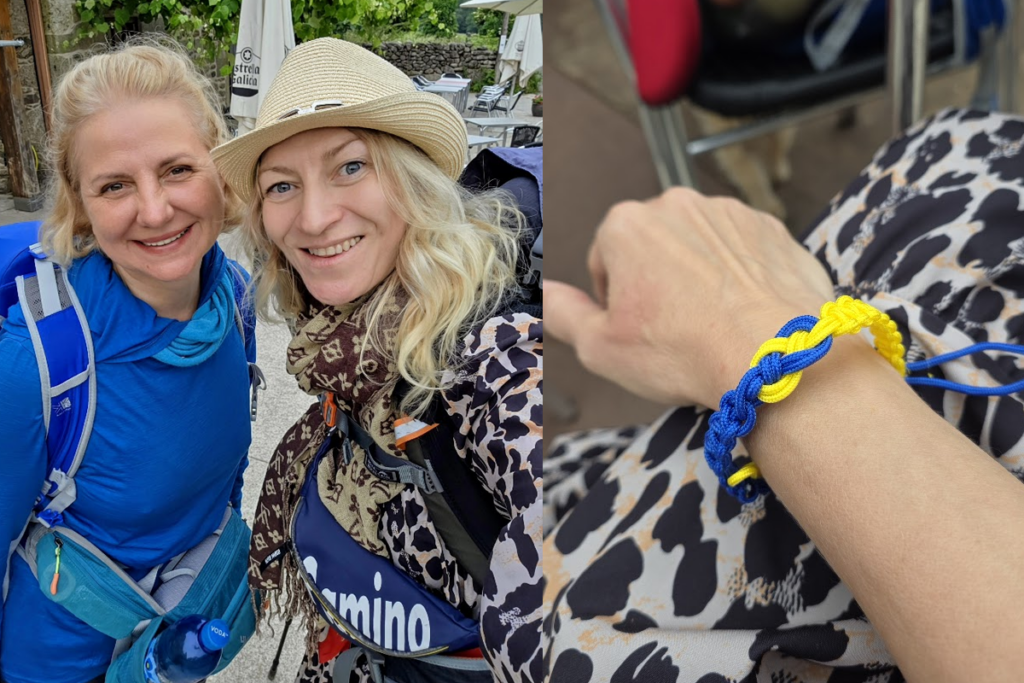
Setting off in the morning, I met Natalia, a pilgrim from Kyiv, who is received everywhere along the trail with immense respect and warmth. With the Ukrainian flag pinned to her backpack, she also draws attention to the horrors of the war, and listening to her dramatic stories, we connected quickly—after all, we are neighbors, Hungarian and Ukrainian. Natalia is already walking her third Camino, as she would be unable to process the family losses caused by the war any other way. The war is terrible and unacceptable, and after our candid conversation, the bond between us grew even stronger: from here on, we walked together toward the ocean.
Most pilgrims stop in Olveiroa, but you’ll keep going, because the absolute highlight of the day is the stretch beyond Olveiroa. The view of the Xallas River winding through the valley from above is a breathtaking experience. After less than four kilometers, you’ll arrive in the quiet village of Logoso, which consists of just a few houses.
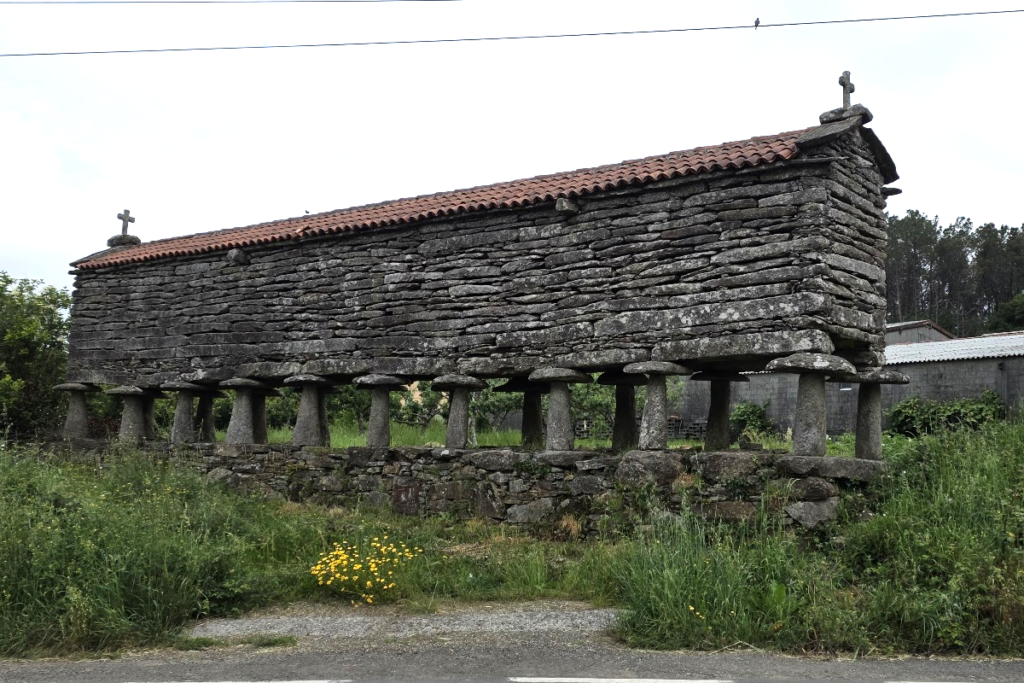
FYI: The world’s longest hórreo is located in Galicia—the hórreo de Carnota—which is an astonishing 34.76 meters long.
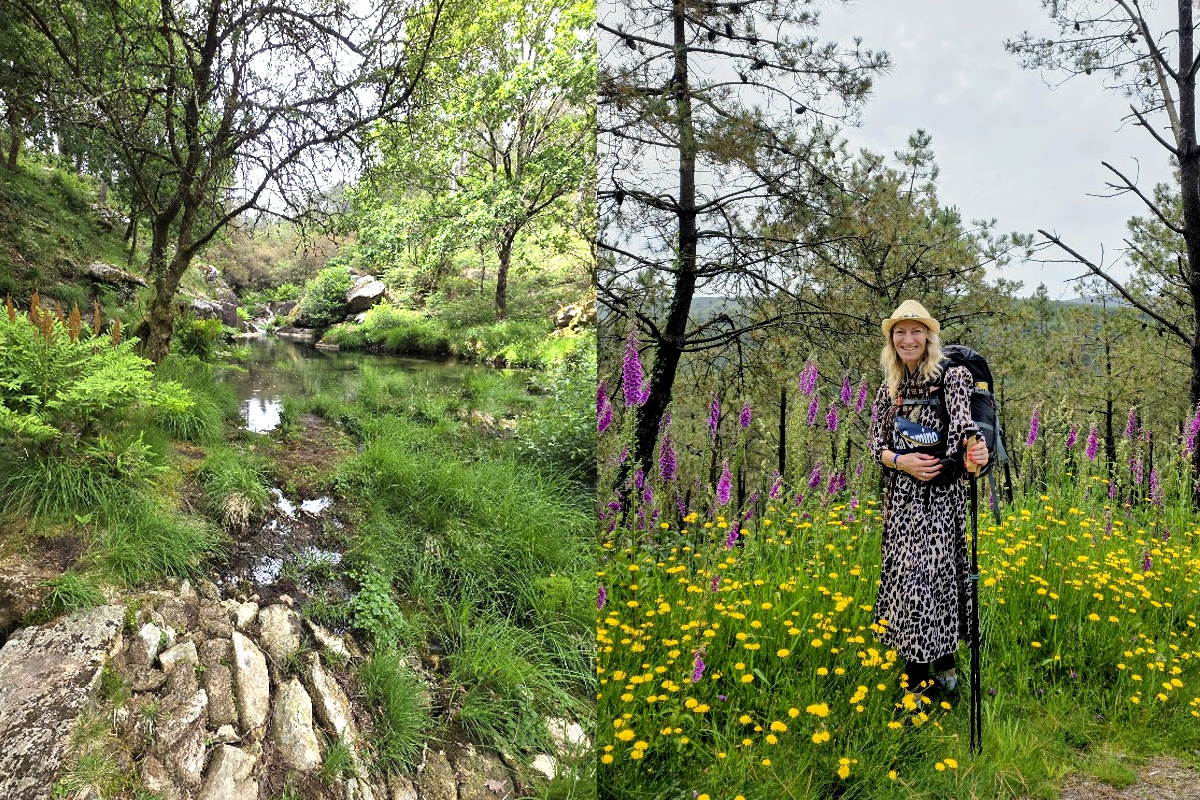
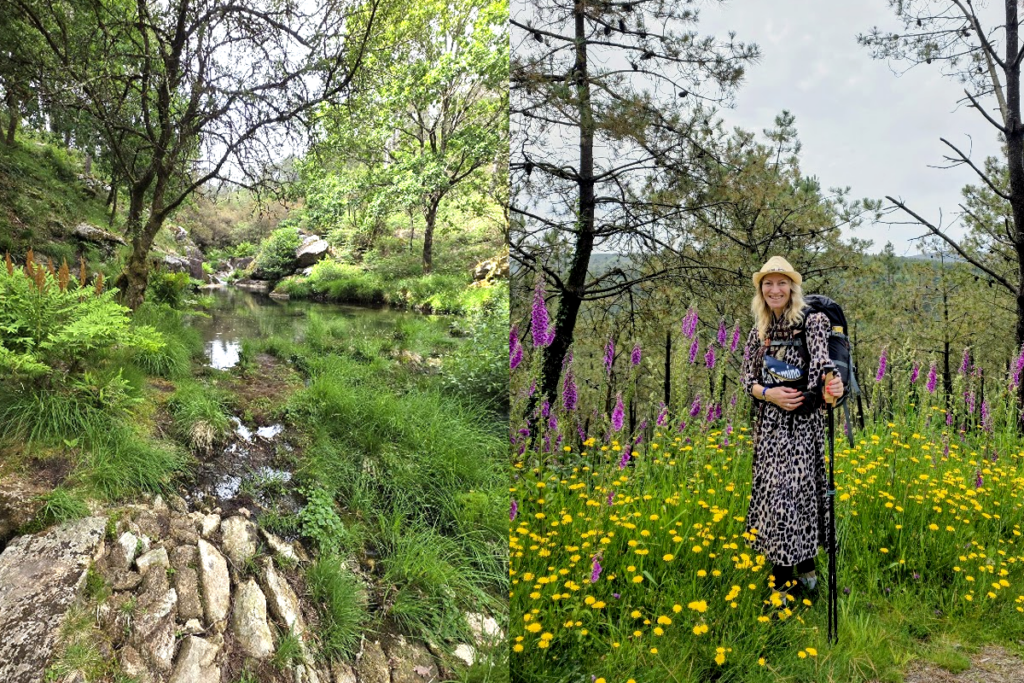
In Logoso, you can choose between two accommodations in total, with Albergue Logoso and its attached restaurant being absolute highlights. The service is fantastic, and the kitchen offers hearty, filling pilgrim menus. At the albergue, modern bunk beds with privacy curtains ensure maximum personal space for resting. In the afternoon, it's worth taking a short 600-meter stroll toward the Hospital River. The natural stream bank, filled with ice-cold water and tiny waterfalls, makes for a brilliant photo spot, while the clear pools provide the perfect setting for recovery and relaxation.
Route: O Logoso – Hospital – As Neves – San Pedro Mártir – Cruceiro da Armada – Cee – Corcubión – Vilar – Sardiñeiro – Calcoba – Fisterra – Faro de Fisterra
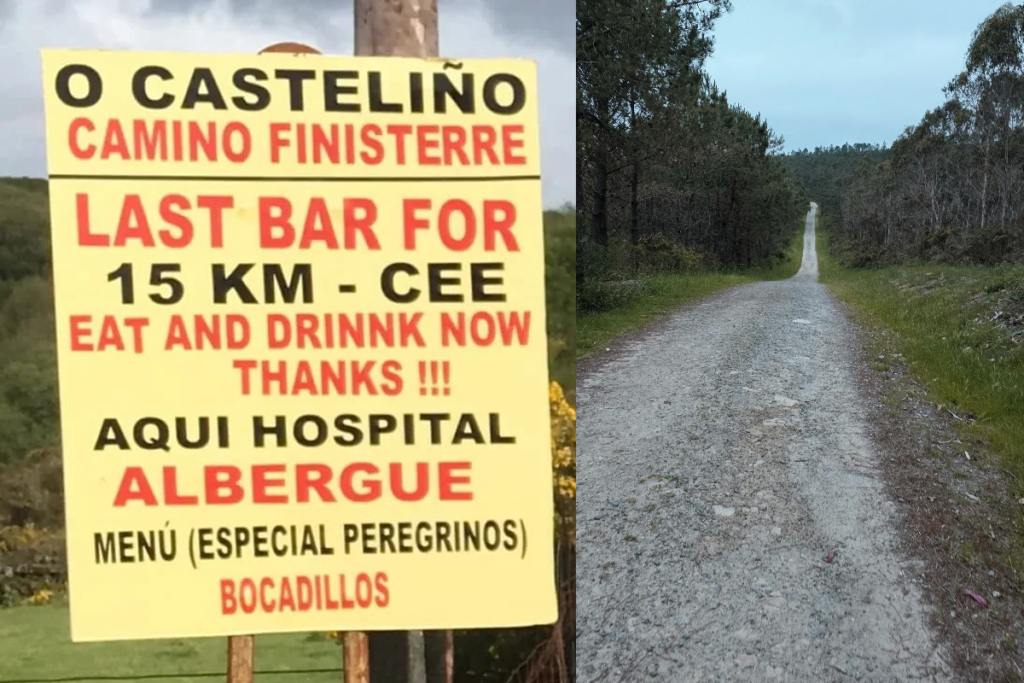
The final act of the pilgrimage begins with a serious tactical decision that you must make at the large roundabout just past the village, where the yellow arrows split in two. You can choose to head straight for the end of the world in Finisterre, or make a detour to the sanctuary of Santuario da Virxe da Barca in Muxía. If you follow the classic route leading straight toward the town of Cee, your last outpost of civilization will be the village of Hospital. A massive sign warns that after the cafe here, there will be no restaurants or shops for the next few hours until Cee. Hospital, by the way, gets its name from the medieval pilgrim hospital that once operated here, and the nearby stream bank with its old flagstone watermill and tiny waterfalls is a true hidden gem.
Your daily rhythm is dictated by your body clock and your stomach. If you decide on a later departure and enjoy a comfortable breakfast in Logoso, you must factor in tackling the ascents of the open stretches on a full stomach under a high, scorching sun. However, if you opt for an early, pre-dawn start, you will be treated to a completely different, intense experience.
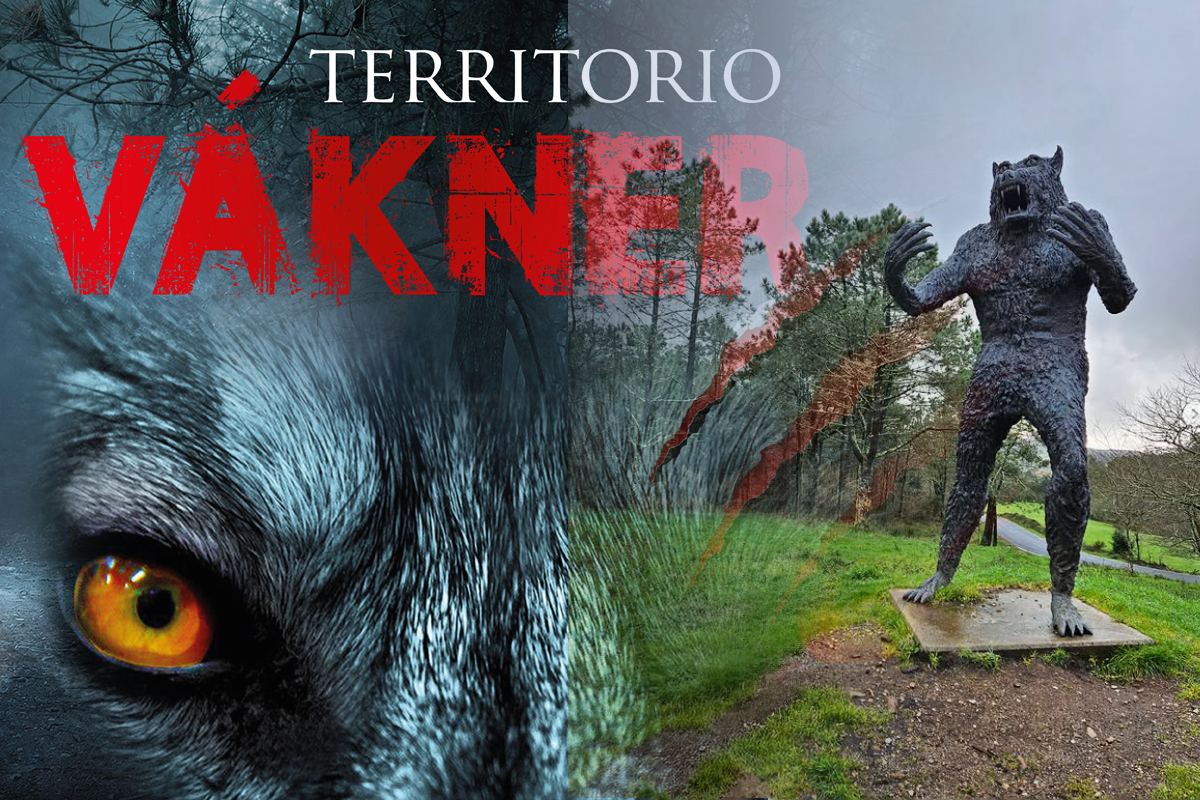
For three hours, you walk alongside the dark, mystical forest, where only the beam of your headlamp shows the way. In these early morning hours, the forest reveals a genuinely eerie side, especially as you walk past Vákner. Emerging suddenly from the cover of the trees, the nearly five-meter-tall bronze sculpture is the work of Cándido Pazos and stands as Spain's very first werewolf statue. In the dense Galician forests, this fearsome beast was spotted in packs during the late 1400s, and passing by the statue in the dark, your pace involuntarily quickens as you hope the old legends don't come true. Brrrr.
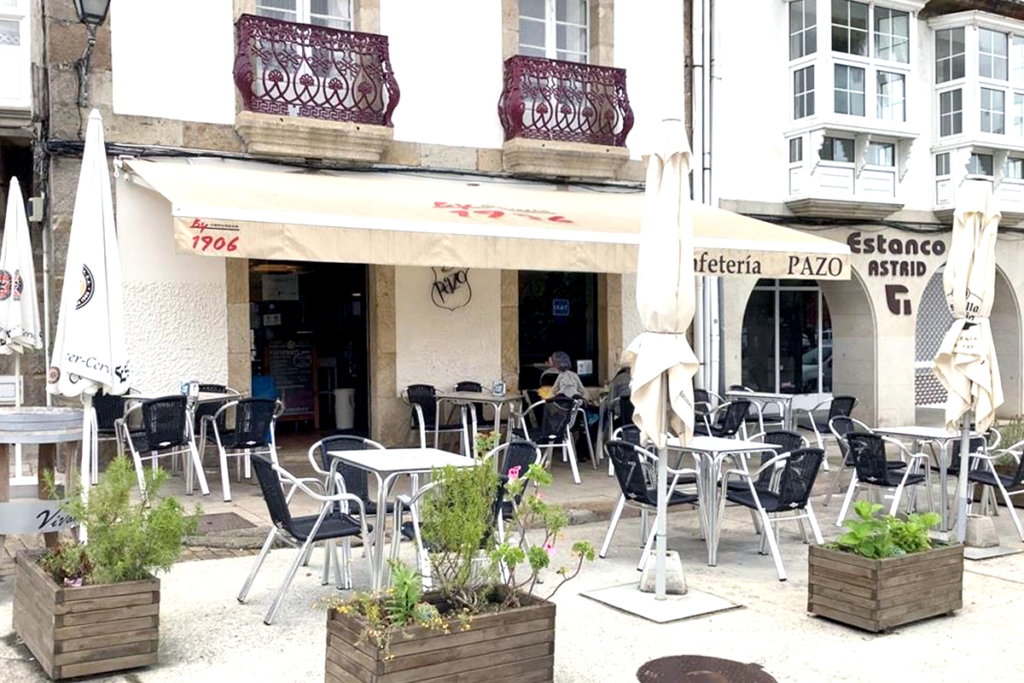
Salvation for the early morning march comes in the town of Corcubión. Galicia is not famous for early risers, with almost nothing open before nine o'clock, so by the time you descend from the mountains to the coast, the open doors of cafeteria Pazo and the heavenly breakfast served in the morning sunshine mean true survival.
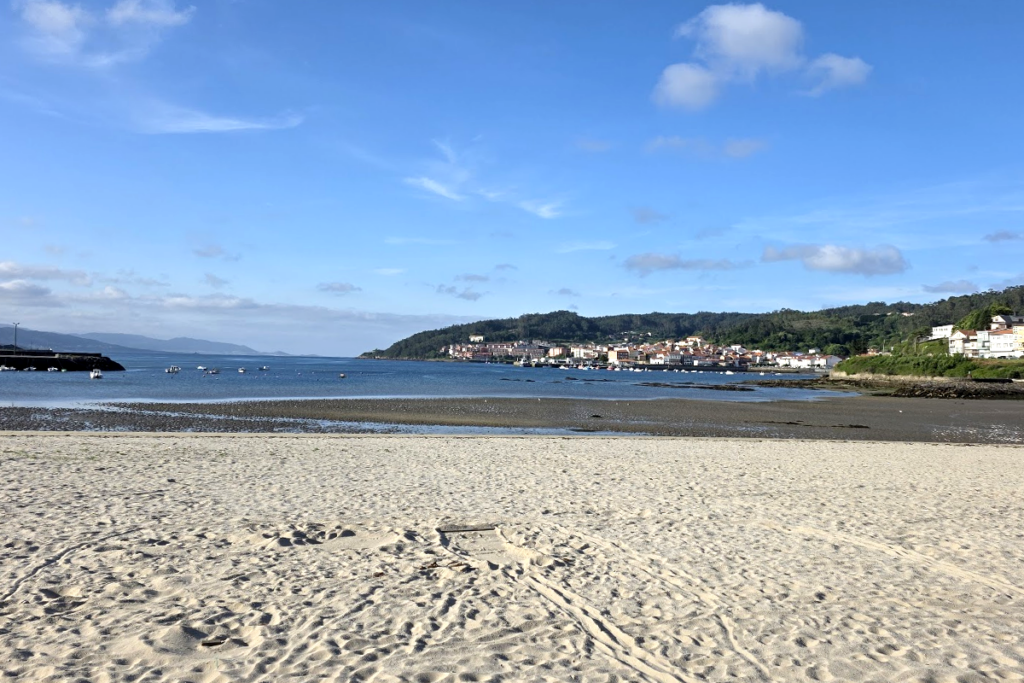
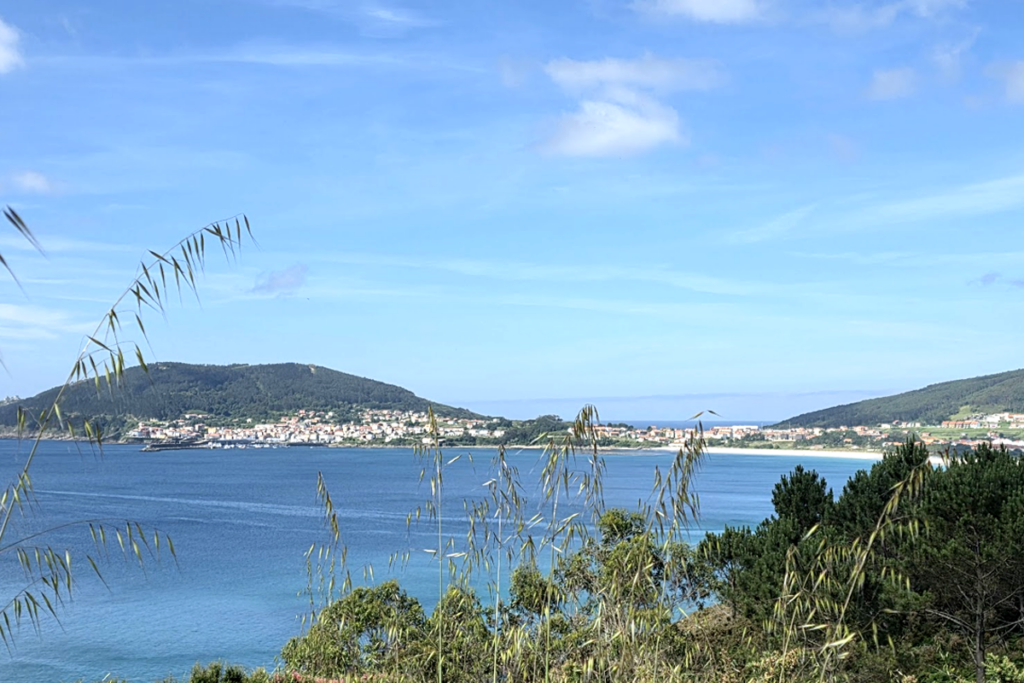
A nap legszebb pillanata, amikor a Cruceiro da Armada kőkeresztjét elérve, a magasból végre megpillantod az Atlanti-óceán végtelen, kék csíkját. Innen az ösvény már a drámai szépségű Halálpart (Costa da Morte) mentén kanyarog. Cee és Corcubión hangulatos utcái után a Langosteira strand puha homokján sétálva érkezel meg Fisterra halászvárosába. Az út azonban nem itt ér véget. Egy utolsó, bő 3 kilométeres aszfaltos gyaloglással fel kell kapaszkodnod a sziklaszirten álló Finisterre-fok világítótornyához (Faro de Fisterra). Itt, a legendás 0,0-s kilométerkőnél, az egykori pogány napoltár, az Ara Solis helyszínén zárul be a kör.
A zarándokok órákig ülnek a köveken a naplementét nézve, miközben egy ősi, pogány kelta és római rituálét ismételnek meg, gyakran teljesen öntudatlanul. Ezen a sziklán állt egykor az Ara Solis, azaz a Napoltár. Sol, a napisten tisztelete a birodalmi Róma legfontosabb kultusza volt, ám amikor Konstantin császár a kereszténységet tette meg hivatalos vallássá, a pogány hagyományokat fokozatosan felváltották az új szimbólumok.
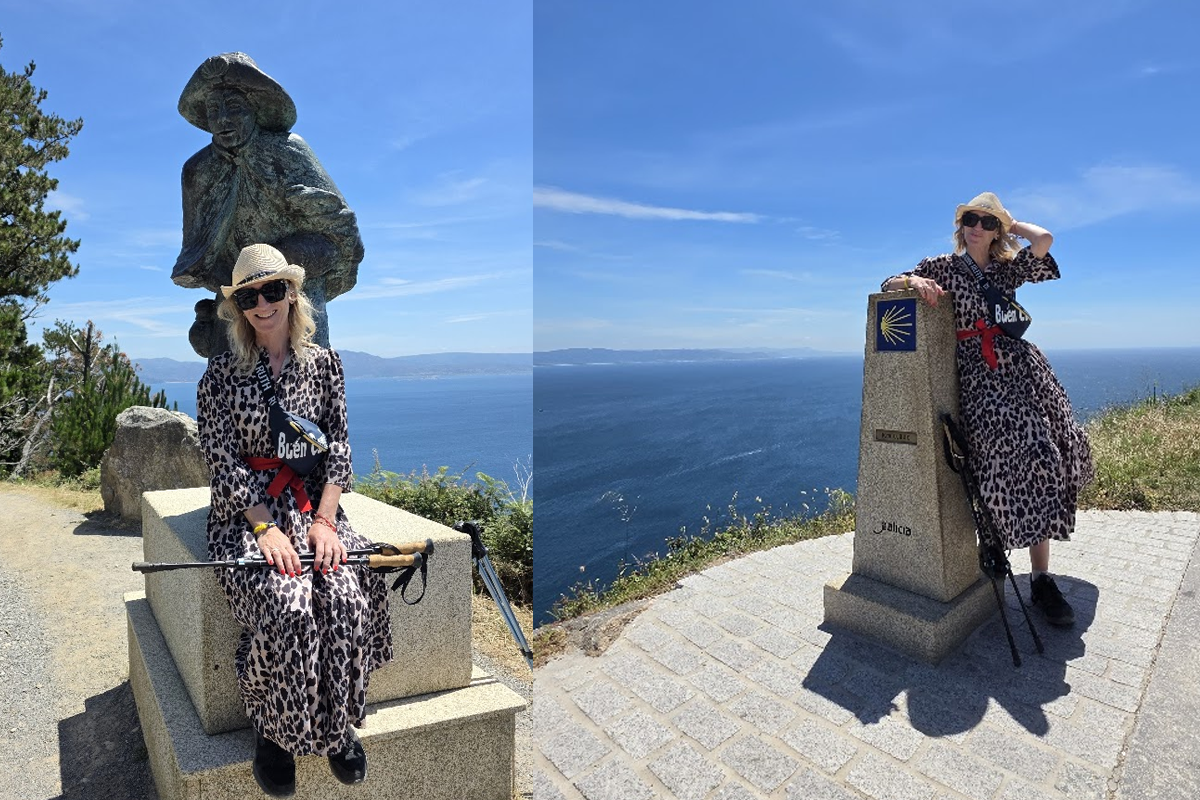
Although the ancient altar is long gone, the location's spiritual power and the ritual of letting go remain vibrant. Just as in ancient times, pilgrims to this day leave behind their boots or a personal item here as a way of closing the past, much like the Celts burned their clothes to mark the start of a new life. This gesture is also deeply rooted in Judeo-Christian culture: when Moses stood on Mount Sinai to receive the Ten Commandments, God's first command was to remove his sandals, as the ground he was standing on was holy. The worn-out pilgrim shoes shed upon the rocks of Fisterra thus remain, to this day, an absolute symbol of arrival and reverence for sacred ground.
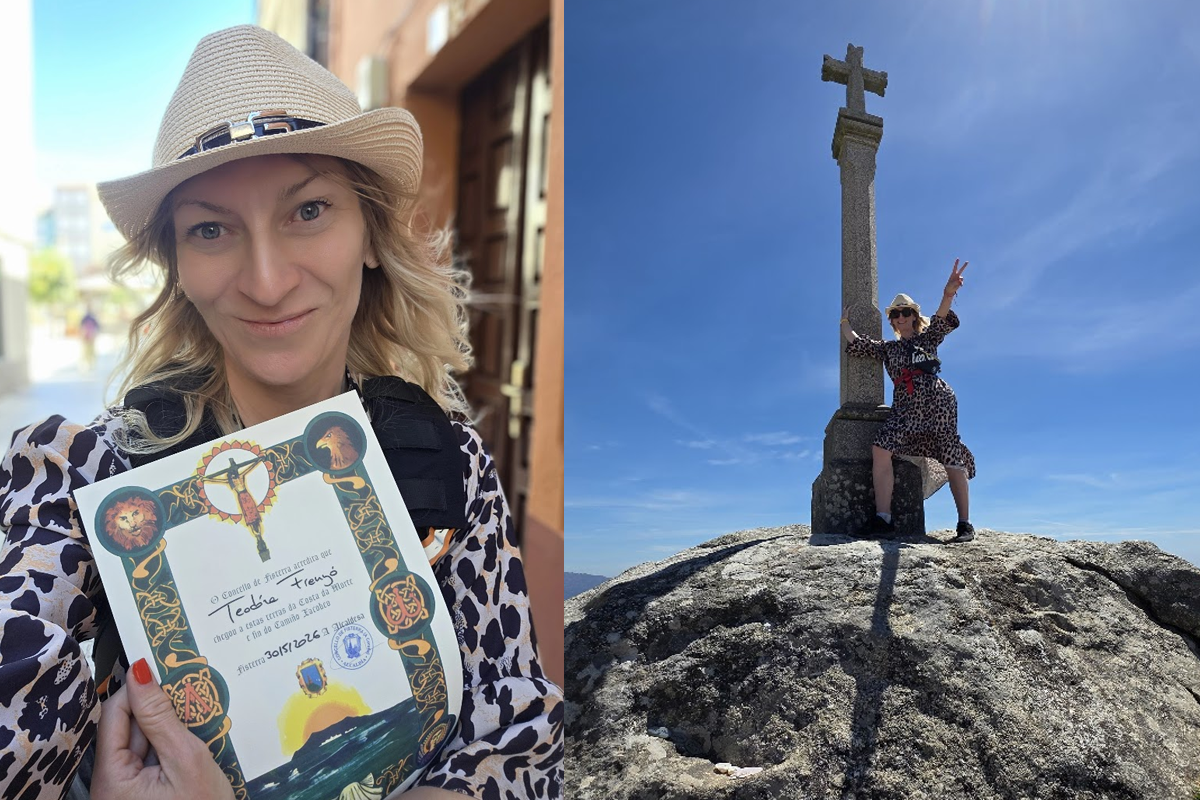
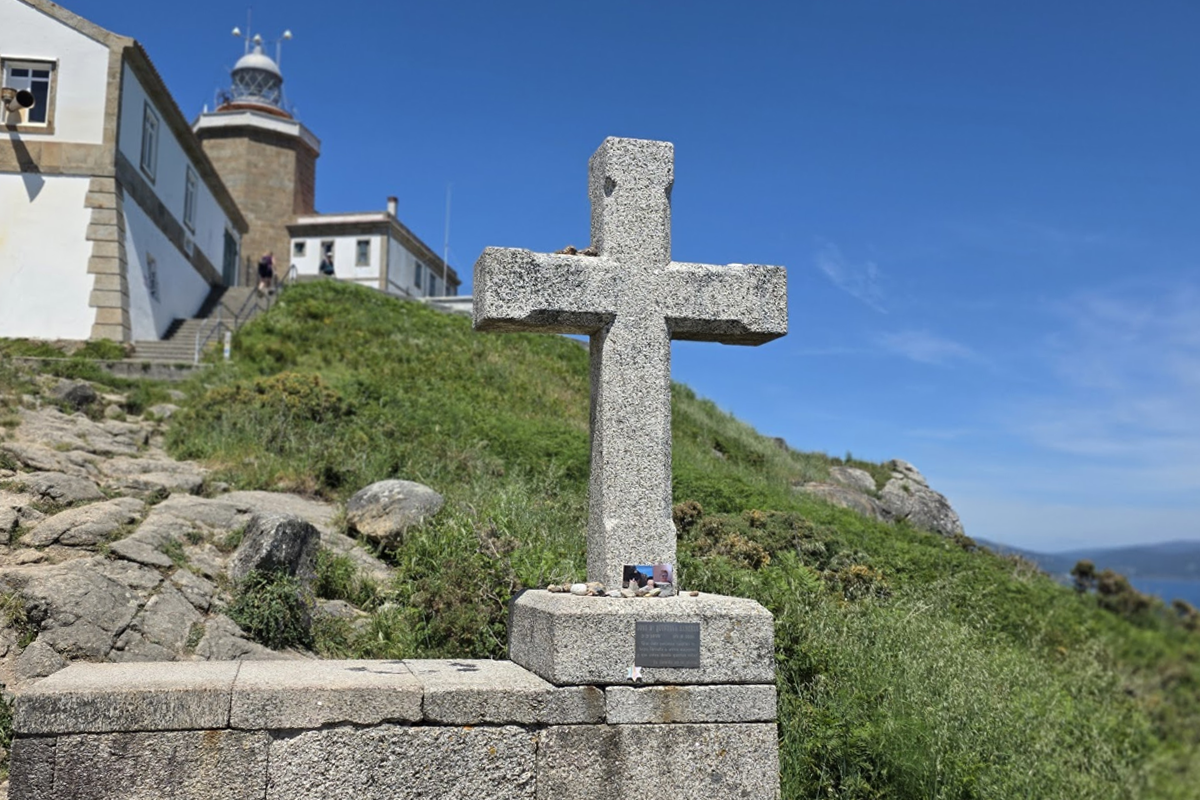
Útvonal: Fisterra – San Martiño de Duio – O Rostro – Lires – Morquintián – Facho de Lourido – Praia de Lourido – Muxía
Bár Fisterra és Muxía között busszal is átjuthatsz, a két végpontot gyalog összekötő út egészen más jelentéssel bír. Sok zarándok szerint a Camino igazi lezárása itt történik meg, a vad és titokzatos Costa da Morte vidékén. Ez a szakasz egyfajta átmenet a befejezés és az új kezdet között. Santiago az érkezés helye, Fisterra és Muxía pedig lehetőséget ad arra, hogy a megtett út élménye leülepedjen benned.
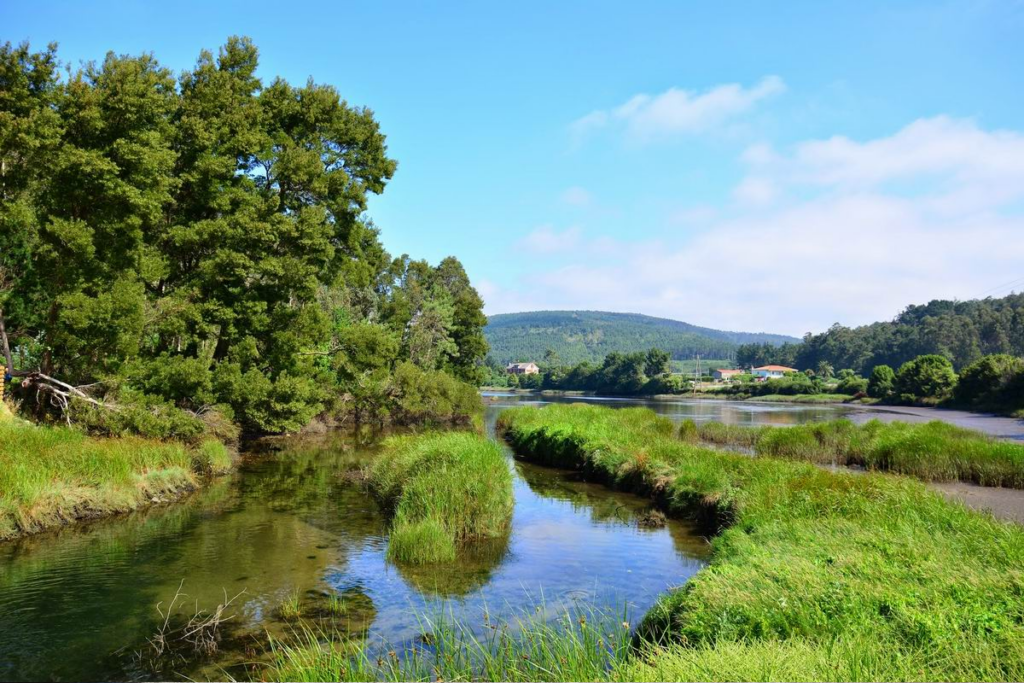
In the first few kilometers, you might expect to walk right along the ocean shoreline the entire time. Contrary to expectations, the route does not follow the ocean coast all the way, but leads mostly through the inland countryside, passing quiet, dense forests and secluded Galician villages. The natural midpoint of the distance is Lires. Located roughly halfway, many pilgrims take a longer break or even spend the night here. The village has long been an important stop for pilgrims, offering several albergues, welcoming family bars, and restaurants. If you prefer to cover this section at a more comfortable pace, Lires is an ideal spot to split the walk into two days. A peaceful evening in the village often offers far more than pushing through a few extra kilometers.
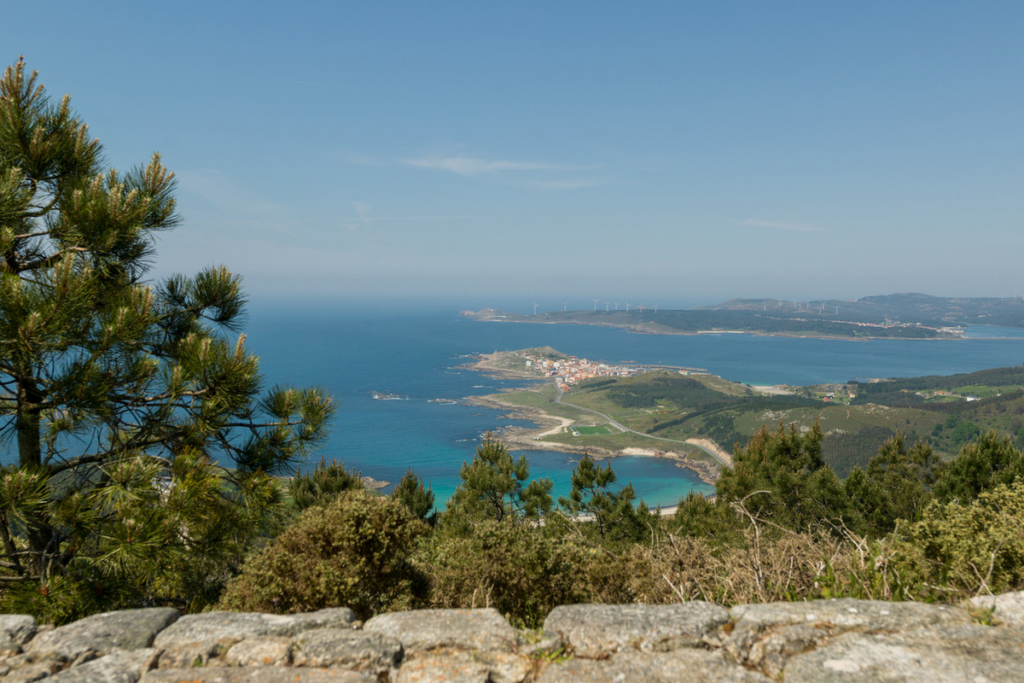
After Lires, the path continues to roll through the Galician hills. Around Morquintián, the simple beauty of the landscape takes center stage: stone houses, carefully tended gardens, moss-covered walls, and paths used for centuries accompany your steps. Here, you may easily find yourself walking alone for long stretches, with only the sounds of nature filling the silence.
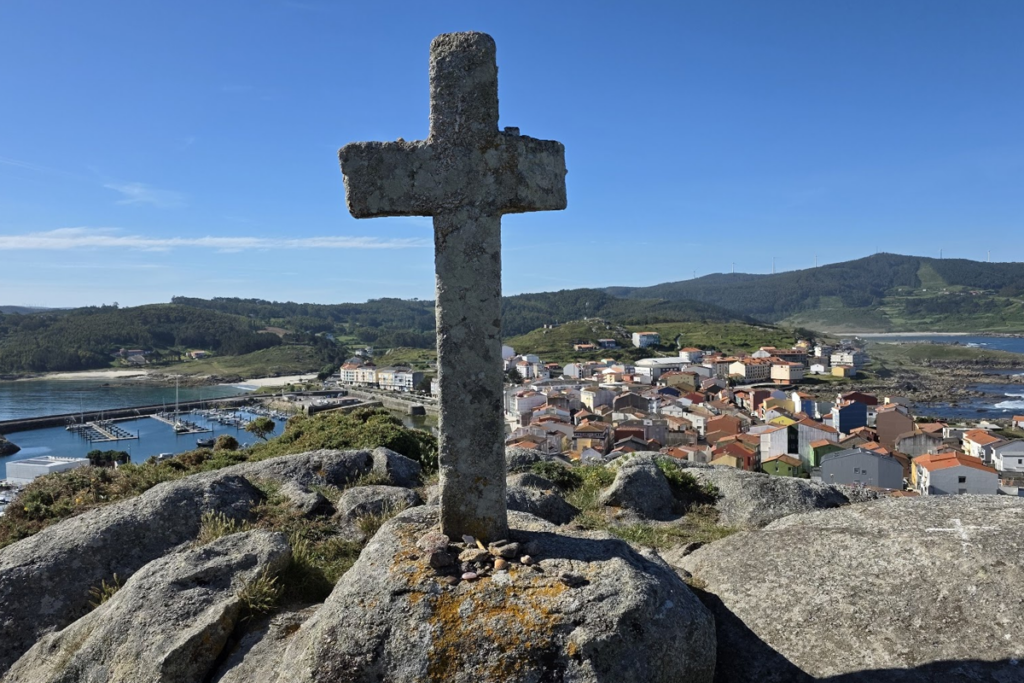
Reaching the outskirts of Muxía, the landscape takes a dramatic turn as you catch sight of the spectacular, wild shoreline of Praia de Lourido. Towering above the wave-swept sandy beach, rarely visited by tourists, stands the luxurious Parador Costa da Morte hotel, from where the path leads straight into the heart of the quiet fishing village.
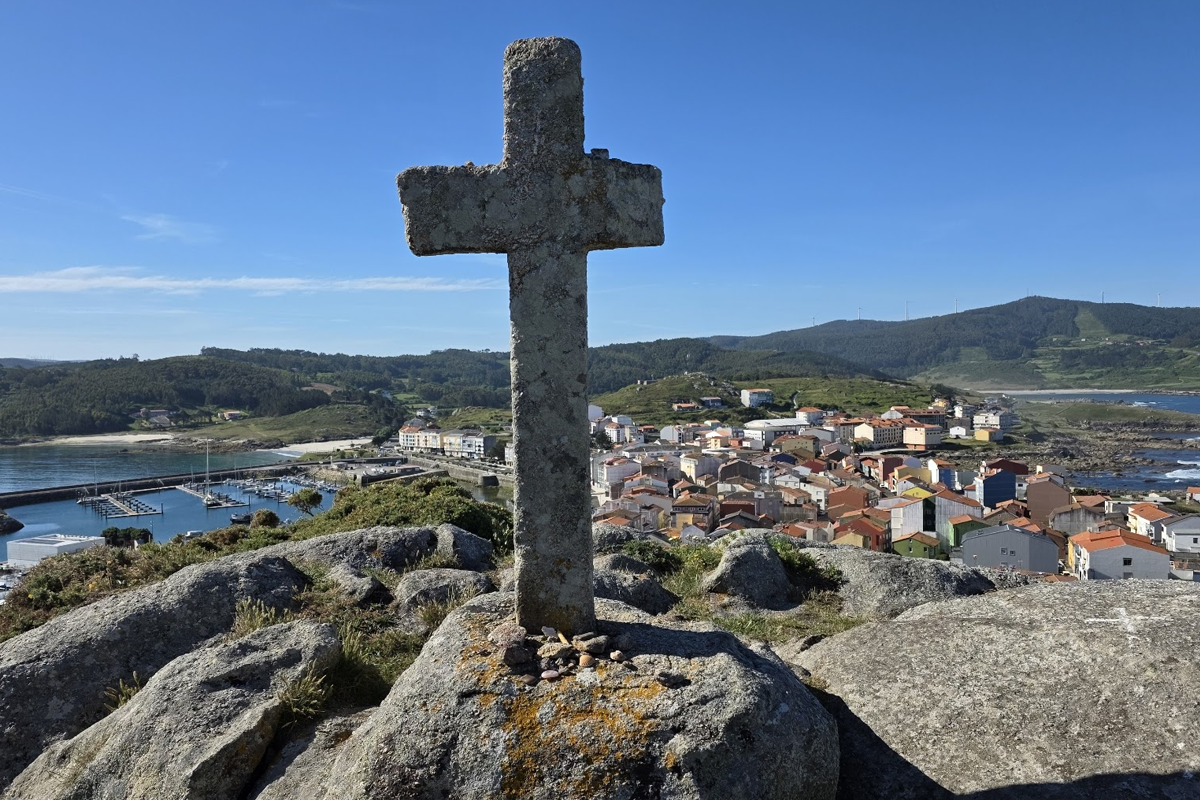
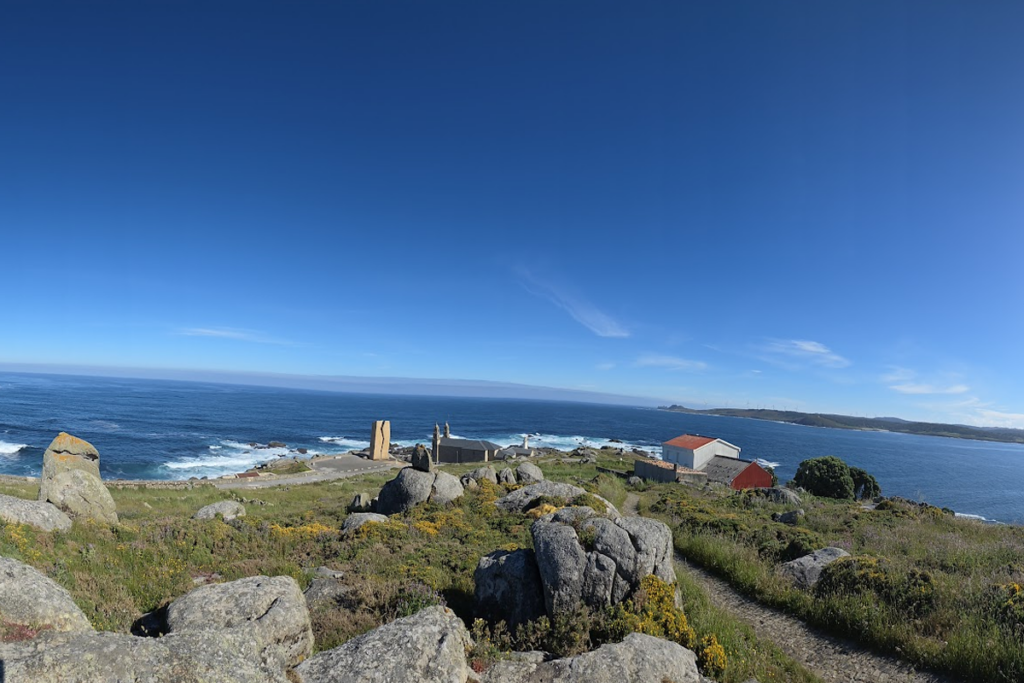
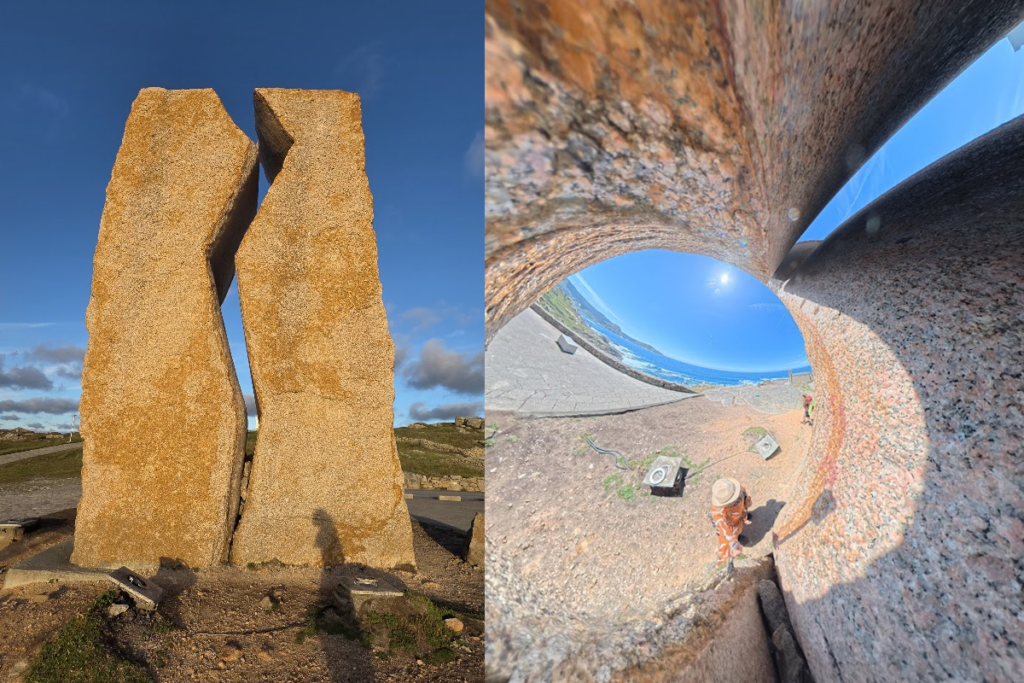
The official pilgrimage route comes to an end at the coastal rocks, beside the 0.0 kilometer stone located next to the monumental A Ferida monument, which symbolizes a lightning strike.
Carved from a single vertical block split down the middle, the crevice-like form of A Ferida symbolizes an open wound, created in memory of the 2002 Prestige oil tanker disaster.
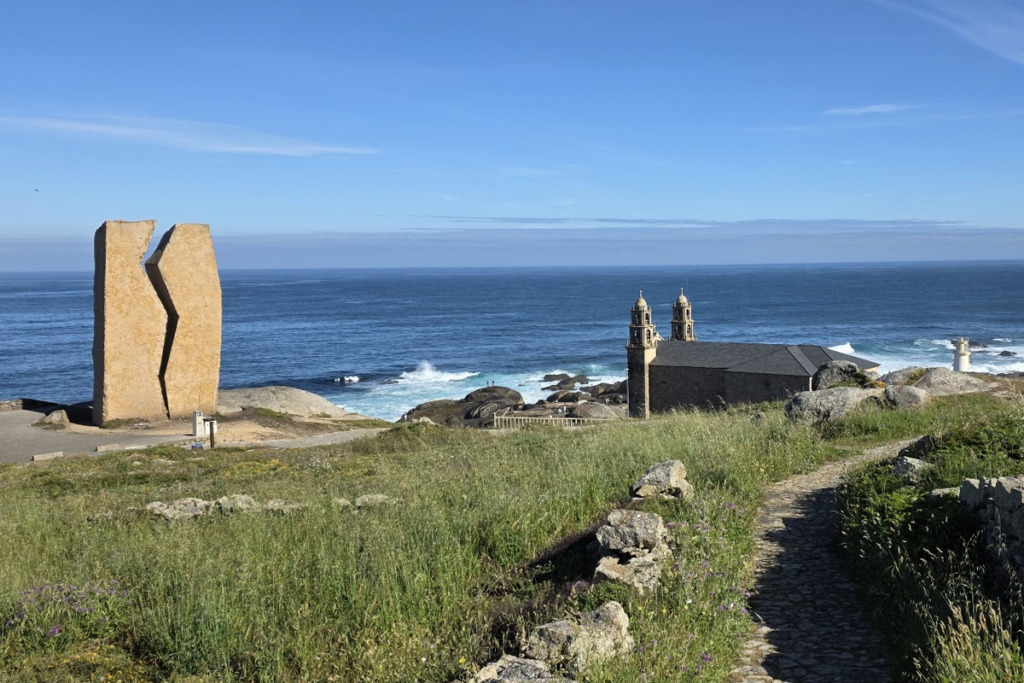
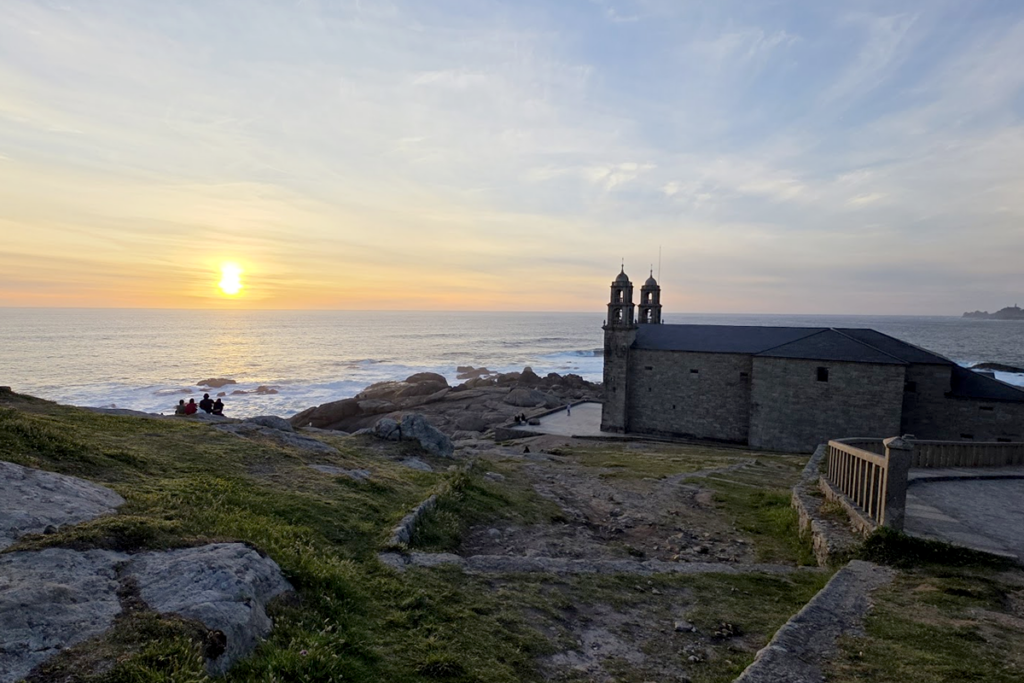
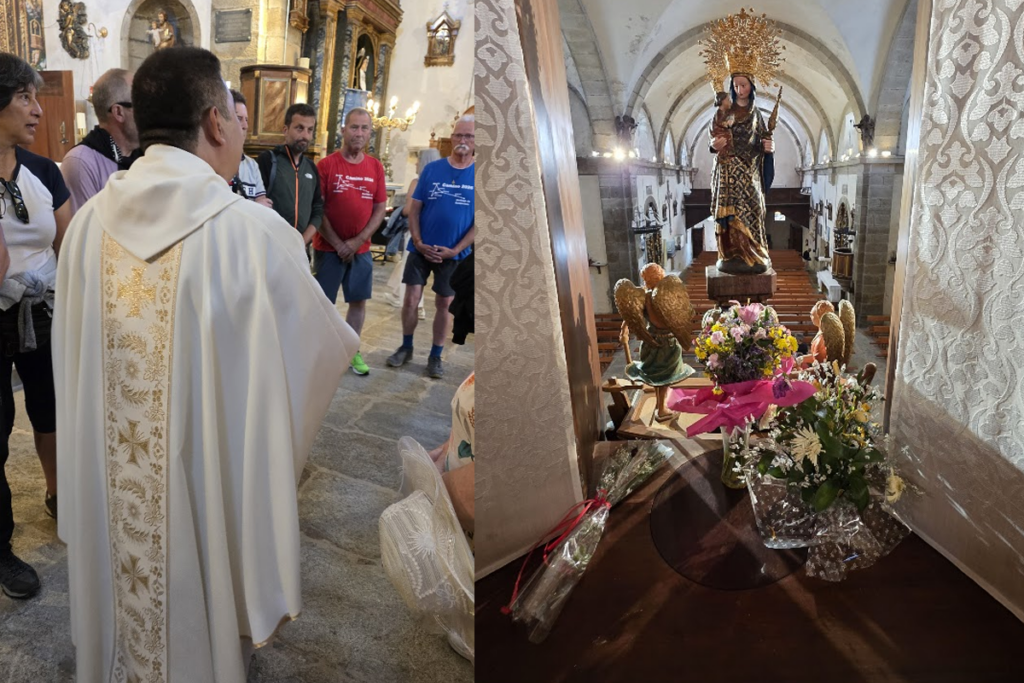
Muxía is pure wonder; the sunset here possesses such elemental power that it burns into your retina forever. At the edge of the village, perched on rocks battered by the waves, stands the Santuario da Virxe da Barca sanctuary, tied to one of the most beautiful legends of the Camino. According to the story, the apostle Saint James sat here exhausted and disheartened on the pagan shores, feeling he had failed in his mission to convert the region. It was then that a stone boat carrying the Virgin Mary appeared on the sea to encourage and bless the apostle, and the remains of that vessel still lie before the church today as massive, flat rocks. The experience is made whole by the local priest, who personally blesses pilgrims arriving from all corners of the world during a moving evening service.
After the spiritual journey, the journey home is all about the practical side. Several direct buses depart daily from Muxía to Santiago de Compostela, allowing you to tailor your return trip to your own pace. The earliest services usually leave early in the morning, with additional afternoon and evening connections available. The travel time ranges between 1 hour 45 minutes and 2 hours, so you can comfortably return to Santiago de Compostela even after a relaxed breakfast.
It is worth buying your ticket in advance for the Monbus service for €6.85, as the bus fills up quickly and you could easily miss out.
The most common departures:
06:15 → 08:00 (approx. 1h 45m, direct)
15:15 → 17:00 (approx. 1h 45m, direct)
17:00 → 19:48 (approx. 2h 45m, direct or with multiple stops)
Muxía: usually Rúa Mariña / Porto Santiago: Estación de Autobuses (bus station)
Top Attractions/Essential Gear
Don't miss it
- Santiago de Compostela
- St. James Cathedral (Catedral de Santiago)
- Plaza del Obradoiro
- Day 2: Santiago – Negreira (A Pena)
- Ponte Maceira
- Day 2: Negreira (A Pena) – Logoso
- Monte Aro
- Hospital River (Pozasi and its waterfalls)
- Day 3: Logoso – Finisterre
- Capilla de San Pedro Mártir
- Cruceiro da Armada
- Corcubión óvárosa
- Playa de Langosteira
- Faro de Fisterra
- +1 Day: Finisterre – Muxía
- San Martiño de Duio templom
- Playa de O Rostro
- Iglesia de San Estevo de Lires
- The Ferida Memorial
- Santuario da Virxe da Barca
What should you bring with you
- 1-1,5 l water
- Naptej, Kalap
- Hiking shoes
- Elsősegély, gyógyszerek
- Kitartás
Good to know
General
All of the natural wonders, beaches, stone crosses, and churches along the pilgrimage route can be visited completely free of charge, so you won’t have to pay any mandatory admission fees or purchase any tickets along the entire route.
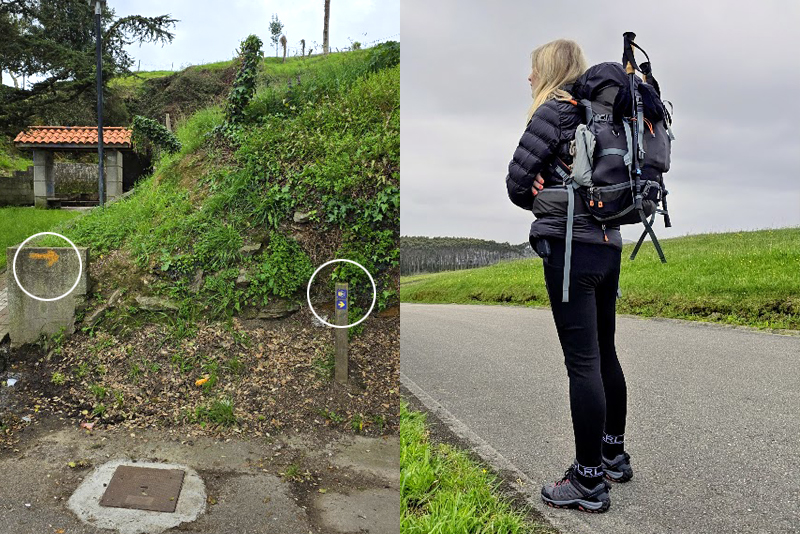
Watch for the yellow arrows: Especially at city limits and major intersections, such as the roundabout in Hospital on the first day
Personal Safety and Handling of Valuables
Although the sections of the Camino leading to Finisterre and Muxía are particularly peaceful, not all albergues here have lockers. Always keep your most valuable items—passport, pilgrim’s passport (Credential), credit card, and phone—in a small belt pouch or shoulder bag on your person, and at night, hide them under your pillow or in your sleeping bag. Physical violence is virtually unknown, but phones left unattended on a charger or wallets slipped into hiking boots can attract opportunistic thieves...
Health Precautions
On this section, prepare for authentic Galician weather: due to the proximity of the ocean, sudden humid heat, thick fog, or wind-driven rain are all common. Always carry enough water, as long stretches through the inland wooded areas offer no water points for many kilometers. Given the terrain, blisters, knee strain, and tendonitis pose the greatest risks. Keep basic first-aid supplies on hand, including a needle, disinfectant, blister plasters, and magnesium. The general emergency number in Spain is 112, and patrols from the Guardia Civil along with the Safe Camino app pay dedicated attention to the safety of pilgrims walking toward the ocean.
Albergue Rules and Pilgrim Etiquette
Most accommodations open in the early afternoon, and lights-out is strictly enforced at 22:00. Check-out is generally required by 8:00 AM. If you choose an early departure—to cross through the mystical forests before sunrise—pack your backpack the evening before. It is a strict unwritten rule not to rustle plastic bags in the dormitory at dawn; carry your bag and gear out into the hallway or kitchen to pack up. Avoid switching on the main overhead light, and use a low-intensity headlamp instead. To guard against bedbugs (chinches), never place your backpack directly on the bed or mattress—keep it on the floor or a chair, and spread your sleeping bag or hygienic liner over the mattress immediately.
Way Rules
Since pitch-black conditions and dense Galician fog are almost guaranteed during early morning starts on the sections after Logoso, wearing a reflective element attached to your backpack and keeping a headlamp turned on is mandatory for visibility. Where the trail runs along paved roads—such as between Cee and Corcubión, or along the paved road in Fisterra—always walk on the left side, facing oncoming traffic. If completing the distance by bicycle, pedestrians always have absolute right-of-way on the paths; announce your presence well in advance using a bell or your voice when approaching from behind so as not to startle walkers on narrow forest trails.
Along the Camino Finisterre and Muxía routes, prices at pilgrim hostels vary depending on the operator. The regional (Xunta de Galicia) and municipal albergues are the most budget-friendly; a bed in these typically costs between 10 and 12 € per night. If you stay at the more flexible but modern private albergues, a bunk bed in a shared dormitory costs between 15 and 25 €, while private rooms at the endpoints in Fisterra or Muxía start at 40 €.
A kora reggeli indulás után egy tipikus galíciai báros reggeli – kávé egy szelet spanyol omlettel (tortilla) vagy croissant-nal – 3.50–5.50 €-ba kerül. Napközben és este a legjobb opció a kiadós Menú del Día (napi menü) vagy a Menú del Peregrino (zarándokmenü), amely két fogást, desszertet, kenyeret és bort is tartalmaz, ennek ára ezen a vidéken jelenleg 12–16 €. Ha a fisterrai kikötőben vagy Corcubiónban beülsz a'la carte vacsorázni, hogy megkóstold a híres helyi tengeri herkentyűket, egy tál friss ételért és egy pohár galíciai borért fejenként 18–25 €-val érdemes számolnod.
A bolti bevásárlás és a frissítők árai szintén fontos részét képezik a napi büdzsének. Ha az Eroski, Dia vagy Mercadona üzleteiben magadnak rakod össze a napi hideg élelmet, amely tartalmaz egy bagettet, serrano sonkát, sajtot, paradicsomot és gyümölcsöt, az kényelmesen megáll napi 8–10 €-ból. Egy másfél literes ásványvíz a szupermarketben mindössze 0.60–0.90 €, viszont ugyanezért a bárokban vagy az út menti automatákból, kis üveges kiszerelésben simán elkérnek 2–2.50 €-t is.
- Pizza: A classic takeout or dine-in Margherita pizza costs €5.00 – €7.00 at most places. At historic institutions like Da Michele, the Margherita is a fixed price of €5.00. At trendier, new-wave pizzerias, artisanal versions with custom toppings range from €8.00 – €12.00.
- Pizza: A klasszikus elviteles vagy sima beülős Margherita pizza a legtöbb helyen 5,00 € – 7,00 €. Az olyan történelmi alapintézményekben, mint a Da Michele, a Margherita fixen 5,00 €. A felkapottabb, újhullámos pizzeriákban a kézműves feltétes verziók 8,00 € – 12,00 € között vannak.
- Street food: A portafoglio (a folded-in-half pocket pizza sold on the street) €2.50 – €3.50. Plates of fried seafood served in paper cones (cuoppo) €6.00 – €9.00.
- Transportation: A one-way ticket for the subway or bus costs €1.30 – €1.50. The price of an Alibus ticket to the airport is a flat rate of €5.00.
Santiago de Compostela Albergue Seminario Menor
A Pena San Mamede de Pena
Logoso Albergue O Logoso
Finisterre Albergue y Pension Finistellae