

Camino: León – Santiago de Compostela Guidebook
10 DaysThe Path of Change: 10 Days on the Most Intense Section of the Camino Francés
The roughly 300 kilometers between León and Santiago de Compostela represent the very heart of the Camino de Santiago, a classic route of cultural and spiritual transformation. These ten days set a rhythm of physical exertion and inner discovery, where, along with the dramatic changes in the landscape, your own boundaries are constantly being redefined.
Leaving behind the monumental openness of the Castilian plateau and the historical stone walls of Maragatería, your journey takes you across mystical mountains to arrive in the perpetually green, humid eucalyptus forests of Galicia. Castles of the Knights Templar, medieval bridges, Gothic cathedrals, and traces of Iron Age culture accompany your path. Along this section, solitary contemplation gradually gives way to the pulsating energy of the pilgrim community, bound together by shared stories and the unifying pull toward a common goal.
The trail leads from the yellow dirt tracks after León to the deep Galician sunken paths, the corredoiras, taking you closer to the spiritual fulfillment of the journey with every kilometer logged. After Sarria, the number of pilgrims multiplies, experiences intensify, and the flavors of pulpo and local cheeses bring authentic Galician character to daily life. It presents a tough physical challenge, legendary mountain passes, and a compelling momentum that ultimately brings you before the Santiago Cathedral as a completely transformed person.
Fun Fact
Why is there a censer in the Cathedral of Santiago? (The Mystery of the Botafumeiro)
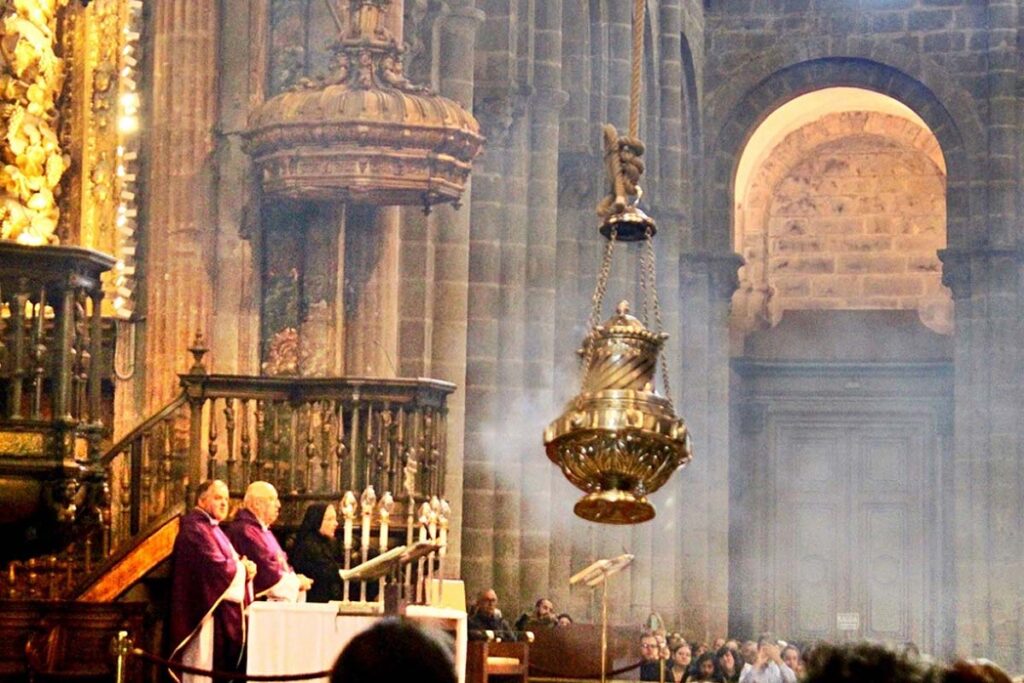
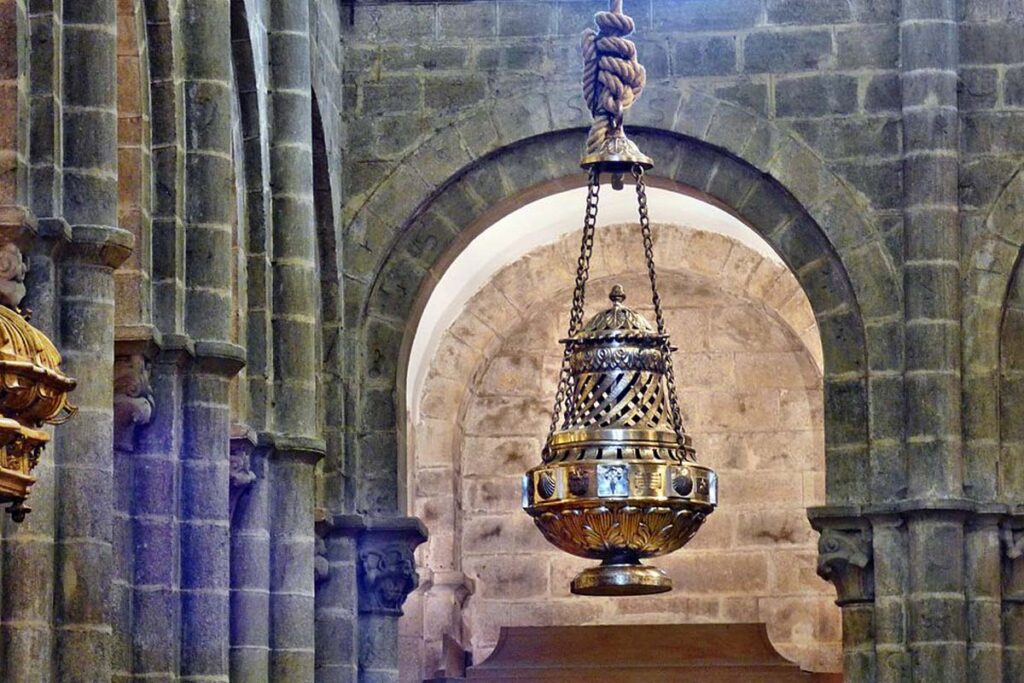
When you reach the very end of the pilgrimage route at the Cathedral of Santiago, you can see a gigantic silver censer hanging from a chain, the Botafumeiro. Today, this is a beautiful, ceremonial ritual, but in the Middle Ages, there was a completely pragmatic, hygienic reason for its installation.
The cathedral has been using a swinging censer since the 11th century. Its size necessitates a rope-and-pulley system, with the current mechanism installed in 1604. Operating the Botafumeiro costs approximately €450, and it is not swung at every Mass. When brought out for special occasions, eight men in red robes, known as tiraboleiros, are required to swing it. At the top of its 68-meter arc between the cathedral's transepts, it can reach heights of up to 20 meters. It reaches its maximum height after about 17 cycles, requiring roughly 80 seconds of swinging.
A katedrális a 11. század óta használ lengő füstölőt. Mérete kötél- és csigarendszer használatát teszi szükségessé, a jelenlegi rendszert 1604-ben telepítették. A Botafumeiro használata körülbelül 450 euróba kerül, és nem minden misén lengetik. Amikor különleges alkalmakra előveszik, nyolc vörös ruhás férfira, úgynevezett tiraboleirosra van szükség a lengetéséhez. A katedrális végei közötti 68 méteres ív tetején akár 20 méter magasra is felemelkedhet. Körülbelül 17 ciklus után érheti el maximális magasságát, ami nagyjából 80 másodpercnyi lengést igényel.
The real fun fact: Throughout history, the massive censer has broken free from its rope several times while swinging at high speeds. In 1499, for example, it snapped in the presence of the famous Catherine of Aragon, flying right through a cathedral window and out onto the square—fortunately without causing any fatalities.
Top Attractions/Essential Gear
Don't miss it
- Santa María de León katedrális (León)
- Palacio Gaudí (Astorga)
- Santa María katedrális (Astorga)
- Castillo de los Templarios (Ponferrada)
- Santa María la Real templom (O Cebreiro)
- San Julián de Samos kolostor (Samos)
- San Nicolás-erődtemplom (Portomarín)
- Szent Jakab katedrális (Santiago de Compostela)
What should you bring with you
- 1-1,5 l water
- Naptej, Kalap
- Hiking shoes
- Elsősegély, gyógyszerek
- Kitartás
Travel Info
-
León
-
6-7 h/nap
-
Albergue, Hostel
-
Szállásokon, kávézókban elérhető
-
Étterem, Kávézók
Time to explore
What you will love.
- Cruz de Ferro: Letenni az otthonról hozott követ a zarándoklat legmagasabb, legszimbolikusabb pontján.
- O Cebreiro panorámája: Felérni a ködös, kelta hangulatú hegyi faluba, és megpillantani a zöldellő Galíciát.
- Ízek az Úton: Megkóstolni az astorgai csokoládét és a tradicionális melidei polipot (Pulpo a la Gallega).
Stages
León – Trobajo del Camino – Virgen del Camino (trail split) – Fresno del Camino – Oncina de la Valdoncina – Chozas de Abajo – Villar de Mazarife – San Justo de los Oteros – Villavante – Puente de Órbigo – Hospital de Órbigo
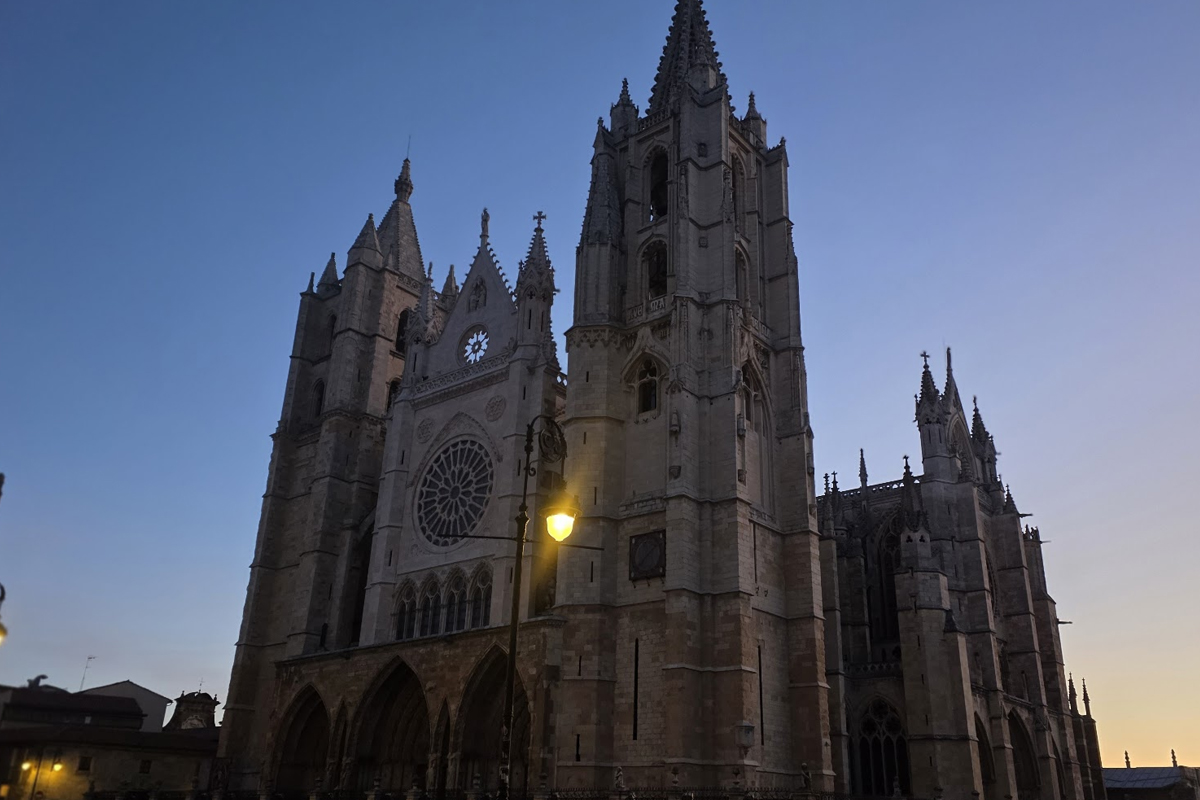
On Easter Sunday morning, León reveals a completely different side than on ordinary weekdays. The sun has barely risen when members of the Jesús Divino Obrero brotherhood begin gathering at their church. There is a flurry of activity as men and women shoulder the monumental thrones—the pasos—carrying heavy, hand-carved wooden statues. Shortly before a quarter to nine, the church doors swing open, and the swaying statues begin their journey through the city, taking two entirely separate routes. One group carries the statue of the Risen Christ, while the other accompanies the Virgin Mary, still shrouded in mourning.
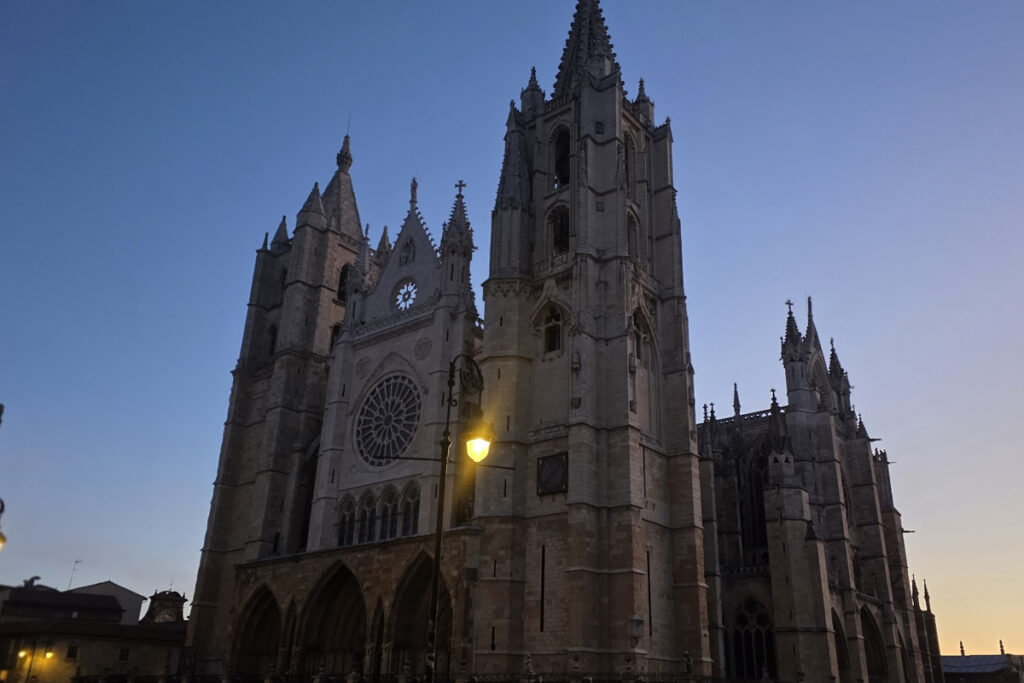
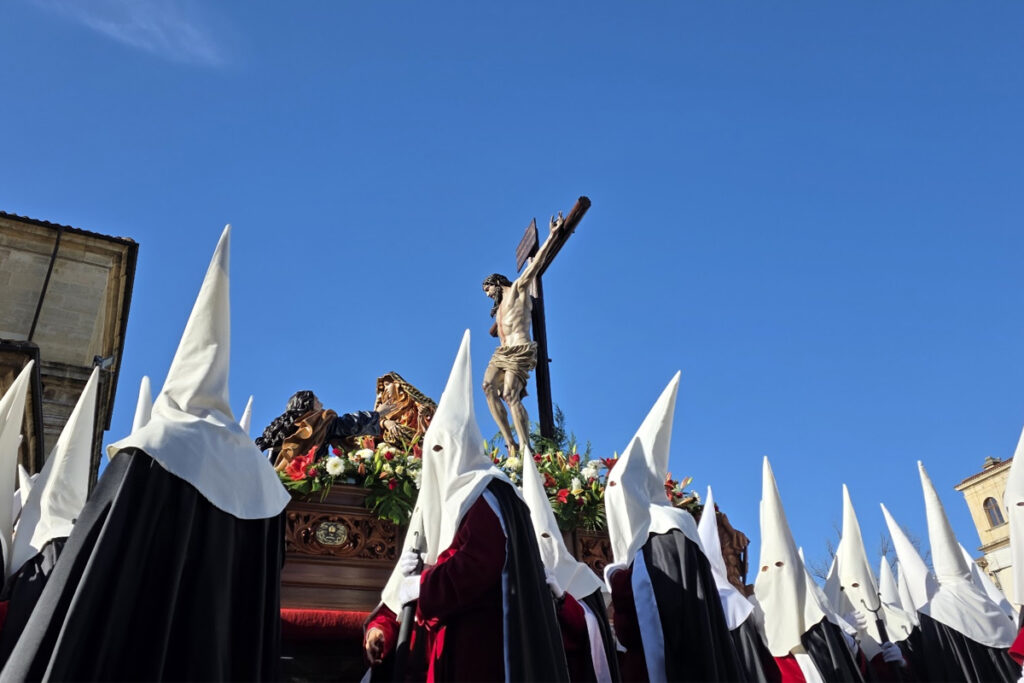
The procession surging through the city streets moves with slow, dignified steps toward the historic center, as solemn melodies from drums and brass dictate the rhythm of the pace. By ten in the morning, both processions converge at the vast square before the León Cathedral, where thousands of pilgrims and locals await them with bated breath. Meanwhile, following the yellow arrows, you set off decisively westward to continue your own journey toward Galicia.
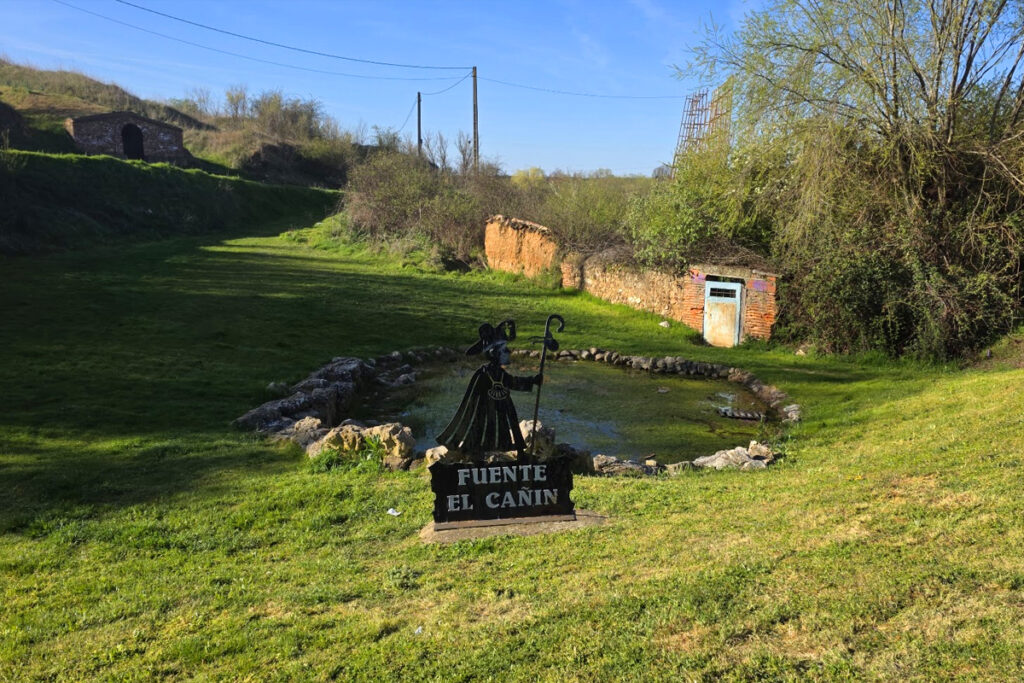
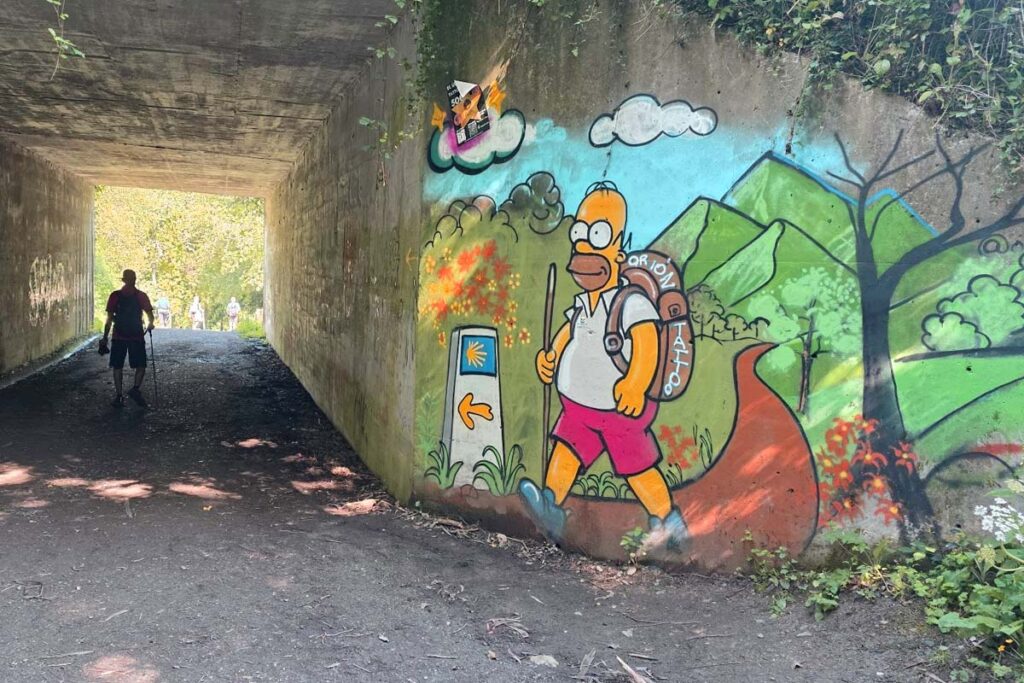
Enduring monotony is the most critical filter of human endurance. The outskirts of León are notoriously frustrating. You walk for hours on narrow sidewalks past warehouses and car dealerships, while the roar of trucks buzzes in your ears. The scheduled Alsa bus departing from León's Santo Domingo Square, from the stop in front of the BBVA branch (Plaza de Santo Domingo - BBVA), is the most practical way to quickly skip the initial industrial zone and the asphalt jungle of Trobajo del Camino. Taking this line brings you directly to the stop in front of the Basilica of the Virgin of the Way (Basílica de la Virgen del Camino), allowing you to resume walking in the clean, open countryside instead of an oppressive hour-long suburban walk. After Virgen del Camino comes the point where every pilgrim must make their first serious strategic decision, as the route splits into two completely different options.
The traditional northern route (towards San Martín del Camino): This is the shorter option, but visually the most soul-crushing. It runs alongside the N-120 highway the entire way. There is hard asphalt underfoot the whole way, guardrails before your eyes, and traffic in your ears. Its single advantage is logistics: villages follow one another in quick succession (Valverde, San Miguel, Villadangos), making it easy to get coffee, water, or first aid if you blistered your feet on the León pavement.
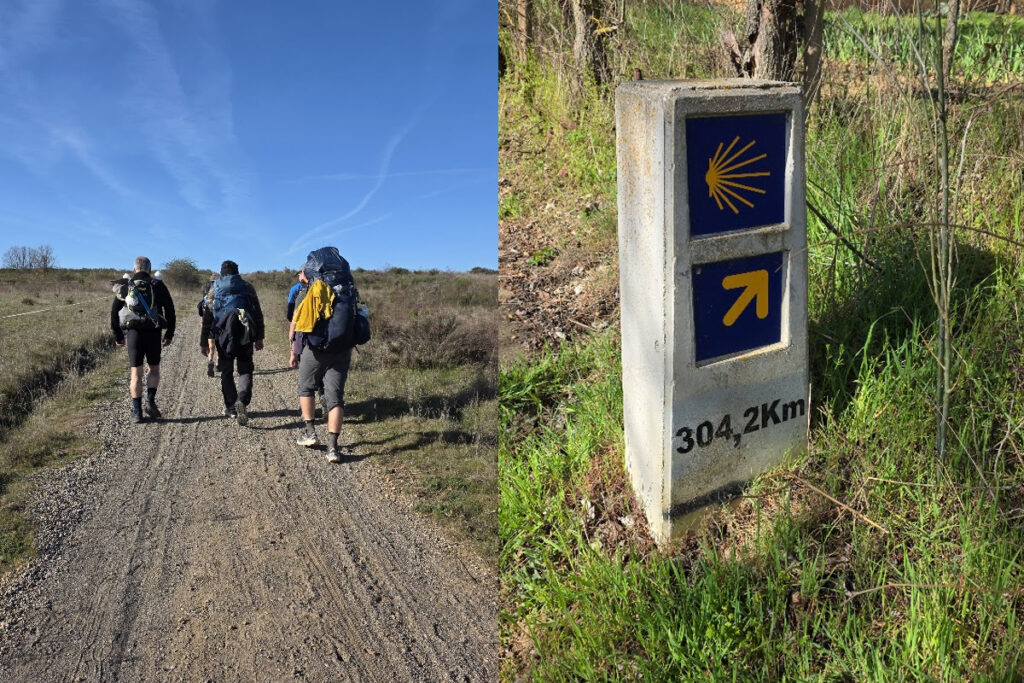
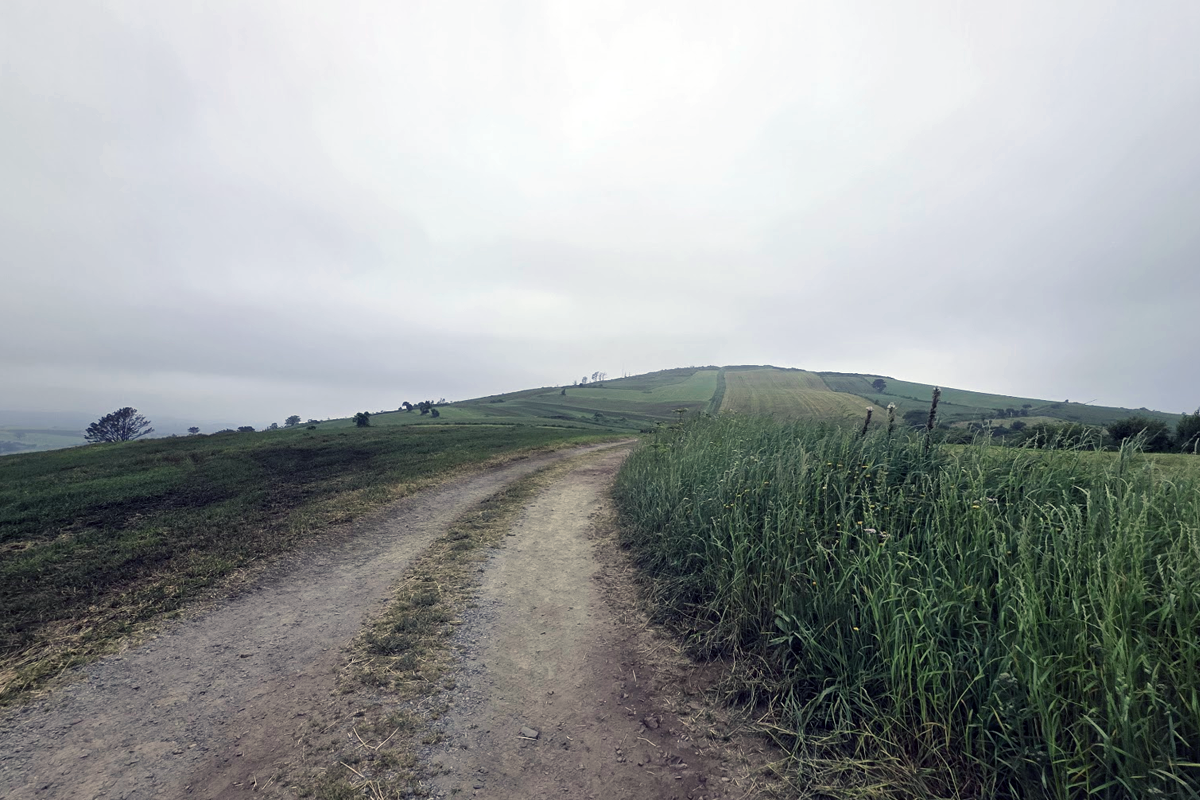
Recommended: The southern alternative route (towards Villar de Mazarife): This option adds extra kilometers, but it saves the pilgrim experience. Turning toward Chozas de Abajo and Villar de Mazarife, you leave behind the noise of the highway. You walk along agricultural dirt roads and canals in genuine countryside silence. Here, however, you must reckon with the raw reality of the Meseta: there are no shade-giving trees, nowhere to hide from the blazing sun, and the distances between villages are much greater. If you run out of water here, there is no quick way to replenish it. For the majority of pilgrims, Chozas de Abajo is the first real, reliable oasis after the vast nothingness. When you walk for hours through the middle of nowhere, there is a single word alongside the yellow arrows capable of delivering an instant surge of happiness: BAR. La parada de Chozas de abajo
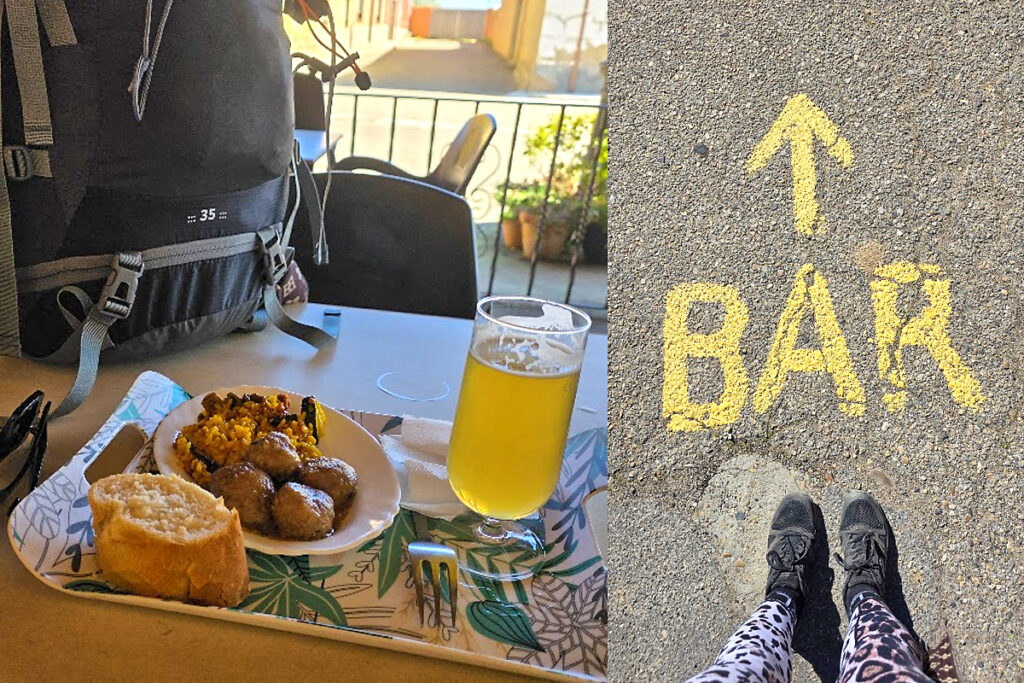
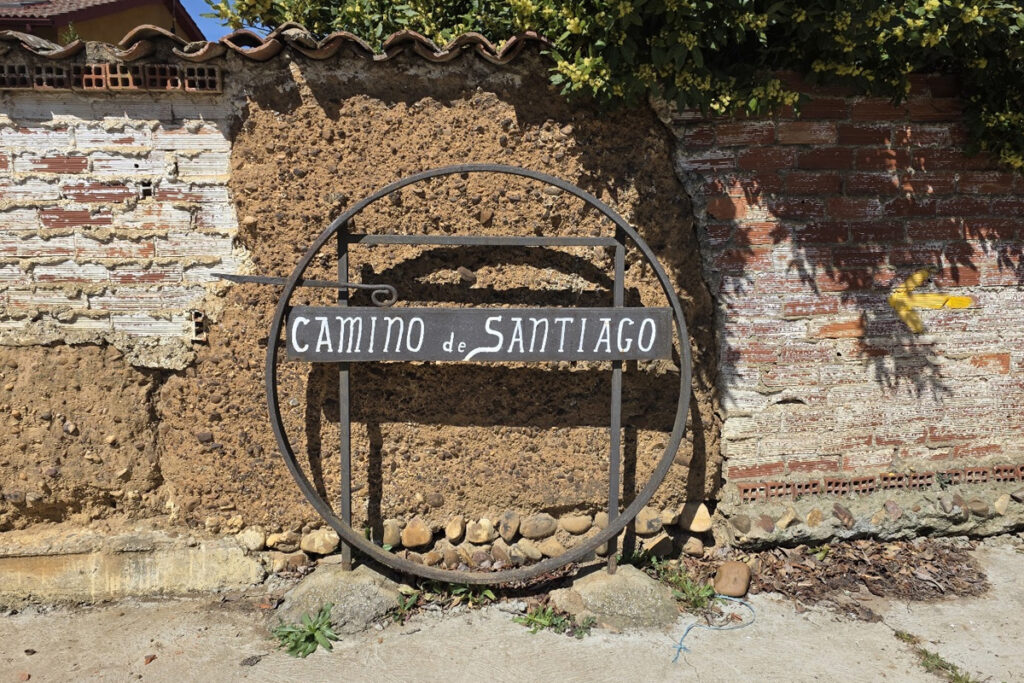
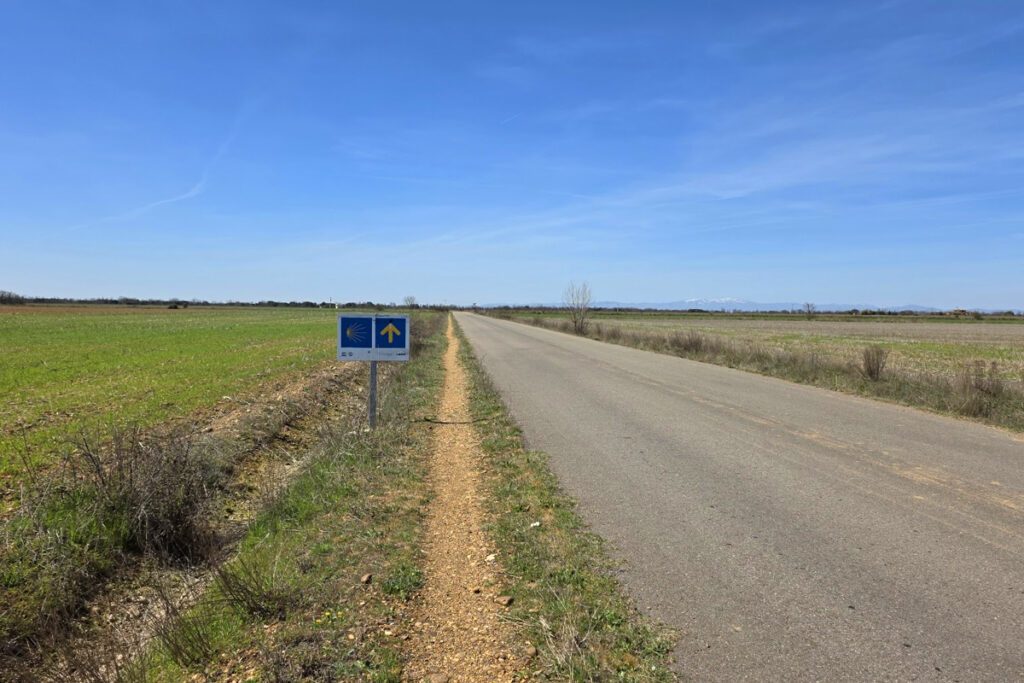
Once you’ve overcome physical fatigue, the biggest challenge is the mental slump that sets in on the home stretch. From there, a long, straight 10-kilometer stretch follows on a country road of the same length before you reach additional services in Villavente.
In 1434, Don Suero de Quiñones stirred up his era with a brilliant, modern-day guerrilla marketing-style feat: for thirty days, he challenged every knight wishing to cross the river to a duel, proving his romantic devotion to a high-born Leonese noblewoman, Doña Leonor de Tovar.
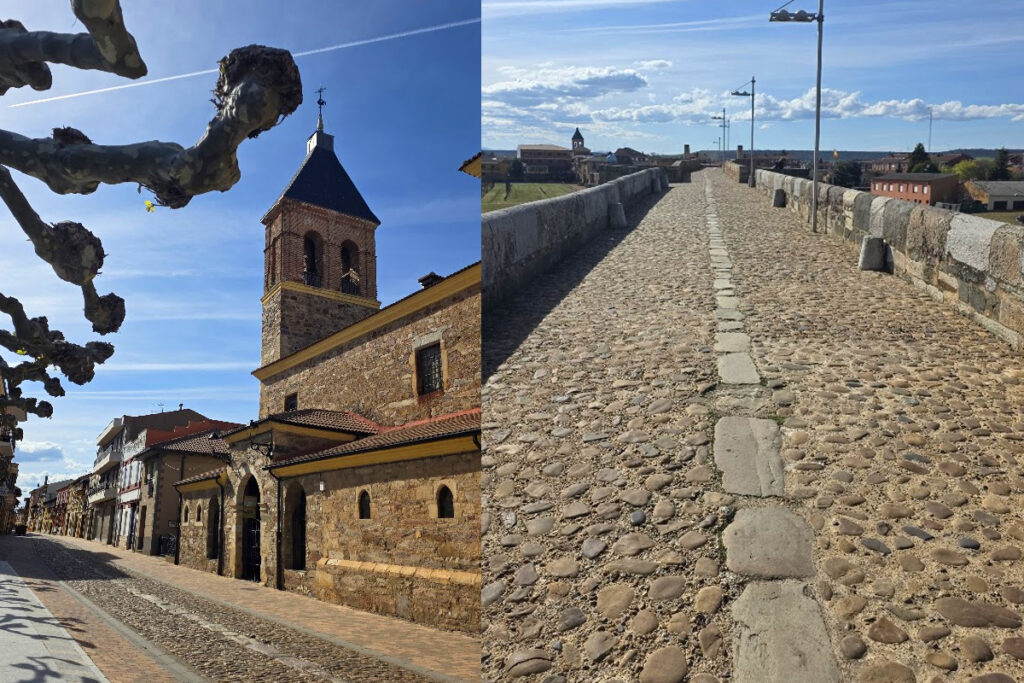
Don Suero de Quiñones 1434-ben zseniális, mai szóval élve gerillamarketing-szerű akcióval rázta fel a korát: harminc napon át minden lovagot párbajra hívott, aki át akart kelni a folyón, így bizonyítva szerelmi elkötelezettségét egy előkelő leóni nemeshölgy, Doña Leonor de Tovar felé.
Hundreds of kilometers with the same simple task: keep going. The power of the Camino stems from this consistent repetition. Long-distance walking clears the mind, making the space that awaits you at the end of the day matter all the more. The town's modern, high-quality pilgrim hostels further enhance this experience. Located in the immediate vicinity of the bridge, DORMERO Albergue Hidalgos embodies undisturbed peace and the philosophy of slow travel. Its spacious, well-kept inner garden provides the perfect sanctuary to completely shut out external noise, offering an opportunity to regain inner focus.
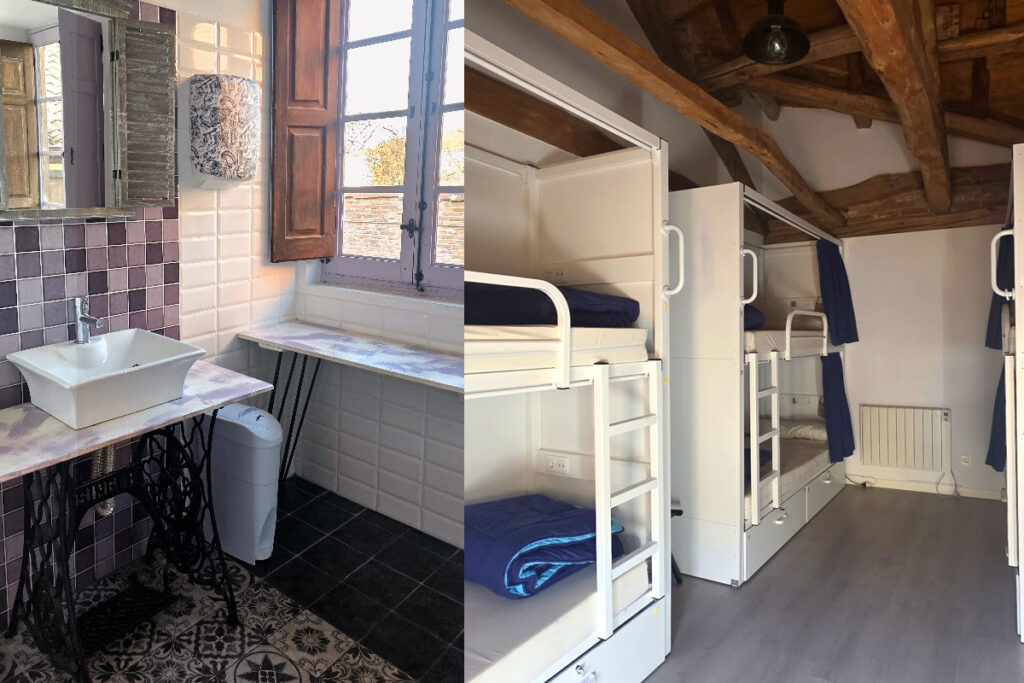
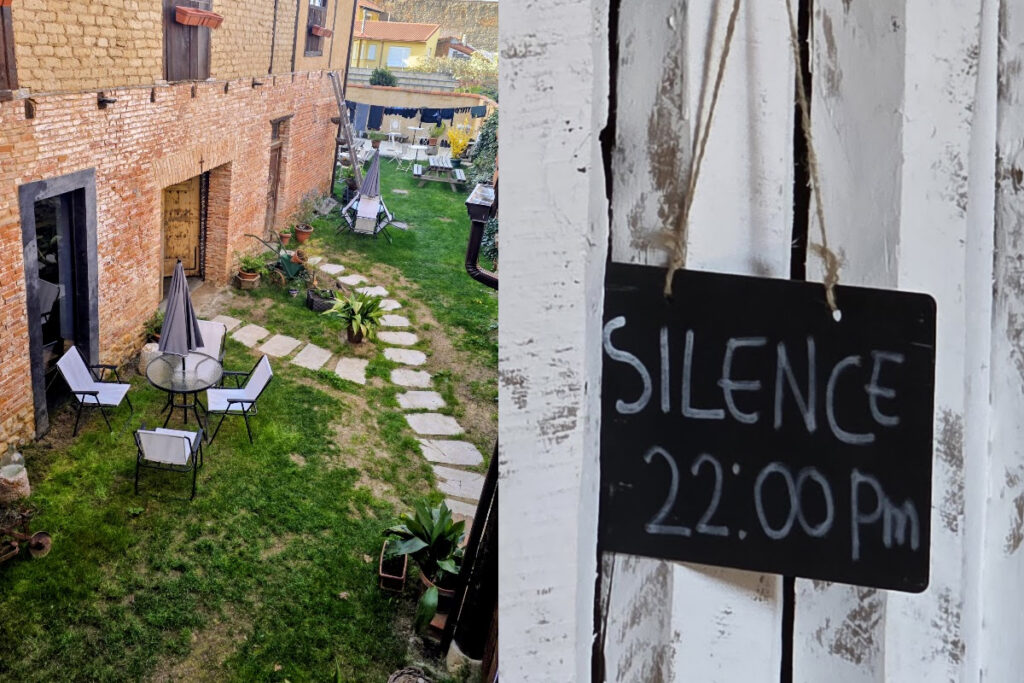
Route: Hospital de Órbigo – Villares de Órbigo – Santibáñez de Valdeiglesias – San Justo de la Vega – Astorga – Valdeviejas – Murias de Rechivaldo – Santa Catalina de Somoza – El Ganso
Of course, if the full distance proves too demanding, the stage can easily be split in two.
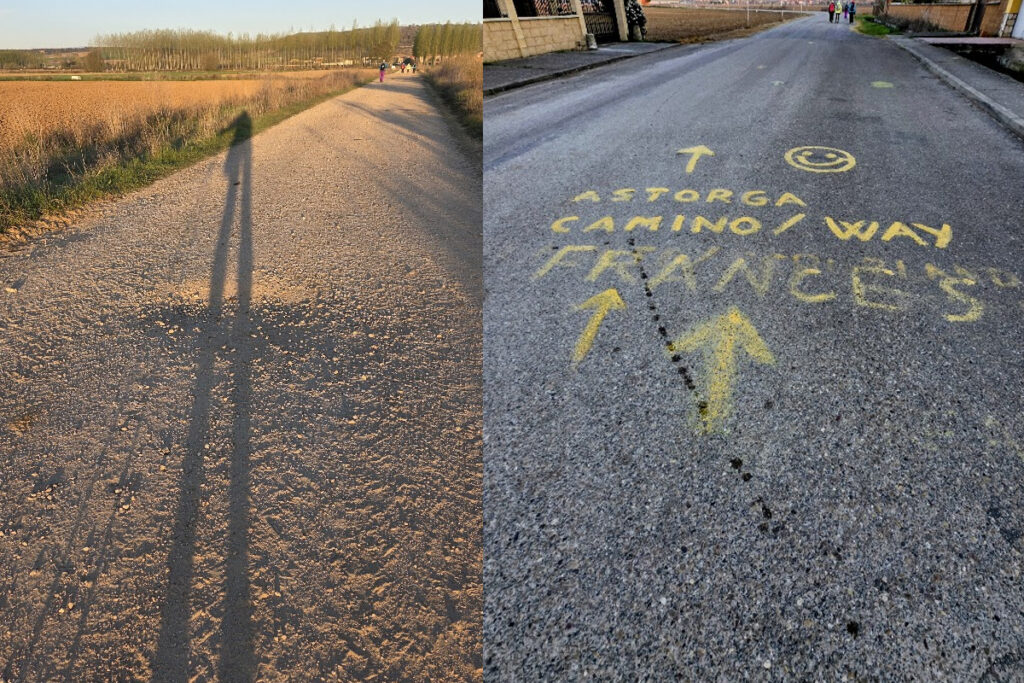
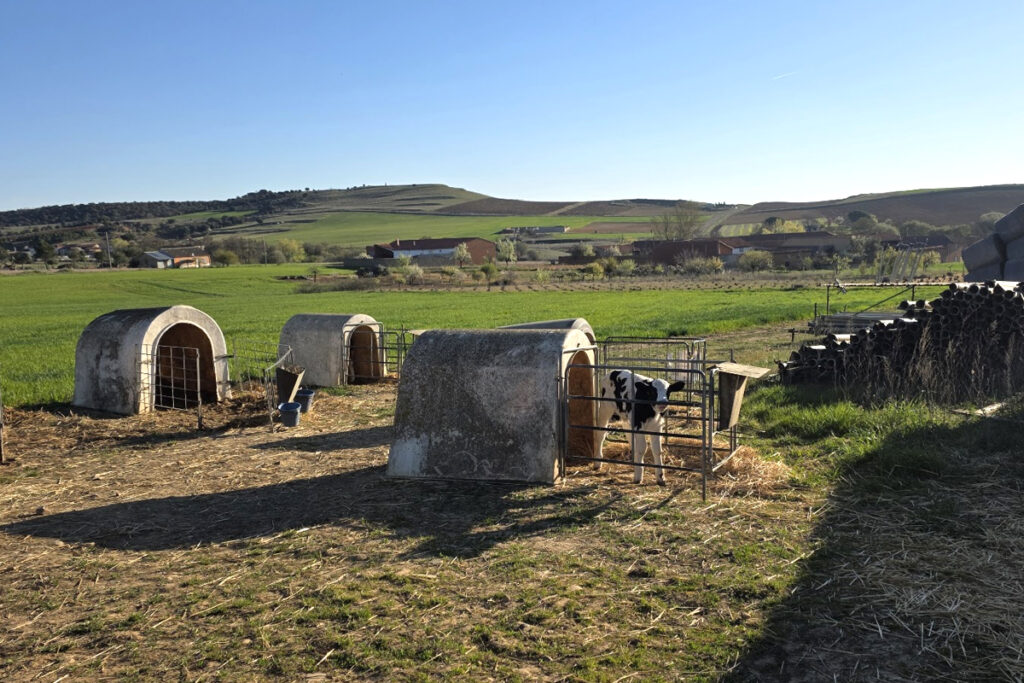
True inner growth always begins at the point where we leave familiar territory behind and step into an entirely new cultural and geographical microclimate. While the fear of uncertainty often paralyzes progress, physical relocation immediately rewrites mental barriers and forces action. The 30-kilometer section between Hospital de Órbigo and El Ganso models this sharp transition, as the pilgrim ascends from the fertile river valley into the heart of mountainous Maragato* culture. You complete the first portion of your day through the agricultural countryside of Villares de Órbigo and Santibáñez de Valdeiglesias, where the rhythm of quiet, red-dirt tracks helps establish your inner focus.
*The term Maragato refers to a distinct cultural and ethnic group from the ancient historical region of La Maragatería in León province. Traditionally muleteers and itinerant traders, they are also known for a unique meat dish consumed in reverse order, the Cocido Maragato.
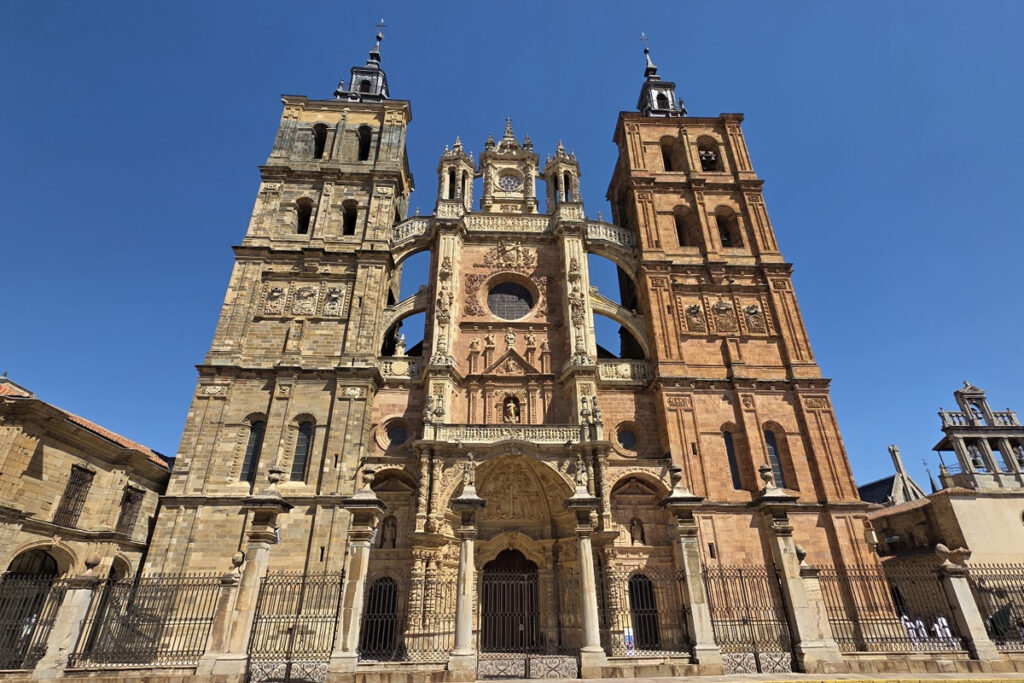
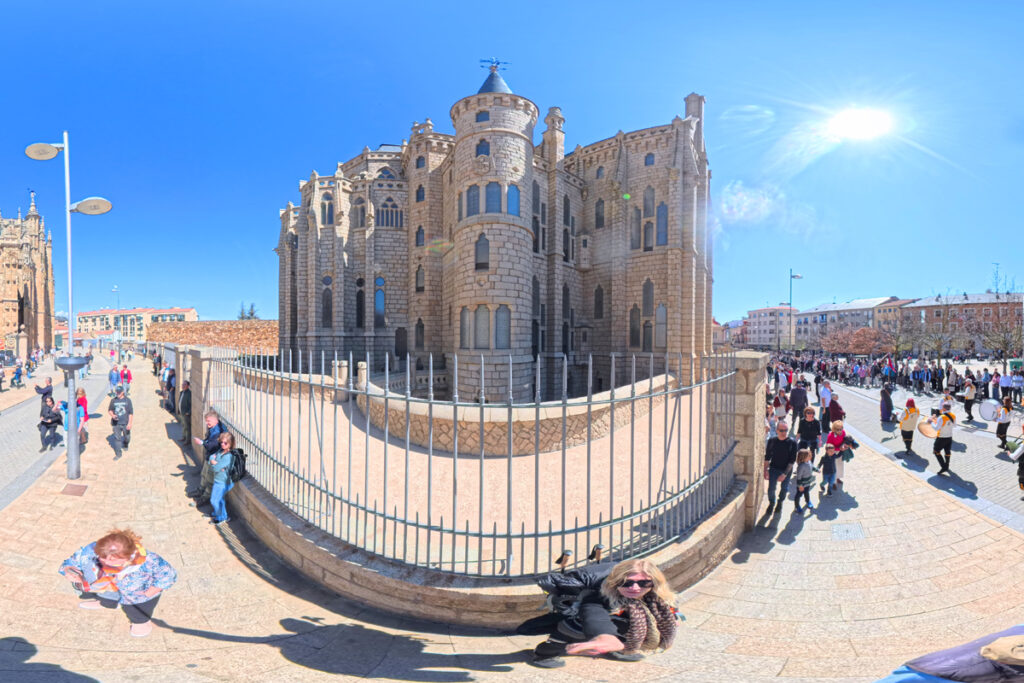
Directly alongside the carved, red-sandstone cathedral (Catedral de Santa María de Astorga) rises Gaudí's neo-Gothic Episcopal Palace built of white granite, dominating the square like a fairytale turreted castle.
A vöröses homokkőből épült, faragványokkal teli székesegyház (Catedral de Santa María de Astorga) mellett közvetlenül Gaudí neogótikus, fehér gránitból emelt Püspöki Palotája magasodik, amely mesebeli, bástyás kastélyként uralja a teret.
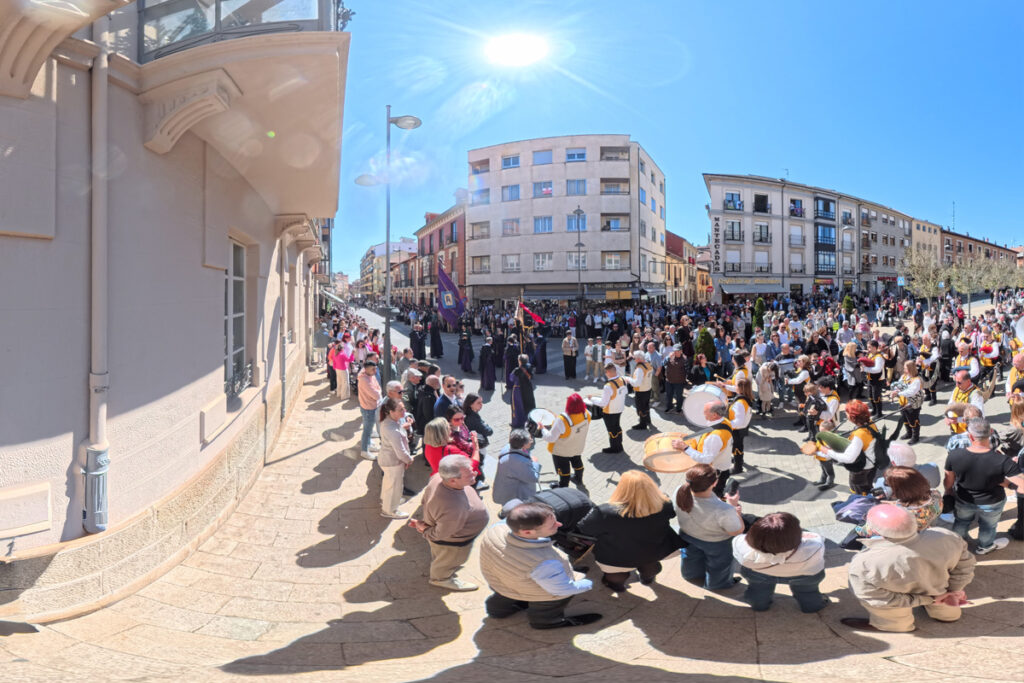
After walking along the promenade by the wall (Paseo de la Muralla), passing the Convent of San Francisco (Convento de San Francisco), you arrive in the gastronomic district, making the city a perfect place for physical and spiritual refueling over a Limonada before leaving urban comforts behind. The authentic Easter drink of the León region and the Astorga area is Leonese lemonade. Despite its name, this is a traditional alcoholic wine cocktail specifically prepared and enjoyed by locals during Holy Week (Semana Santa).

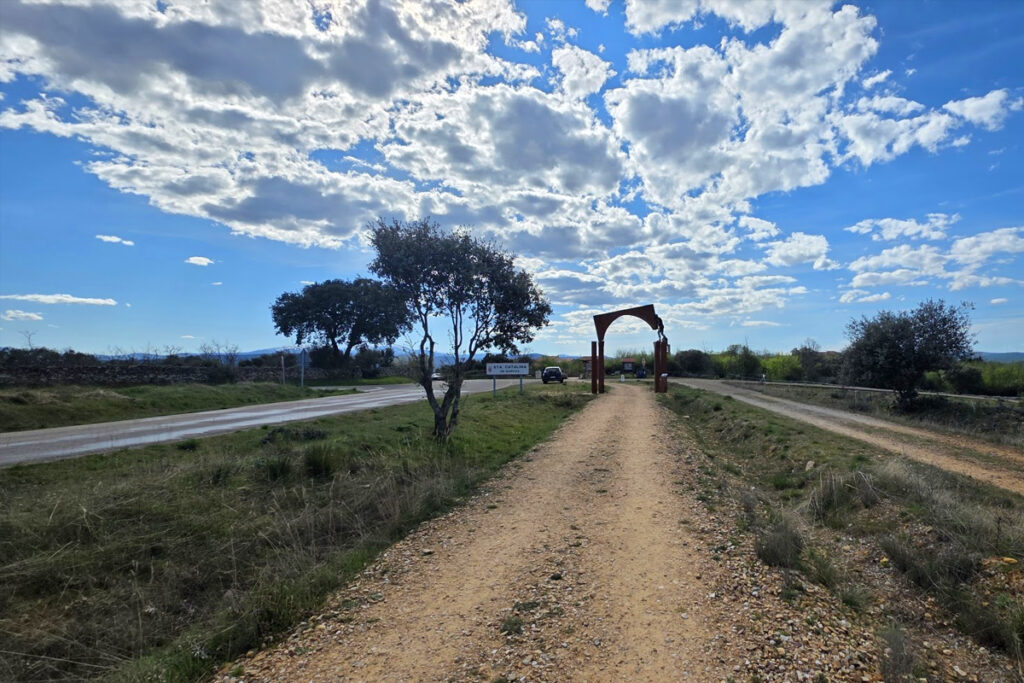
Leaving the walls of Astorga behind, you pass the Hermitage Ecce Homo on the outskirts of Valdeviejas, before your path leads straight through the authentic stone houses of Murias de Rechivaldo. Heading toward Santa Catalina de Somoza, the silhouette of a rusty iron gate in the distance marks your steady course. Arriving on the edge of El Ganso, the village church tower comes into view from afar. Entering the settlement, you are greeted by traditional stone architecture with slate roofs and massive wooden gates that once accommodated the carts of local muleteers.
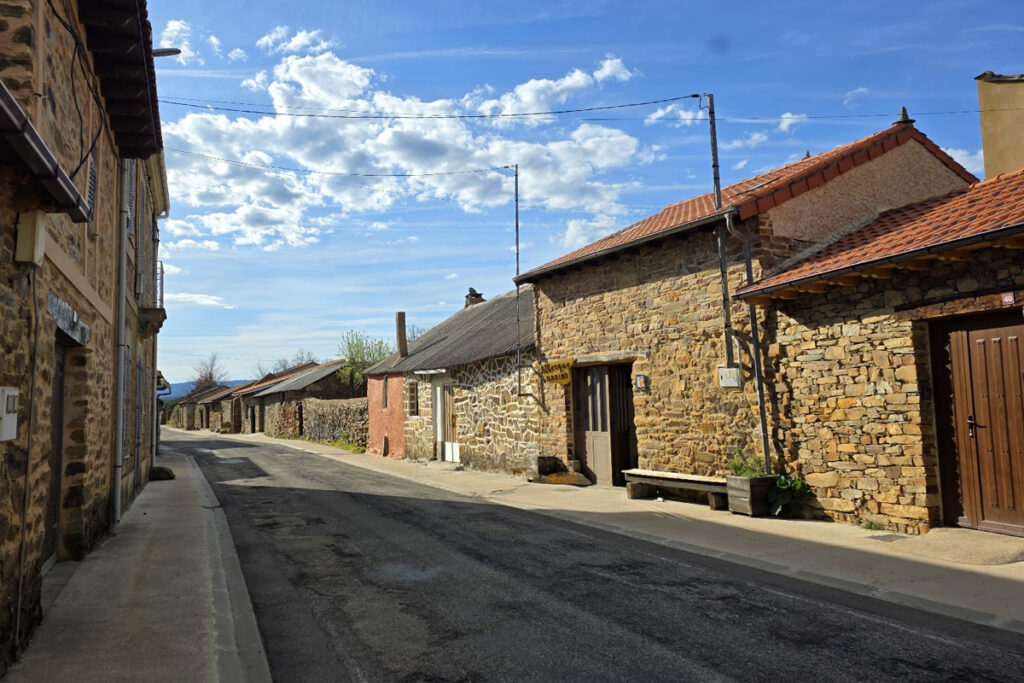
Útvonal: El Ganso – Rabanal del Camino – Foncebadón – Cruz de Ferro (Vaskereszt) – El Acebo – Riego de Ambrós – Molinaseca
The first base is Rabanal del Camino. You walk through it because it is too early and the cafés are still closed. After Rabanal, the trail turns steep. The next stop is Foncebadón, a former medieval ruined town that pilgrim tourism has now completely revived. In place of once-abandoned stone houses, you are welcomed today by a distinctly cozy, friendly little village—a perfect base for the final push before the summit.
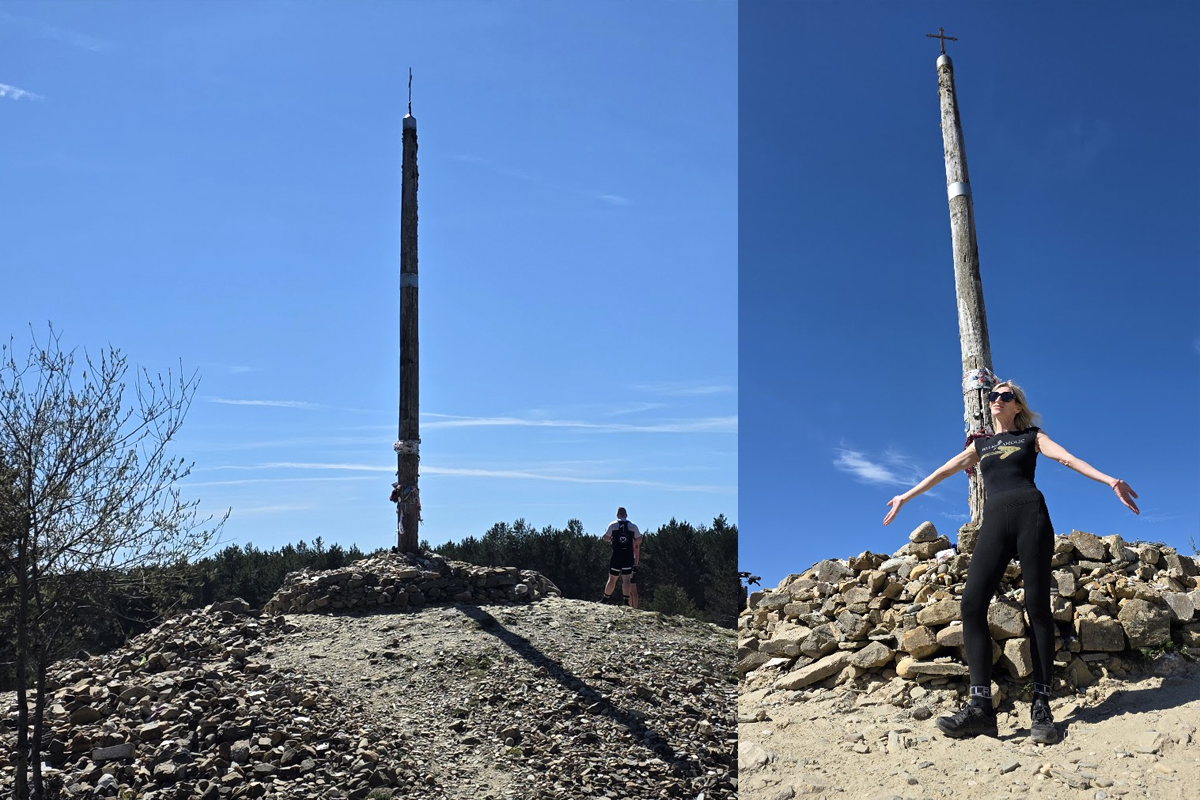
Stripped of all esoteric or religious pathos and translated purely into historical, practical, and psychological facts, the significance of the Cruz de Ferro (Iron Cross) is that it is the physical and symbolic climax of the Camino. It marks the highest point of the French Way (at roughly 1,500 meters). A simple wooden beam bearing an iron cross stands at the center of a mound of stones carried by pilgrims (a so-called amilladoiro) that rises to human height. The Cruz de Ferro is a place not only for shedding internal burdens, but also for painful farewells. You step up, lay down your own stone—whether it honors the memory of a loved one, marks a closed chapter of life, or simply signifies completing the physical journey—and then move on. Your ego lacks the energy to play a role.
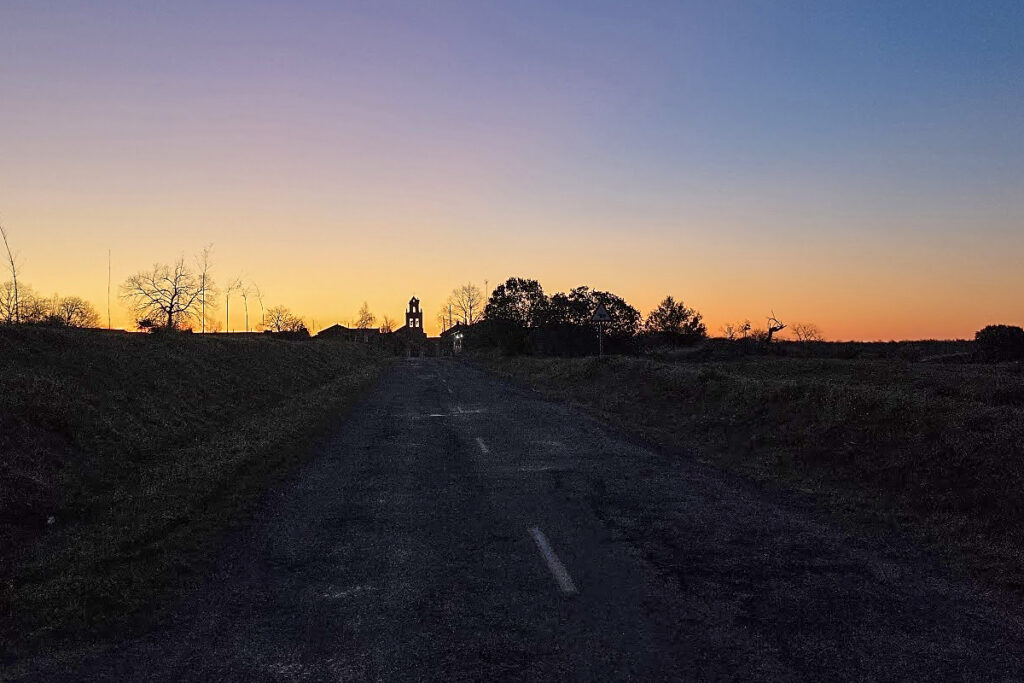
Az első bázis Rabanal del Camino. Áthaladsz rajta, mert túl korán van, a kávézók még zárva. Rabanal után az út meredekké válik. A következő állomás Foncebadón, egy egykori középkori romváros, amit a zarándokturizmus mára teljesen újjáélesztett. Az egykor elhagyatott kőházak helyén ma egy kifejezetten otthonos, barátságos kis falu fogad, ami tökéletes bázis a csúcs előtti utolsó rohamra.
A Cruz de Ferro (Vaskereszt) jelentősége mindennemű ezoterikus vagy vallási pátosz nélkül, tisztán történelmi, gyakorlati és pszichológiai tényekre lefordítva: a Camino fizikai és szimbolikus csúcspontja. Ez a Francia Út legmagasabb pontja (körülbelül 1500 méteren). Egy egyszerű fagerenda egy vaskereszttel, amely egy embermagasságú, zarándokok által hordott kövekből álló domb (úgynevezett amilladoiro) közepén áll. A Cruz de Ferro nemcsak a belső terhek, hanem a fájdalmas búcsúk helye is. Odalépsz, leteszed a saját kövedet – legyen az egy szeretted emléke, egy lezárt életszakasz, vagy egyszerűen csak az út fizikai teljesítése –, majd továbbindulsz. Az egódnak nincs energiája szerepet játszani.
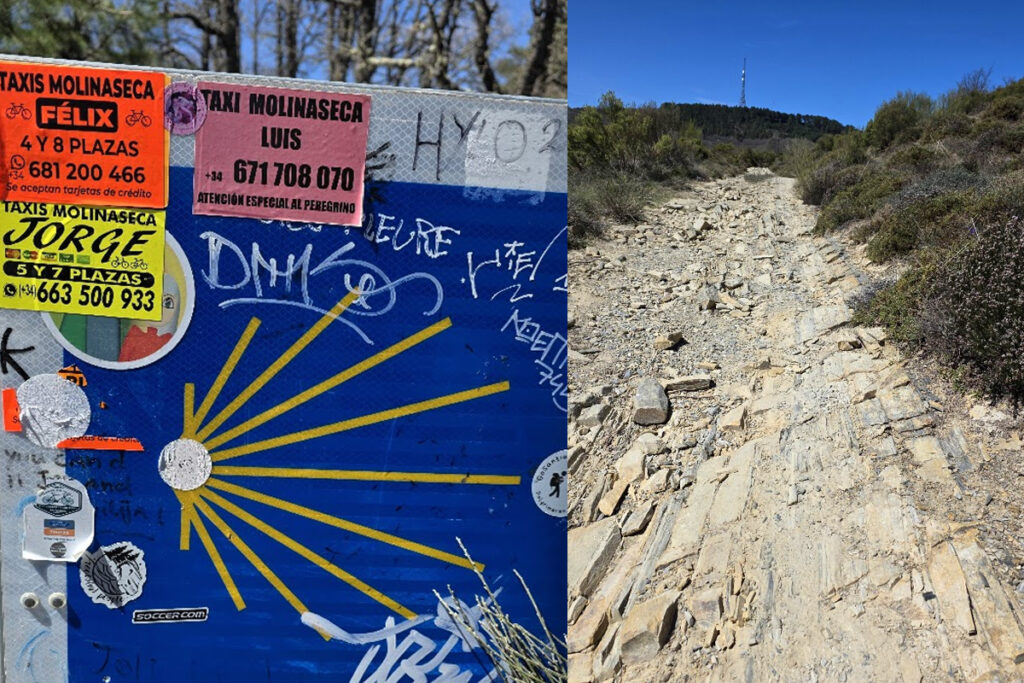
After the Cruz de Ferro comes the hard part: the brutal descent to Molinaseca. Everyone I have asked so far has called this stretch the toughest, and experiencing it a second time, I can only repeat: it is a true test of endurance. Even though you might see people practically running down the sharp, loose stones, remember that not even one percent of pilgrims are professional trail runners. You do not need to race anyone. Just take it slow and unhurried—pay attention to every single step and spare your legs, because your knees and ankles have to fight for every meter here. And if you feel your joints giving out, do not be ashamed for a second: there is a reason you see taxi advertisements everywhere along the trail, as plenty of people choose to catch a ride on this section instead.
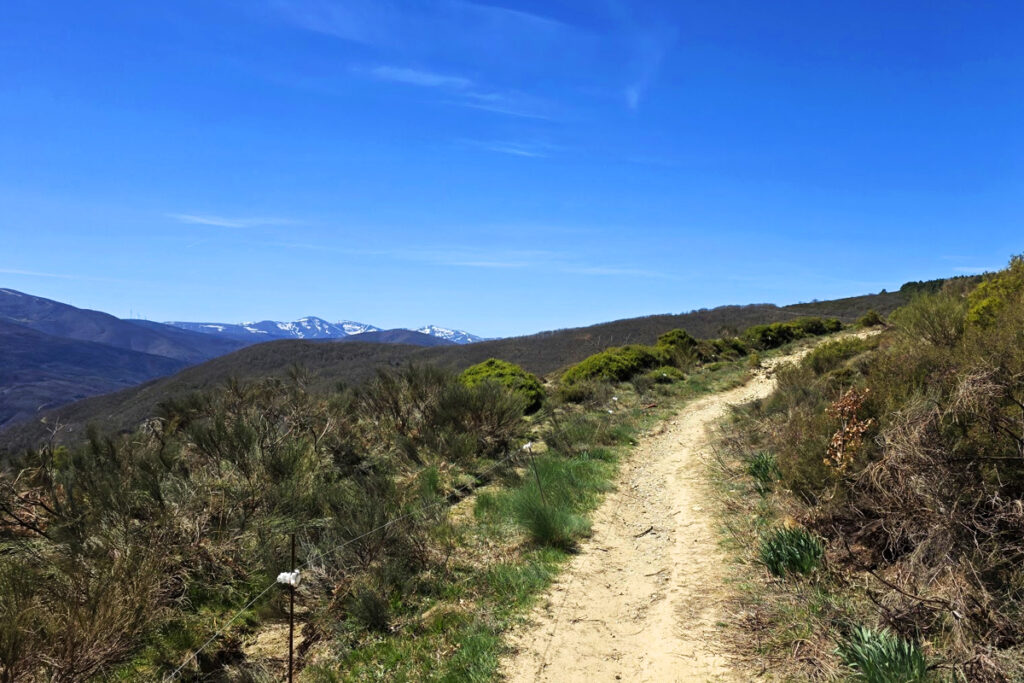
After the hardcore section, you either rest in El Acebo like many others, or… since half the day is still ahead of you and you are not completely wiped out, you press on to Molinaseca, because sleeping and waking there is a true experience. The immense advantage of El Acebo is that it provides refuge right at the end of the brutal descent. It is a beautiful mountain village of traditional stone houses with wooden balconies, where you can catch your breath, grab a coffee, and if your legs have called it quits, safely call it a day right here.
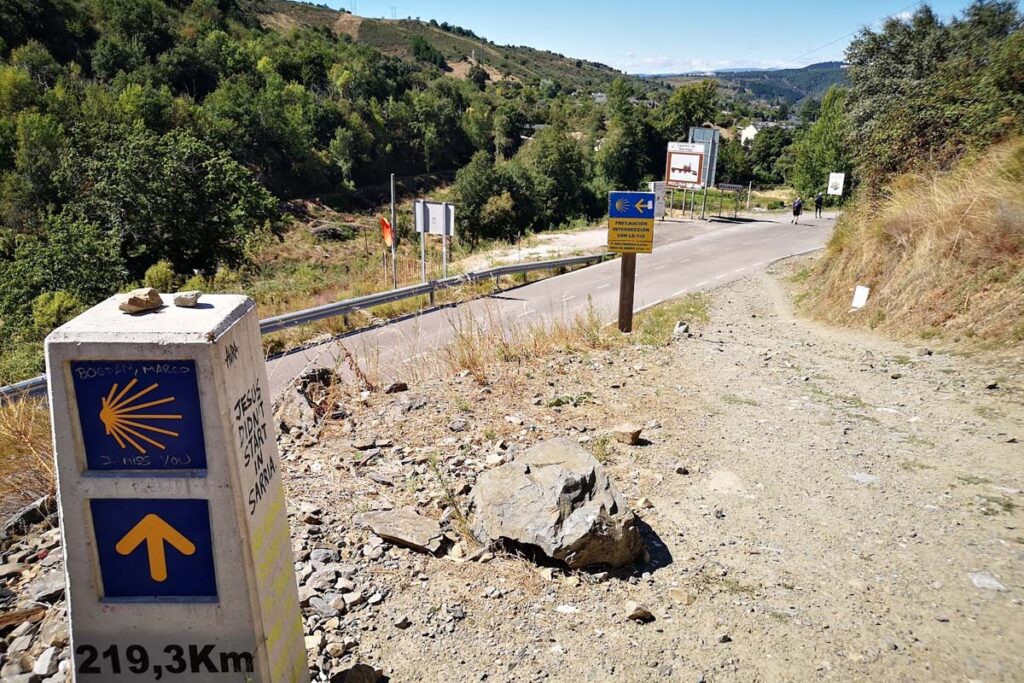
If you still have some breath left in you, the terrain from here is a continuous, steep, and rocky descent to Riego de Ambrós. Tucked into a wild, pristine landscape, this charming 12th-century village hosts fewer accommodations and more local homes, with the chapel of Ermita de San Sebastián at its center. Leaning heavily on your trekking poles, you make your way down into the valley along another relentlessly steep, rocky, and uneven path. Reaching the outskirts of Molinaseca, you catch sight of the tower of Iglesia de San Nicolás de Bari—where you can also collect a stamp—but nothing can quite prepare you for the breathtaking view of the village unfolding before you.
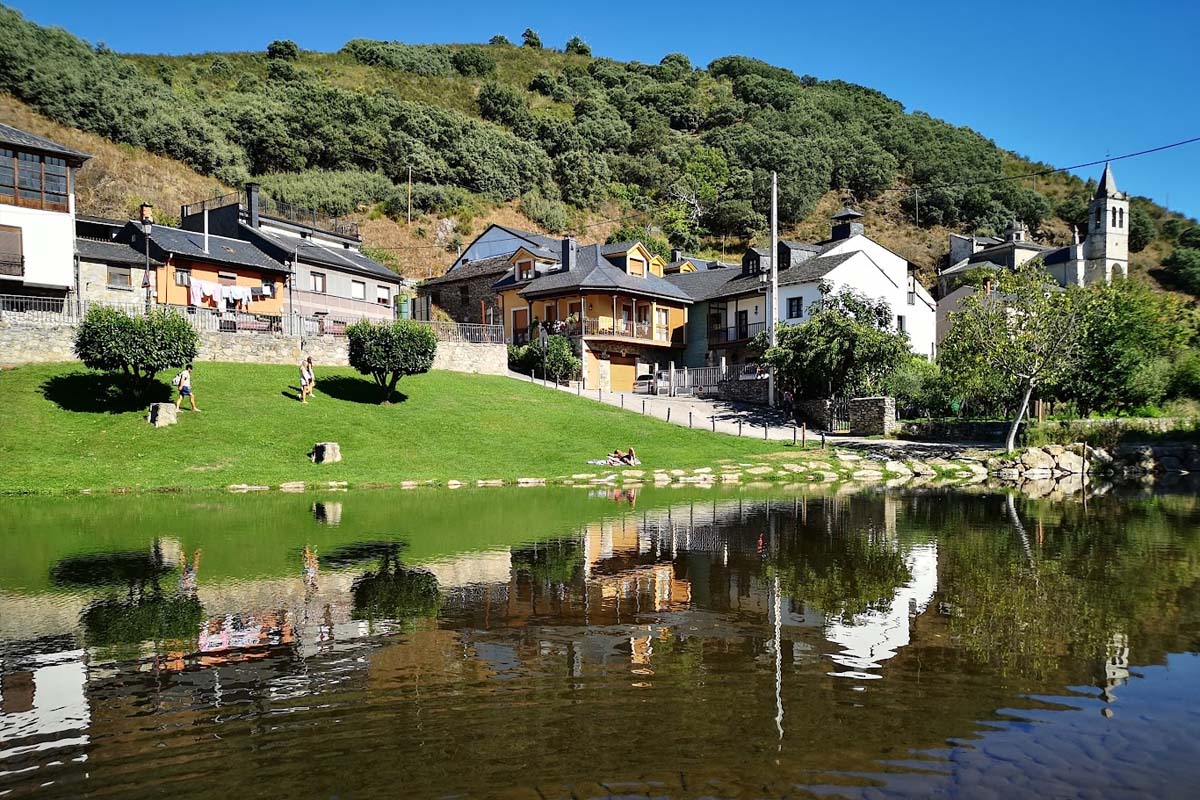
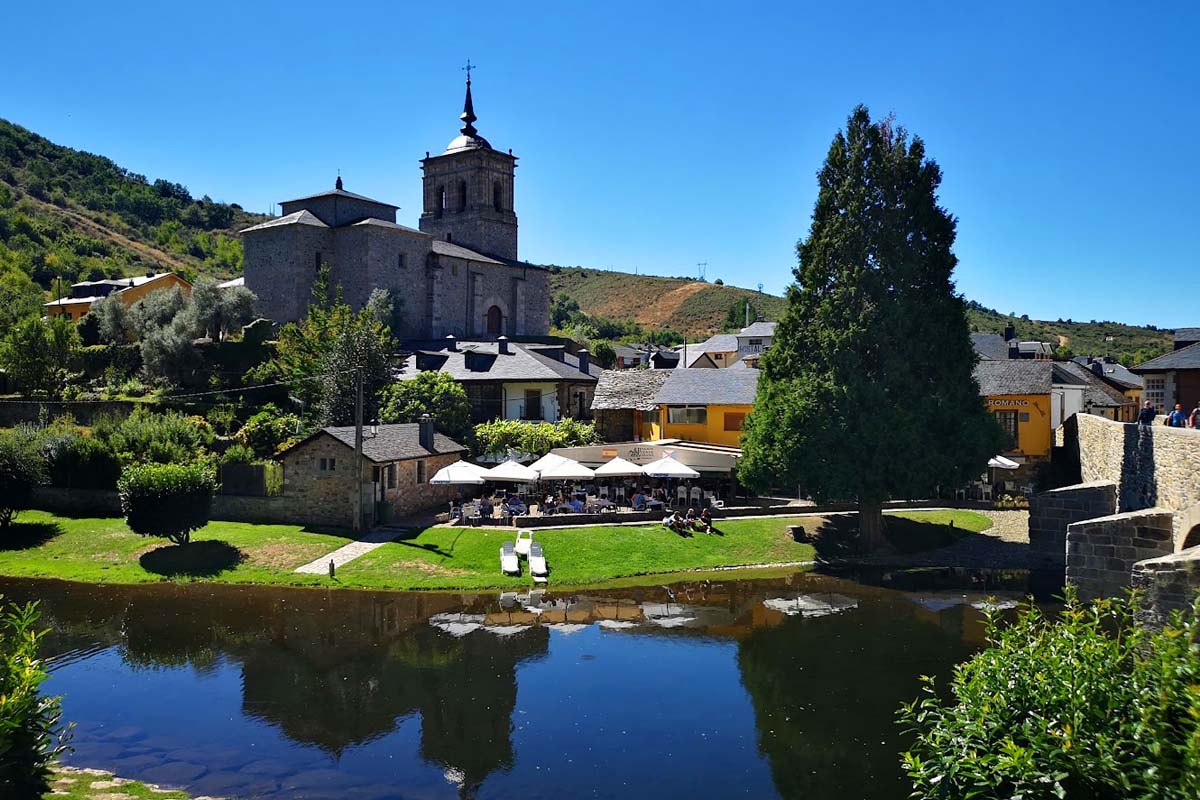
For Molinaseca is an amazingly cool place that makes up for all the suffering. At the foot of the monumental Roman stone bridge, pilgrims and locals alike soak their feet together in the dammed, crystal-clear waters of the Río Meruelo. After the steep descent, everyone gathers at the riverside cafés and the outdoor seating along the historic, timber-framed streets: the fantastic restaurants and cozy tapas bars offer the perfect setting to celebrate survival with a glass of wine.
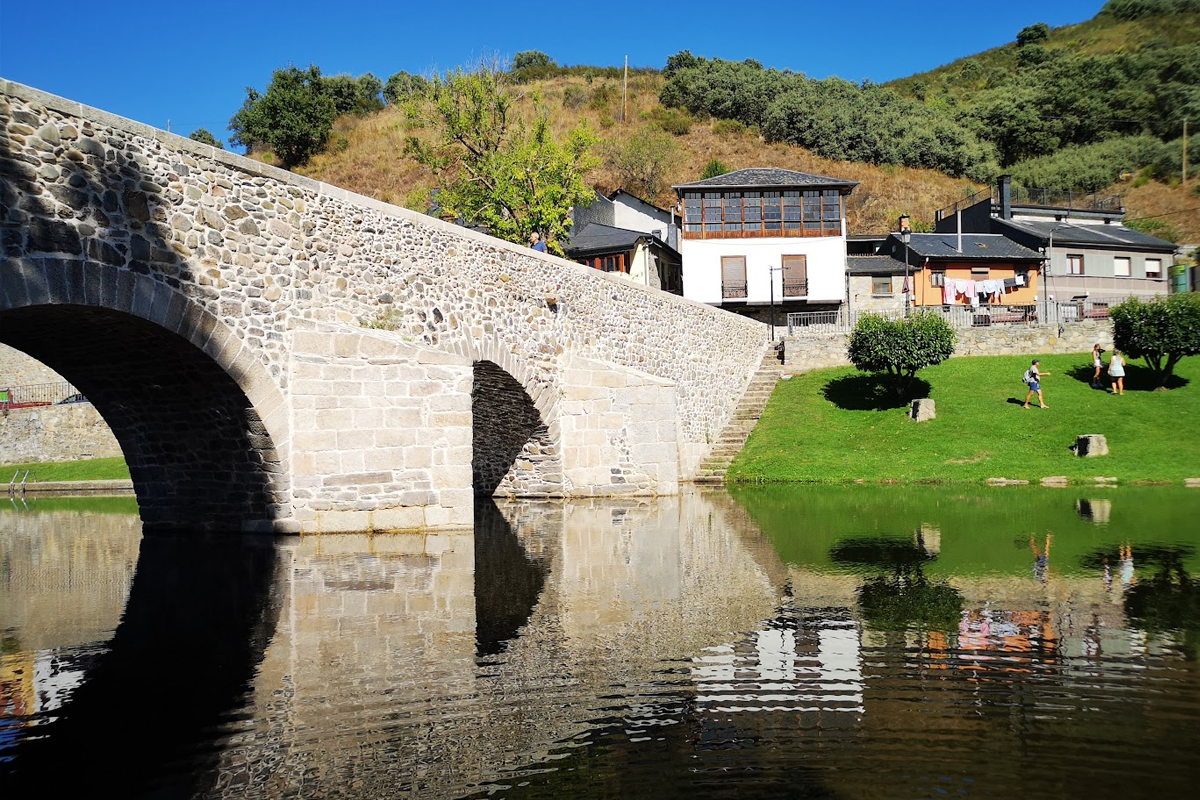
Route: Molinaseca – Campo – Ponferrada – Columbrianos – Fuentesnuevas – Camponaraya – Cacabelos – Pieros – Villafranca del Bierzo – Pereje – Trabadelo
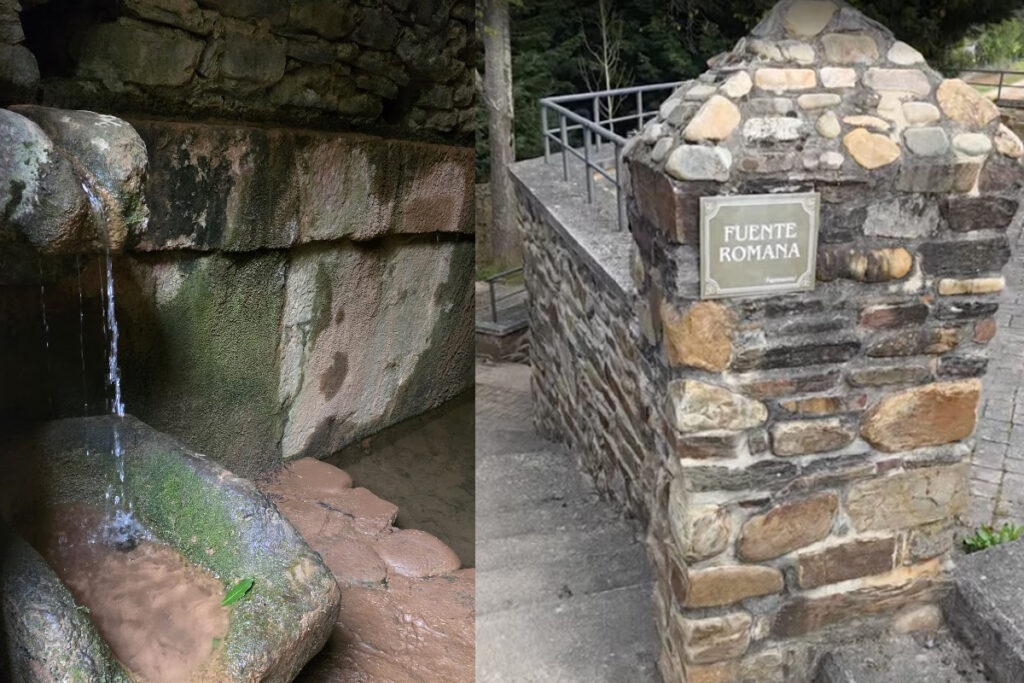
Leaving Molinaseca behind, the first nine-kilometer stage passes quickly, but it hides a secret that most people rush right past. Upon reaching the village of Campo, a perfectly accessible path leads off to the left. This trail guides you to one of the town's lesser-known monuments, the Fuente Romana de Campo spring. Of uncertain origin but likely dating to late Roman times, this vaulted structure lies well below the level of the current path, requiring a bit of extra attention to spot. The fountain transports us back into the past, serving as a reminder that for nearly 2,000 years, our ancestors and thousands of pilgrims traveling the Camino de Santiago refreshed themselves right here.
Ahogy mész tovább Ponferrada felé, az időjárás hozza a tipikus északi formáját: miközben csepeg az eső, a felhők mögül áttörő napfényben egy hatalmas szivárvány feszül az út menti, lilaakáccal benőtt, omladozó kőházak fölé.
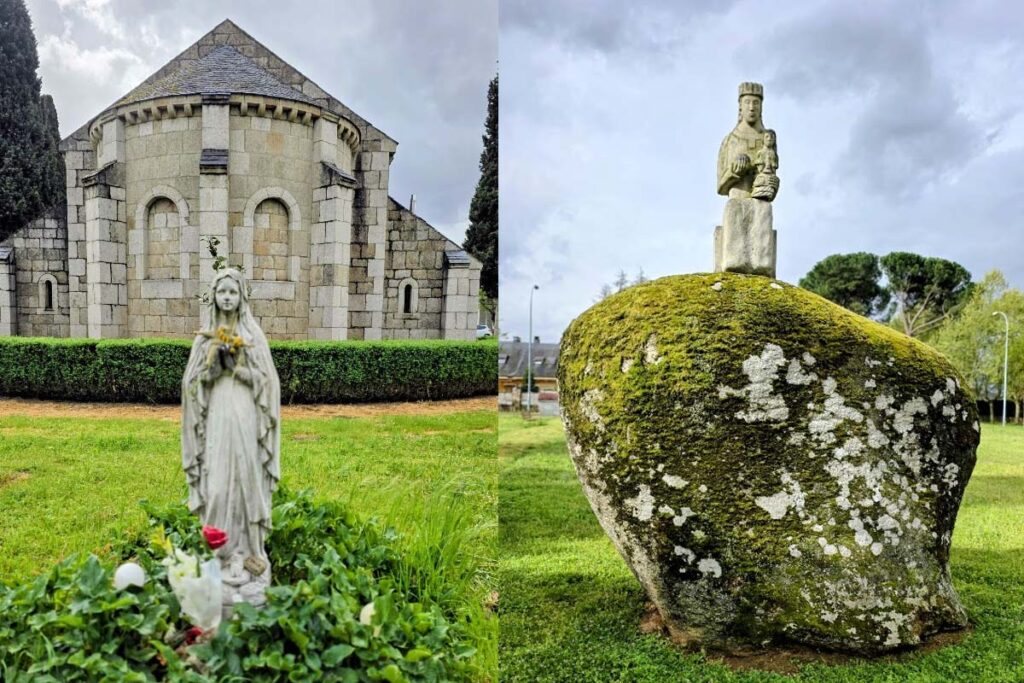
Entering Ponferrada, you pass the Templars' monumental fortress, the Castillo de los Templarios, but the true face of the city reveals itself as you cross it on foot. Beyond the castle, narrow, historic streets follow, where you walk beneath stone-carved coats of arms on noble house facades and ornate wrought-iron balconies. As you follow the yellow arrows past the historic center, through Ponferrada's Compostilla district, you pass the chapel of La ermita de la Virgen de Compostilla.
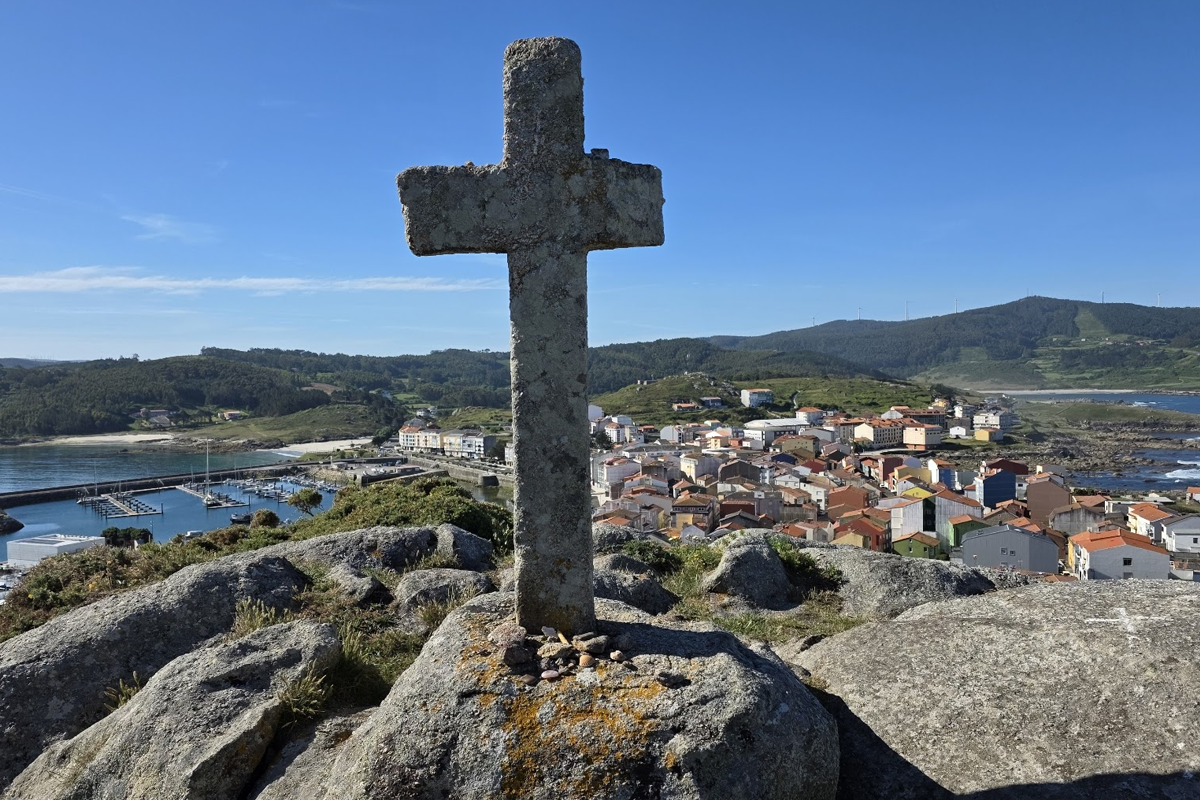
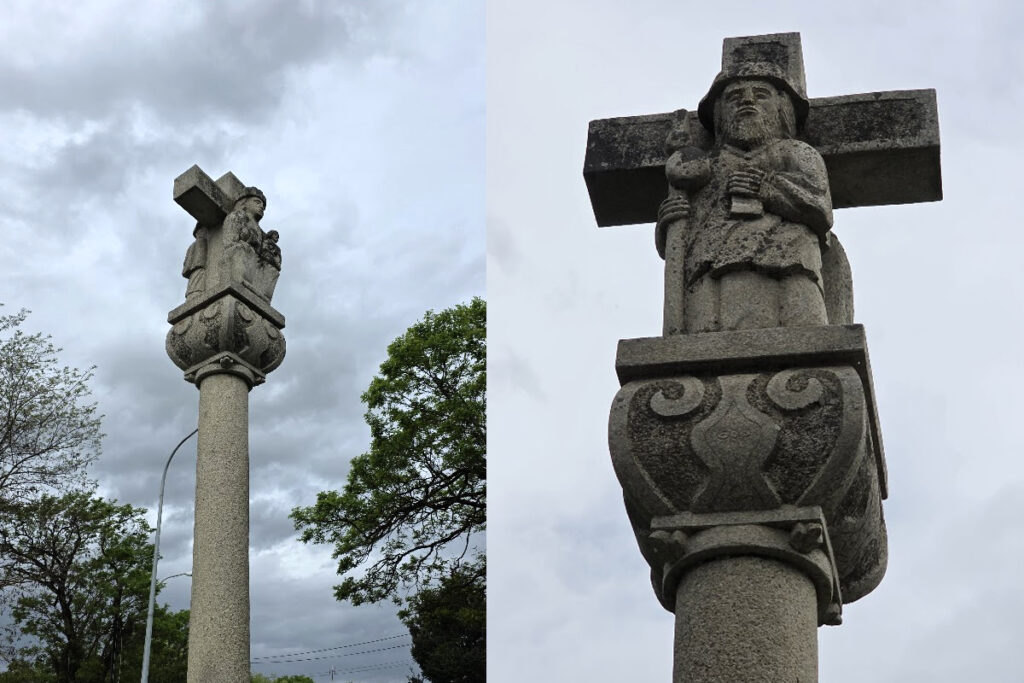
Not much further along, on the road out of town, you pass a beautifully carved, tall stone cross—a traditional cruceiro. The crucifix is double-sided, a feature common among crosses erected along pilgrimage routes: one side depicts Saint James the Apostle in pilgrim attire, wearing a wide-brimmed hat and holding a staff with a gourd flask tied to it, while the other side shows Our Lady of Sorrows (Pietà). They were erected at strategically important points—crossroads, town borders, or near cemeteries. According to Christian belief, they protected travelers and pilgrims from evil spirits and frequent highwaymen.
Leaving Ponferrada behind, you cut through the asphalt streets of Columbrianos, Fuentesnuevas, and Camponaraya into the rolling vineyards of the El Bierzo wine region, before walking onward through the bustling old town of Cacabelos. From here, a sweaty climb brings you up to the village of Pieros, where from above you catch sight of picturesque Villafranca del Bierzo wedge-shaped among the mountains—the most important historical stop of your day.
As soon as you reach the edge of the village, you immediately spot the famous 12th-century Romanesque church, the Iglesia de Santiago. On its northern side lies the legendary Puerta del Perdón (Door of Forgiveness), which holds extraordinary significance during Holy Years (Año Santo Jacobeo—when Saint James' Day, July 25th, falls on a Sunday). 2027 will be such a year. Since the Middle Ages, any pilgrim who was unable to continue the remaining nearly two hundred kilometers to Santiago de Compostela due to illness, injury, or utter exhaustion received full absolution—a plenary indulgence—by passing through this door, exactly as if they had reached the cathedral itself. This spot is the ultimate symbol of understanding, acceptance of human limitations, and grace on the Camino, before which you bow your head and press on toward the valley.
Route: Trabadelo – La Portela de Valcarce – Ambasmestas – Vega de Valcarce – Ruitelán – Las Herrerías – La Faba – Laguna de Castilla – O Cebreiro – Liñares – Hospital da Condesa – Padornelo – Alto do Poio – Fonfría – O Biduedo – Filloval – Pasantes – Ramil – Triacastela
Naturally, if the long distance proves too taxing, the route can easily be split in two.
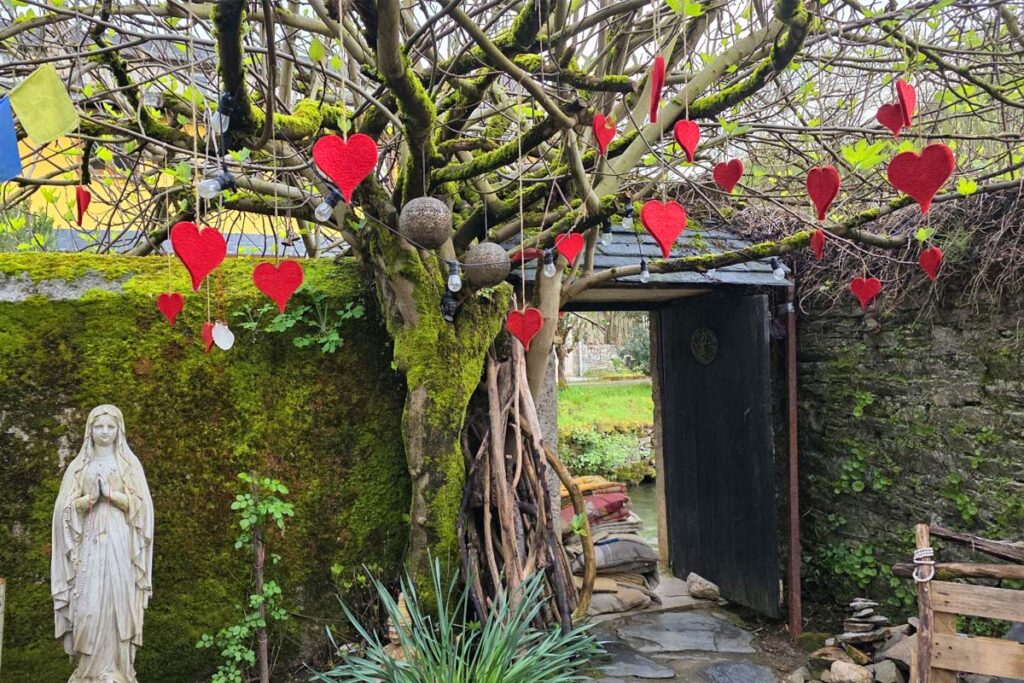
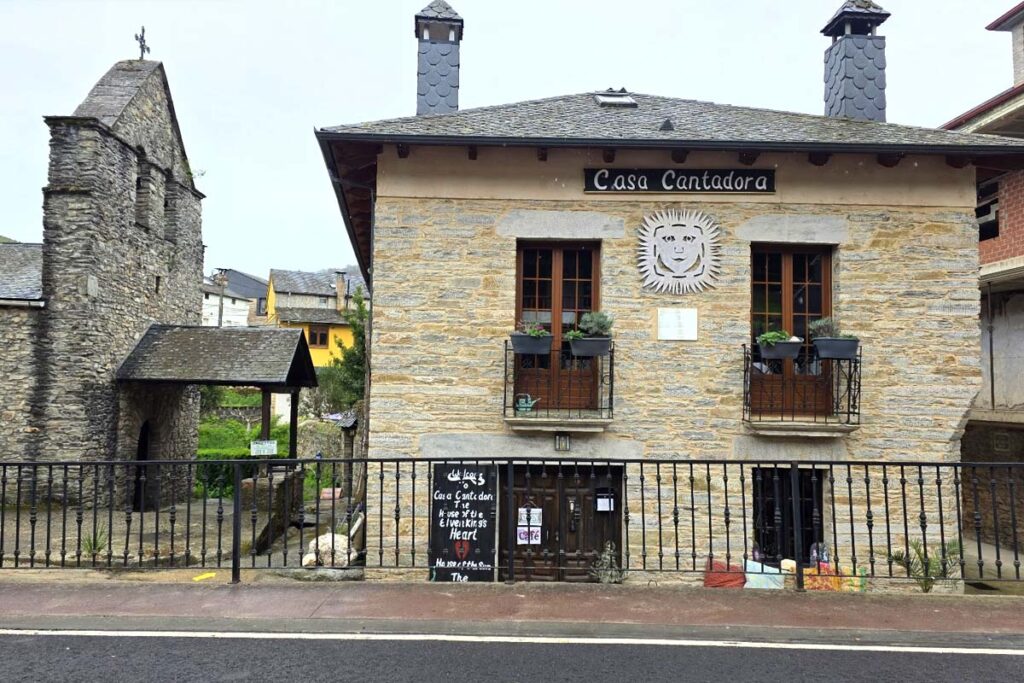
A long day lies ahead of you. In Ambasmestas, it is worth stopping at the Casa Cantadora hostel. At first, you simply pop into the chapel, where Knut, the hostel owner, is lighting candles. A few minutes later, you are chatting over a cup of coffee. If he offers you one, take it. By the time you move on, you may well find yourself wondering why you didn't book your stay here. The place has a special vibe: Nordic simplicity, cozy communal spaces, and home-cooked meals you will still be remembering days later. You can also order breakfast, and chances are it will be one of your best decisions on this stretch.
After breakfast, you set off on the trail leading to O Cebreiro. The distance is barely sixteen kilometers, but the elevation gain is over six hundred meters. The path winds steadily uphill from the Valcarce Valley into the mountains. You pass through small villages, with pastures and forests alternating along the way, as the route shifts from asphalt to stony dirt tracks. As you climb higher, the air turns cooler and fresher. At a certain point, you cross the border of Castile and León into Galicia without even noticing.
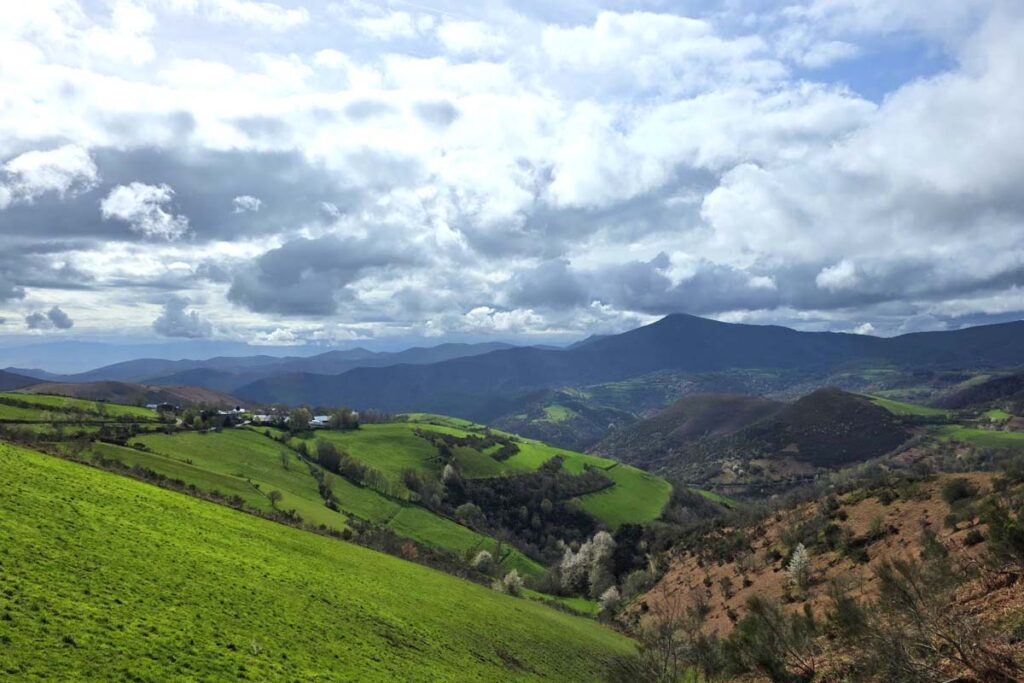
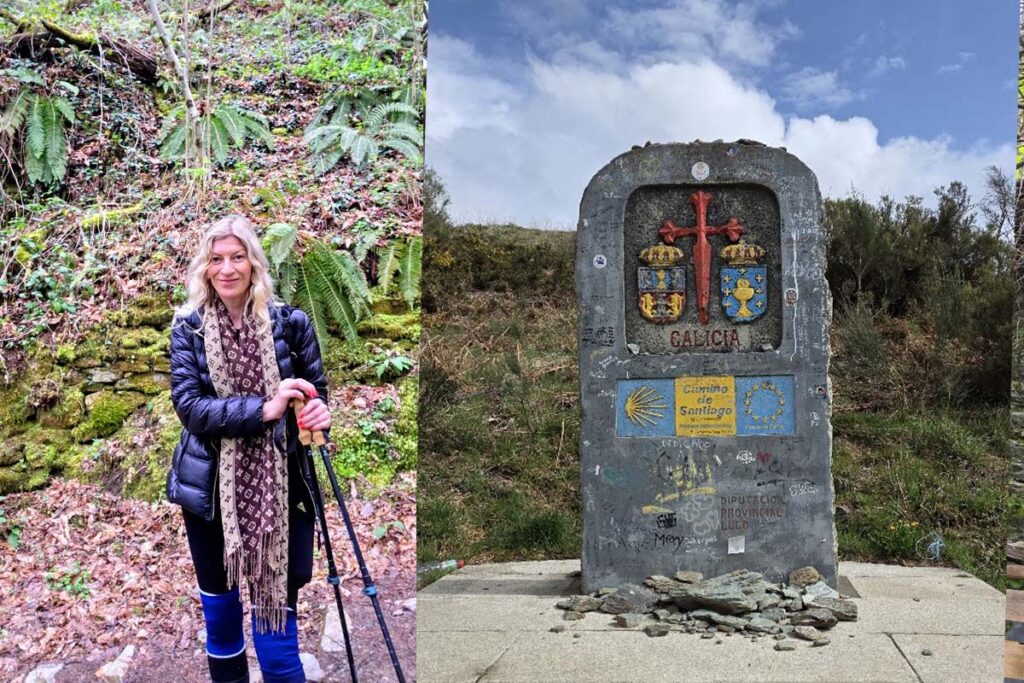
O Cebreiro is a special place. The village sits on a windswept ridge at an elevation of nearly 1,300 meters. Round stone pallozas line the village, built with thick walls and characteristic rye-thatch roofs. These structures preserve architectural traditions dating back to Celtic times, creating a sight that feels as though a bygone era has survived amidst the mountains.
One of the key figures in the history of the Camino, Elías Valiña, is also laid to rest here. The local priest is credited with creating the system of yellow arrows that guides millions of pilgrims toward Santiago today. Beside the church, his grave is often covered with scallop shells, stones, and small notes, honoring how much he did to revitalize the Camino.
It is worth taking your time in O Cebreiro. The rooftops vanishing into the mist, the rapidly changing light over the mountains, and the calm rhythm of the village create an atmosphere that many pilgrims look back on as one of the most memorable stops of the entire journey.
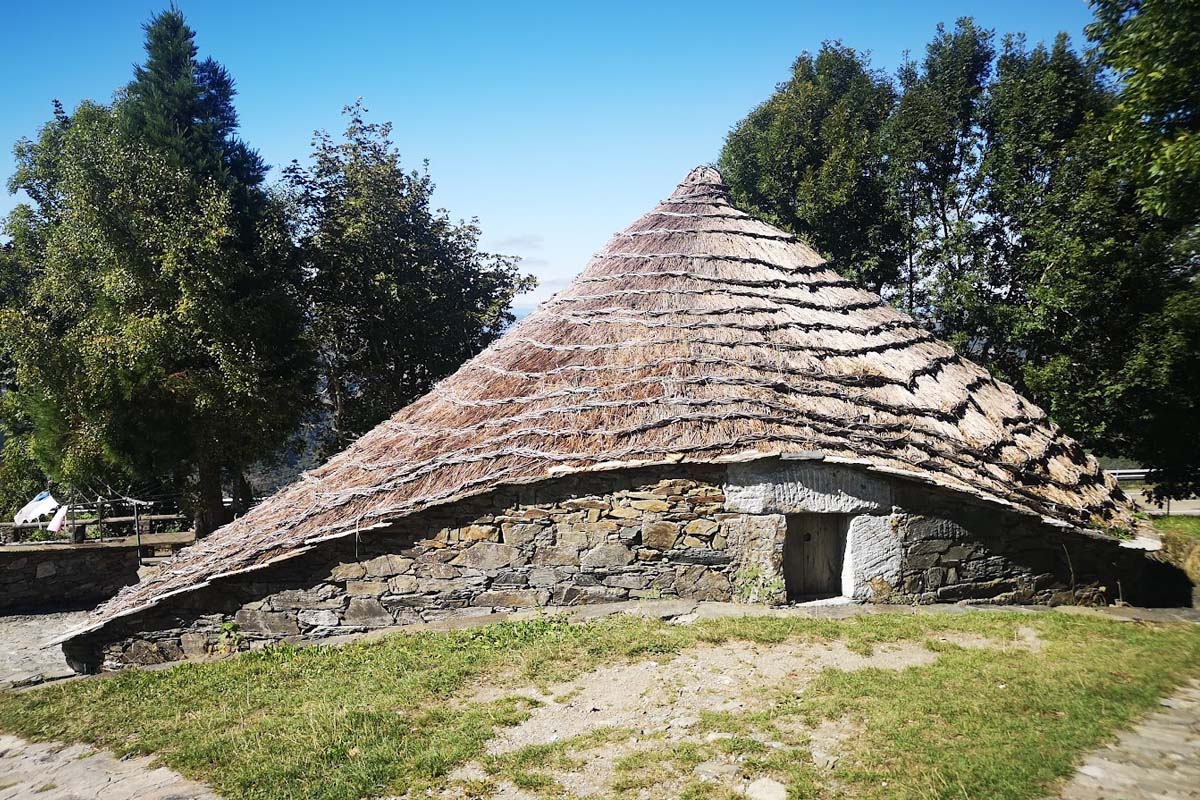
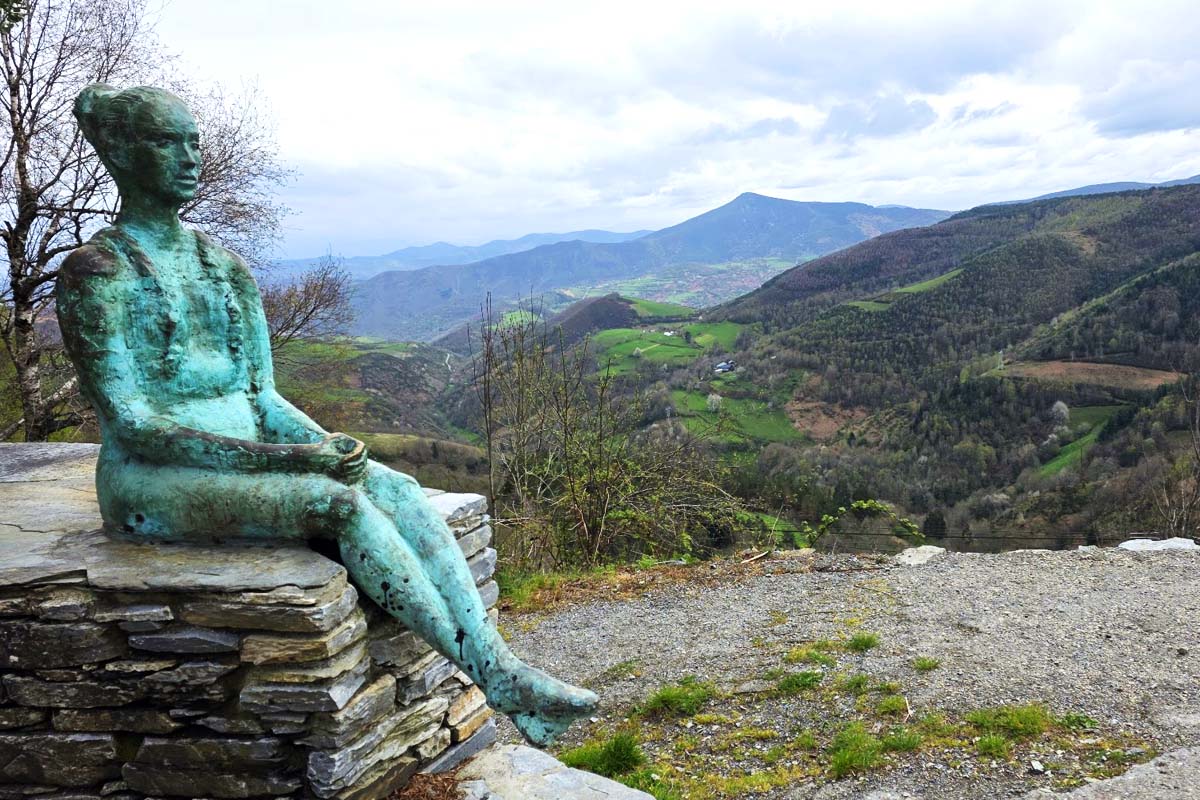
O Cebreiro is a special place. The village sits on a windswept ridge at an elevation of nearly 1,300 meters. Round stone pallozas line the village, built with thick walls and characteristic rye-thatch roofs. These structures preserve architectural traditions dating back to Celtic times, creating a sight that feels as though a bygone era has survived amidst the mountains.
One of the key figures in the history of the Camino, Elías Valiña, is also laid to rest here. The local priest is credited with creating the system of yellow arrows that guides millions of pilgrims toward Santiago today. Beside the church, his grave is often covered with scallop shells, stones, and small notes, honoring how much he did to revitalize the Camino.
It is worth taking your time in O Cebreiro. The rooftops vanishing into the mist, the rapidly changing light over the mountains, and the calm rhythm of the village create an atmosphere that many pilgrims look back on as one of the most memorable stops of the entire journey.
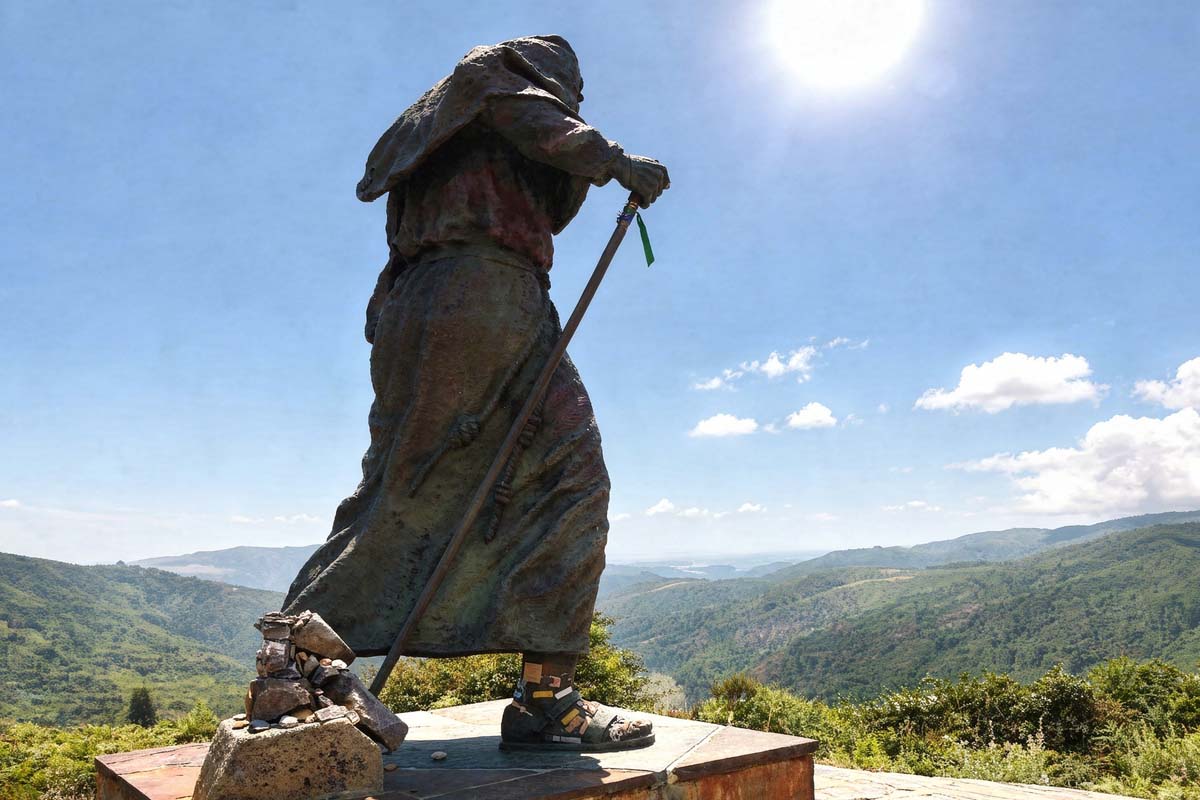
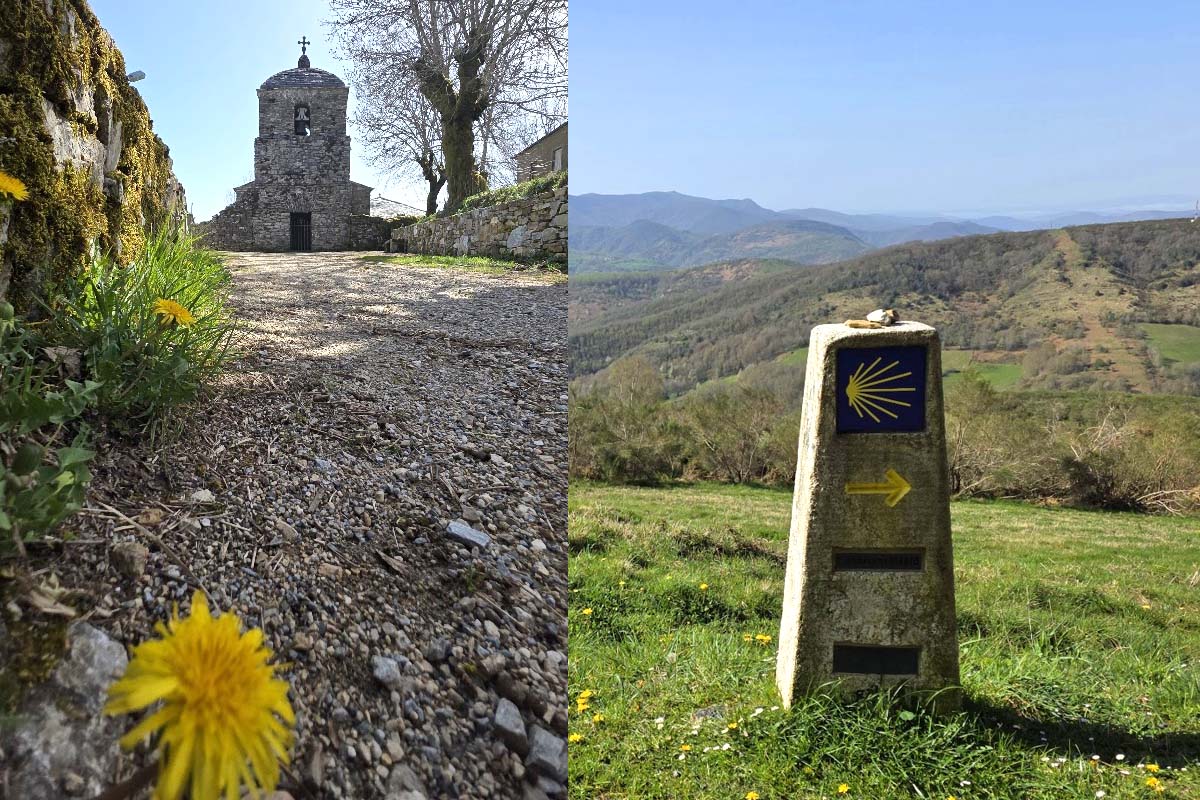
Walking onward across the rolling terrain, you soon reach the village of Hospital da Condesa. Named after its historic pilgrim hospital, the town greets you today with its characteristic slate-stone Galician architecture. Past the village, the path gently climbs toward Padornelo, with surrounding pastures and the rhythmic clanking of cowbells serving as your background music. The hardest part of this section comes next: making the final push up to the summit of Alto do Poio. Sitting at 1,337 meters, this is the highest point of the Camino Francés in Galicia. The terrace of the legendary bar at the top offers the perfect spot to replenish your energy, while the sweeping panorama completely recharges your drained batteries.
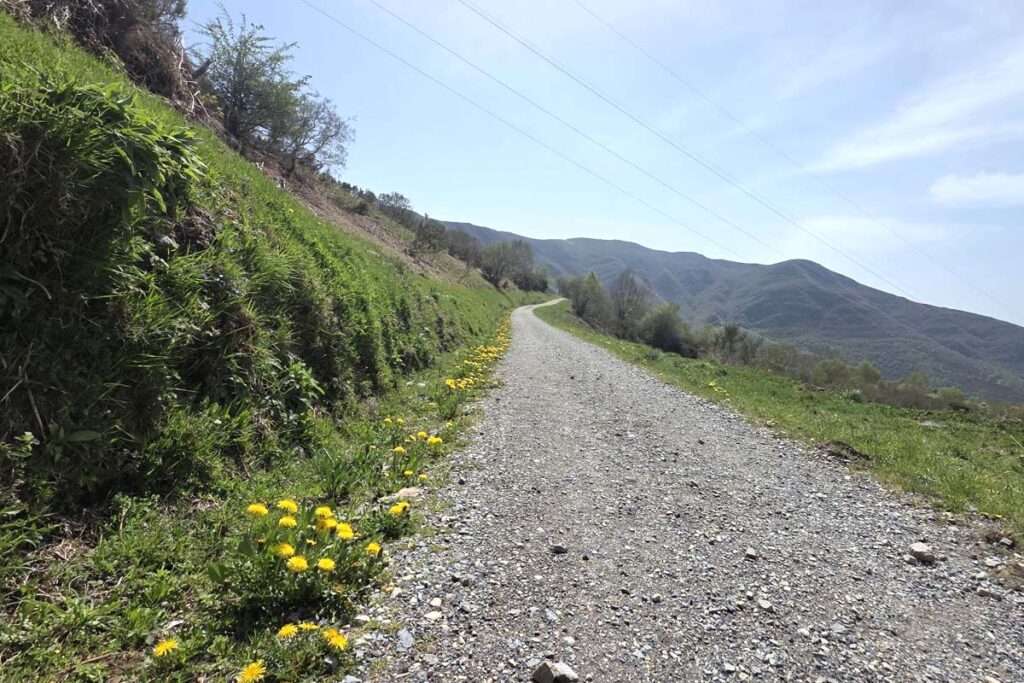
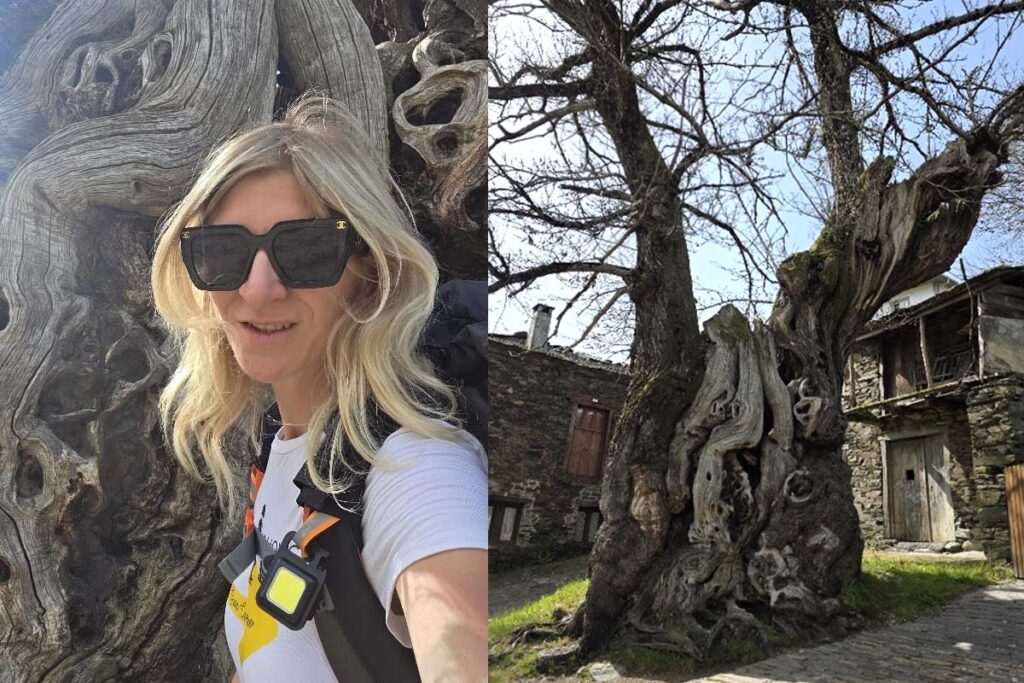
From the summit, a gentler, more gradual stretch begins. Next comes Fonfría, known for its clear spring water, before the trail leads into the tiny settlement of O Biduedo. Here, you can already feel the landscape changing: the barren, high-mountain pastures slowly give way to lush, green forests and chestnut trees. Descending toward the valley, you pass through the hamlets of Filloval and Pasantes. The downhill stretch can be tough on the thighs in places, but the view of the Triacastela Valley spreading out below more than makes up for it. Just before your destination, you reach the village of Ramil, where you walk past a monumental, 800-year-old chestnut tree. This natural patriarch is the final major landmark before you arrive at your end point.
Route: Triacastela – Balsa – San Xil – Montán – Furela – Pintín – Calvor – Aguiada – Sarria – As Paredes – Vilei – Barbadelo – Rente – Mercado da Serra – Leiman – Peruscallo – Cortiñas – Brea – Morgade – Ferreiros – Mirallos – A Pena – Mercadoiro – Moutras – Parrocha – Vilachá – Portomarín
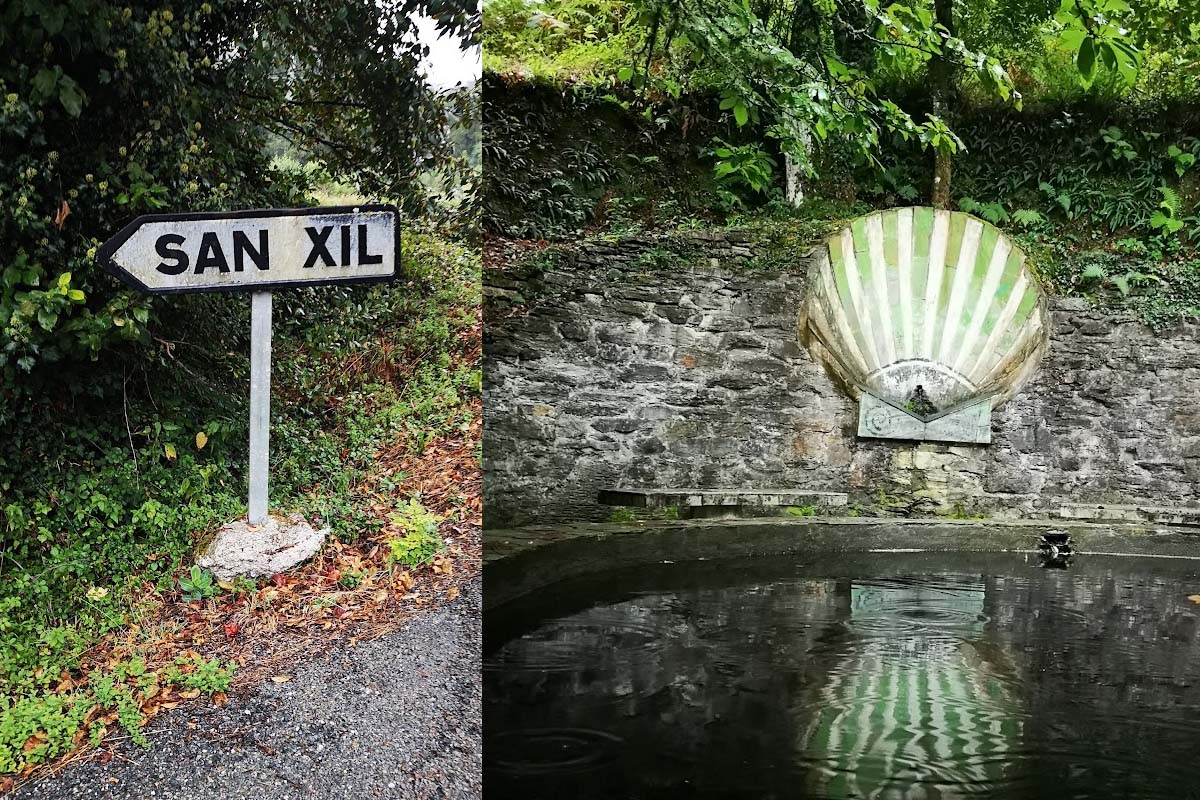
After Triacastela, the Camino Francés offers two completely different experiences, so the choice depends on your mood for the day and your personal pace. The northern option via San Xil is the classic, nature-focused route. Starting with steeper climbs, this shorter section winds through oak forests and tiny Galician hamlets. Open cafes are few and far between, with the focus set on quiet and reflection. Passing through Fontearcuda and Furela, the trail rolls along before gradually descending after Pintín, finally reaching the village of Aguiada. The southern alternative via Samos is longer, following the gentler, more paved terrain of the river valley. Nestled in the valley, Samos serves as the cultural heart of this section, with many choosing this detour for its magnificent Benedictine monastery. Here, local gastronomy and historic architecture take center stage. Past Samos, the path leads along farmland and small farmsteads, winding around the hills before joining back up in Aguiada.
After Aguiada, the two alternatives merge, and pilgrims follow a single shared path from this point on. Past San Mamede do Camiño and Vigo, the landscape grows increasingly built-up, signaling that a larger town is near. The final kilometers lead through the suburbs of Sarria, with the stage ending in its bustling center, filled with the energy of fellow pilgrims.
In Sarria, you can decide whether to stop and rest or press on immediately. Either way, stock your backpack with fuel, because what comes next is pure, unadulterated Galicia! Setting off toward As Paredes and Vilei, you are instantly immersed in a genuine sense of countryside freedom.
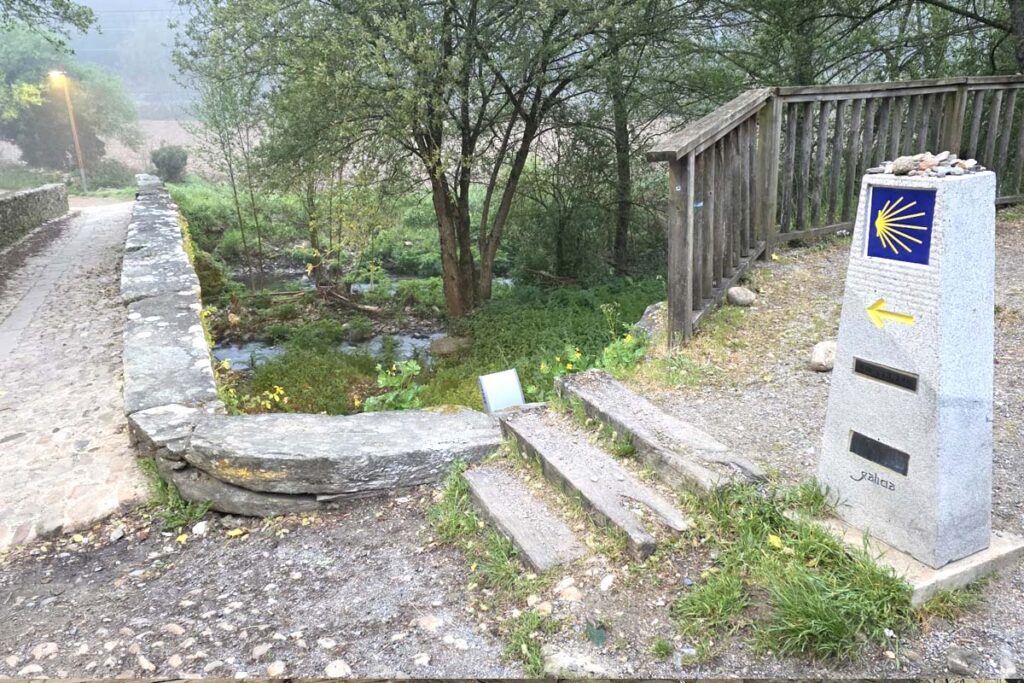
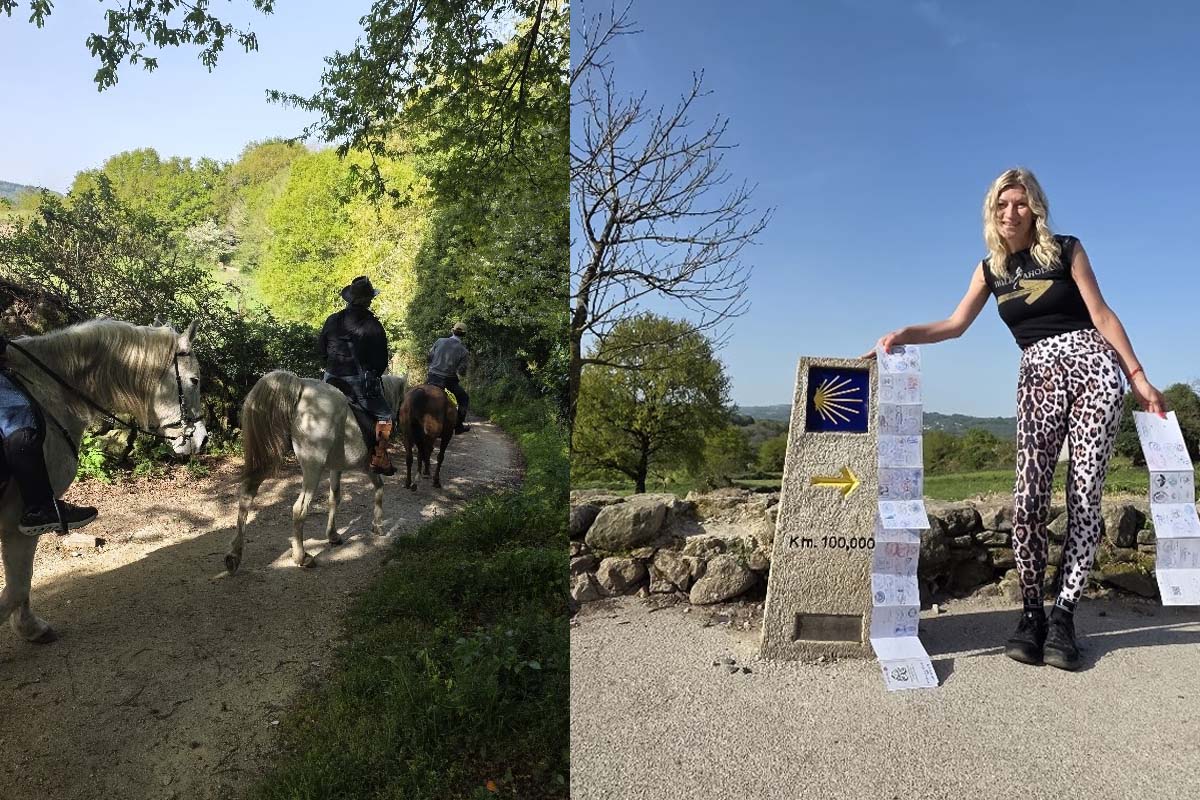
Passing the mystical medieval church of Barbadelo, you feel history and your own journey align perfectly in the depths of the shady oak groves. After Rente and Mercado Serra, you navigate between stone walls that have watched over travelers like you for centuries. Heading toward Leiman and Peruscallo past traditional hórreos, every meter charges you with energy. Climbing toward Morgade beyond Cortiñas and Brea, you push your limits, carried forward by your own momentum. And then, at the border of Ferreiros, you spot the magic number 100 carved into stone. This is the moment that gives you goosebumps: you've tackled the hardest part, and only double digits stand between you and Santiago! After Mirallos and A Pena, you earn the freshest tortilla and an ice-cold refreshment on the stylish terraces of Mercadoiro, swapping stories with fellow pilgrims.
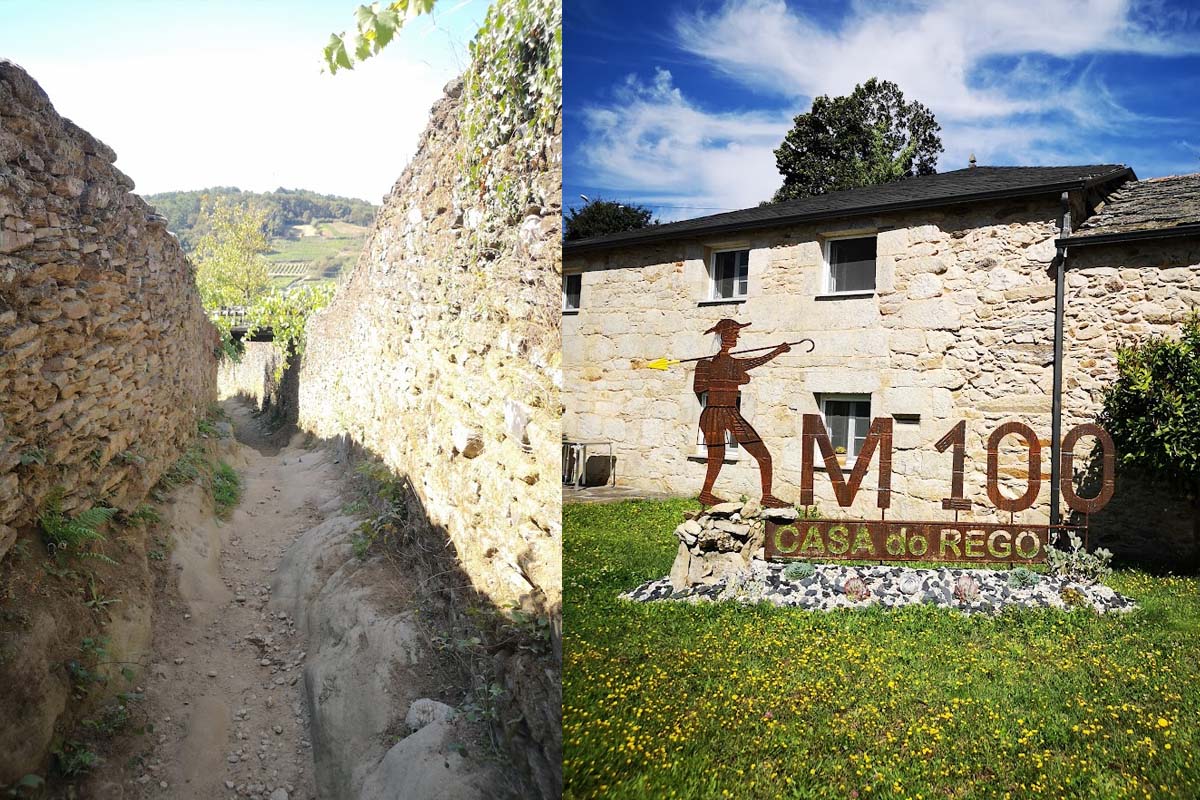
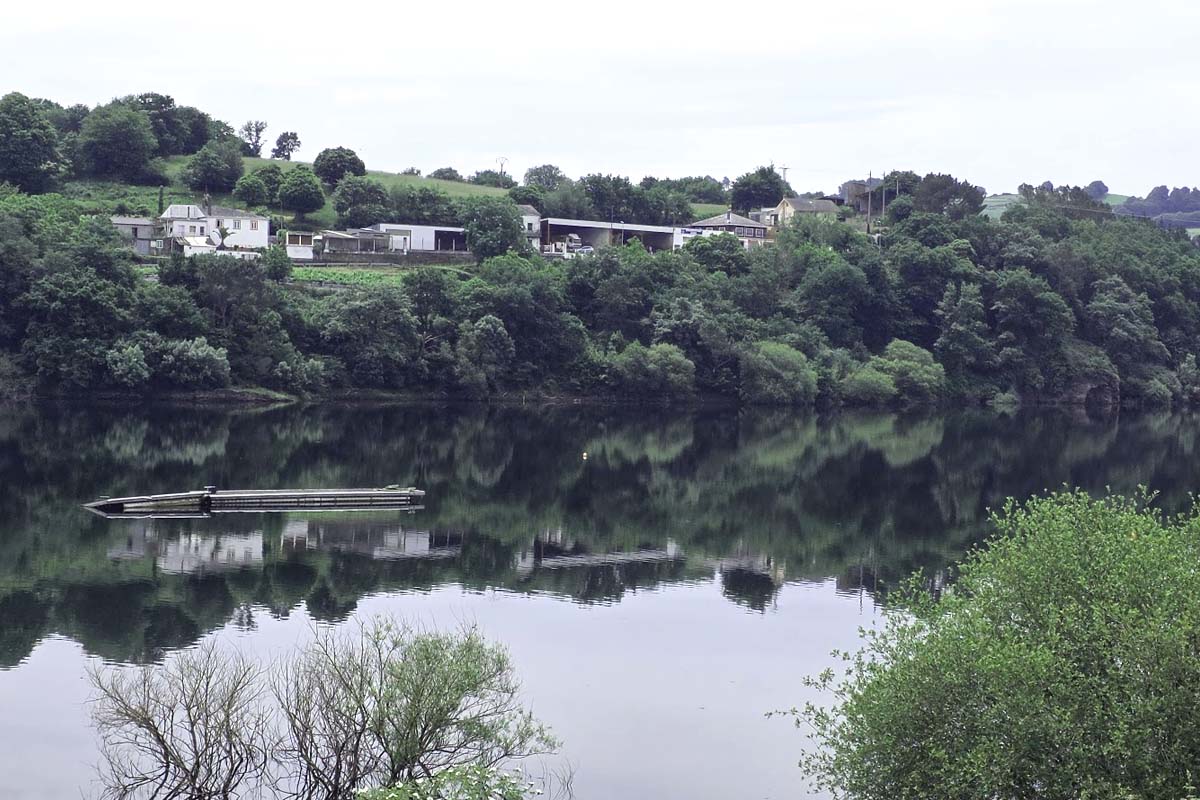
Walking across the rolling hills of Moutras and Parrocha becomes a pure flow state. When you catch sight of the vast Miño River valley from the edge of Vilachá, the view is breathtaking, but this is precisely where the tricky part begins. Before reaching the bridge, you descend a slope so steep, loose, and gravelly that you had better keep your eyes glued to your feet and fully focus on every step. Once you safely reach the bottom, the highlight of the day awaits: crossing the massive modern bridge over the river, then climbing the monumental stone staircase to arrive in Portomarín, a historic town with a uniquely enchanting atmosphere built on the shores of the reservoir.
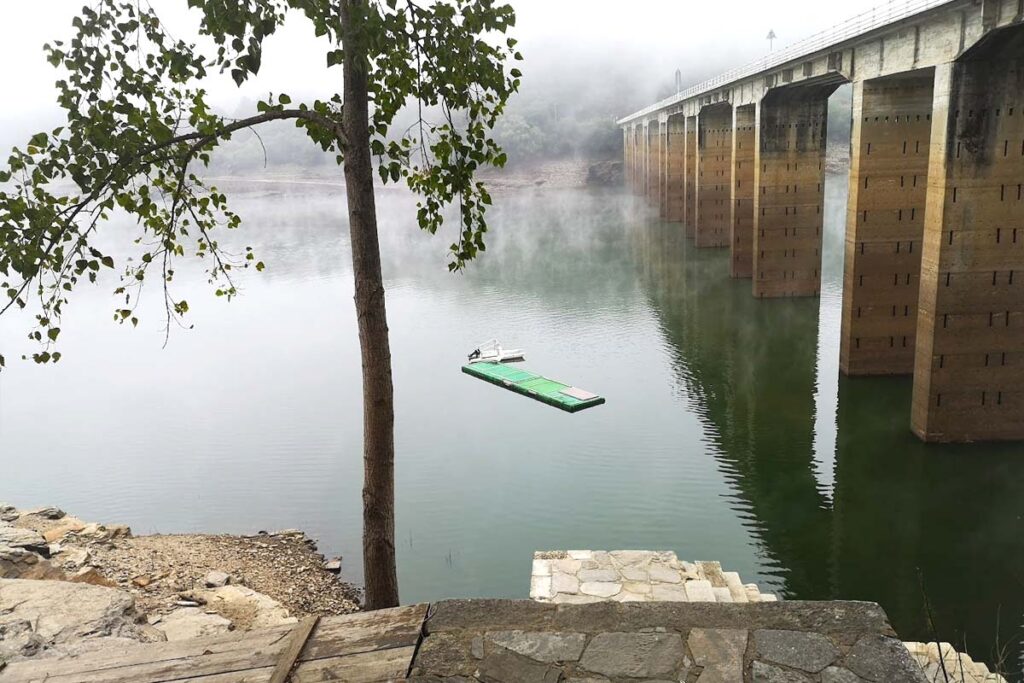
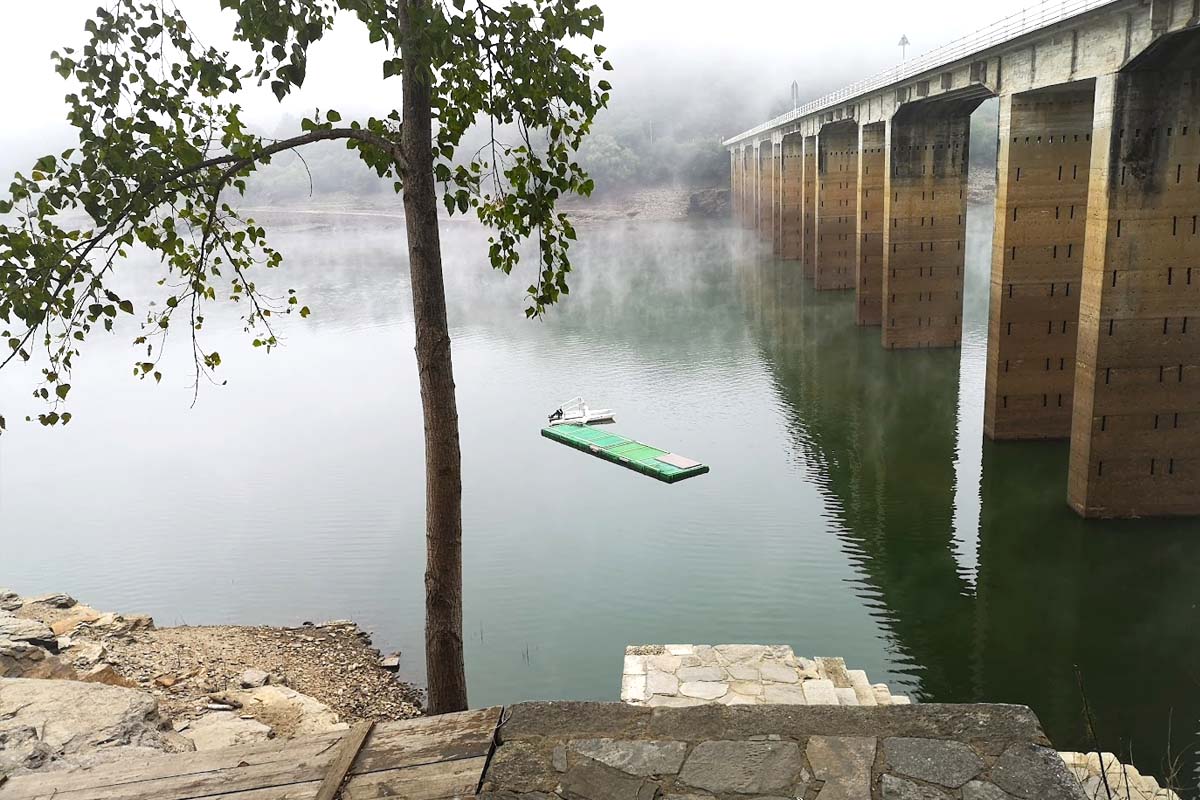
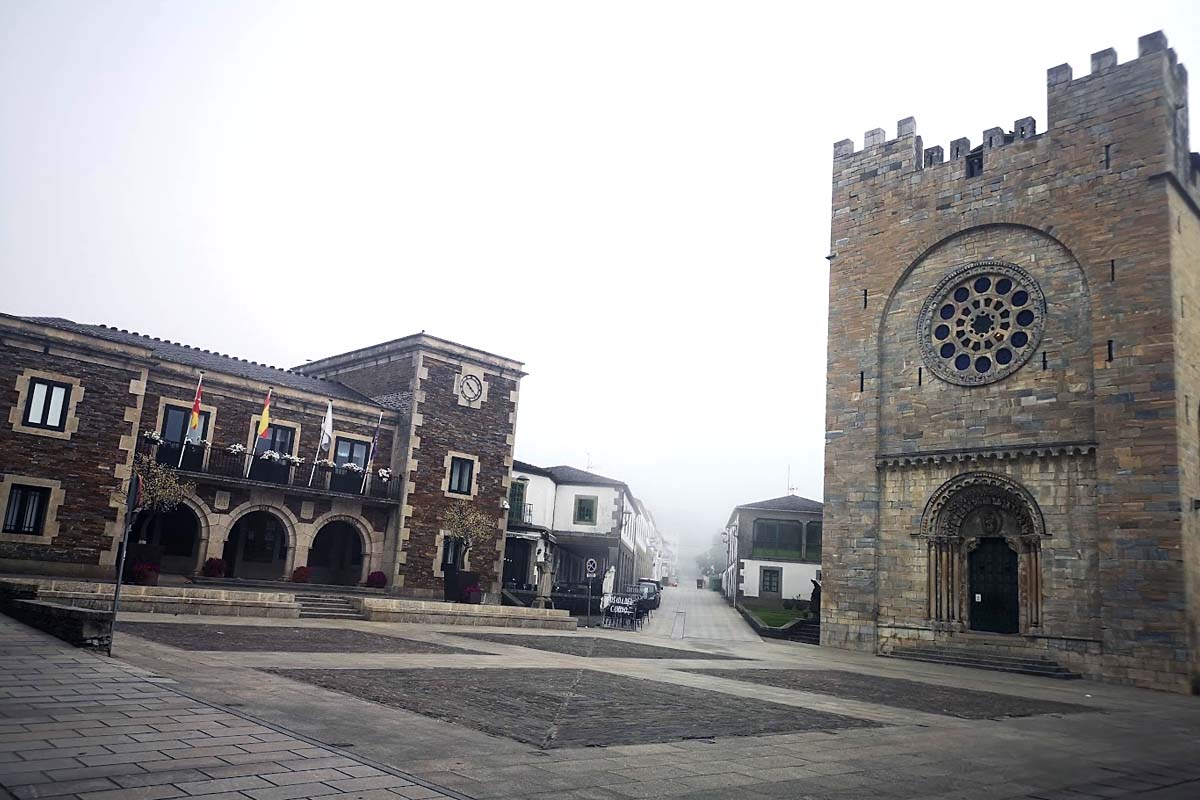
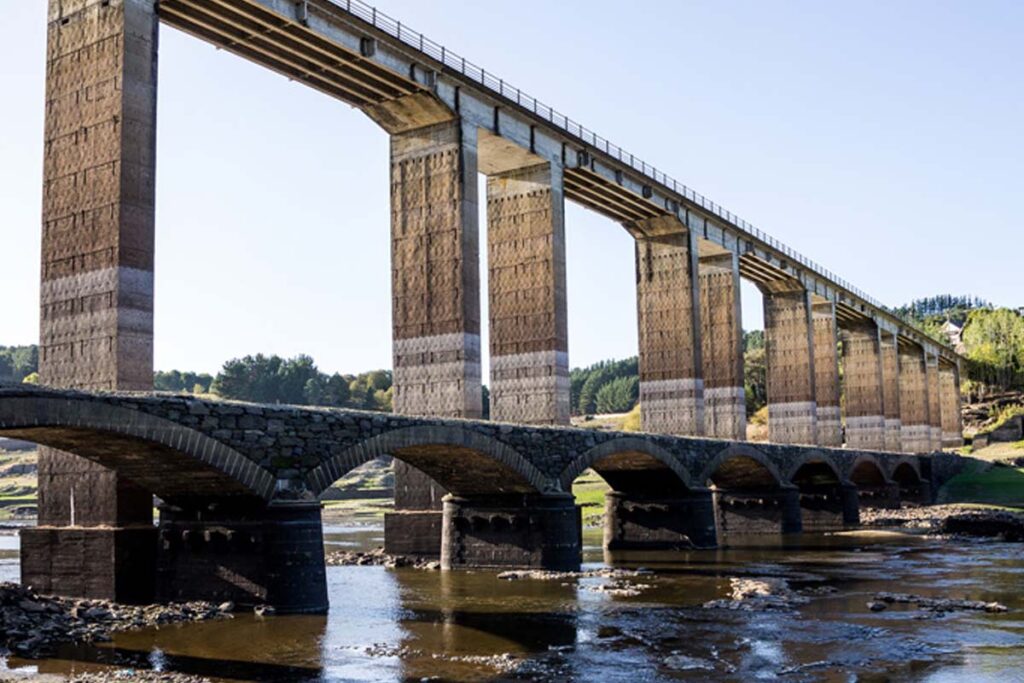
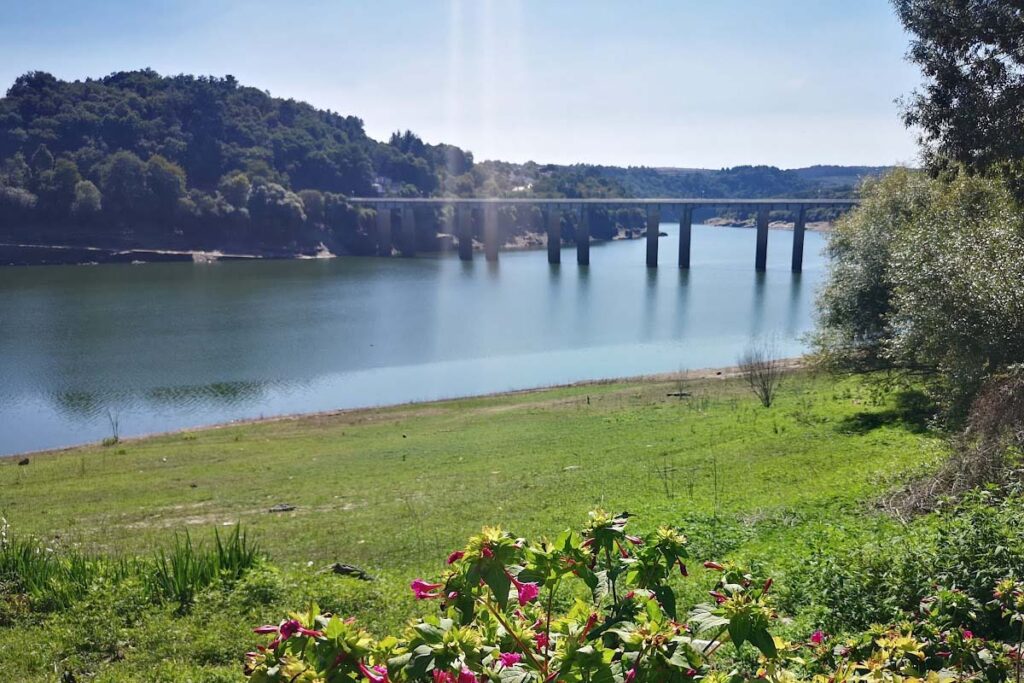
When the Belesar reservoir was built in the 1960s, the damming of the Miño River completely submerged the old town and the historic Romanesque bridge. However, the villagers refused to lose their most cherished heritage. Through an astounding feat of engineering and community dedication, every single stone of the Fortress-Church of San Nicolás standing by the riverbank was individually numbered, the walls were carefully dismantled, and then carried up to the hilltop to the new Portomarín. Today, this monumental building still stands in the spacious main square, meticulously reconstructed stone by stone. If you take a closer look at the dark gray and brown sandstone blocks, the numbers and markings carved into the stones remain clearly visible to this day. During particularly dry summers, when the water level of the reservoir drops significantly, the ruins of the old houses and the remaining piers of the bridge can still be seen down in the valley, while life and history carry on above at a safe height.
Route: Portomarín – Toxibó – Gonzar – Castromaior – Hospital da Cruz – Ventas de Narón – Previsa – Lameiros – Ligonde – Airexe – Portos – Lestedo – Os Valos – Mamurria – A Brea – Palas de Rei
The section out of Portomarín kicks off right away with a steady climb under the canopy. In May, temperatures around 30 degrees combined with 100% humidity create a true tropical sauna environment among the Galician hills. Heading toward Toxibó and Gonzar, the muggy air immediately tests your endurance, making it crucial to set off with plenty of water. Continuous hydration is essential along this stretch, so keep your water bottle within easy reach and sip frequently.
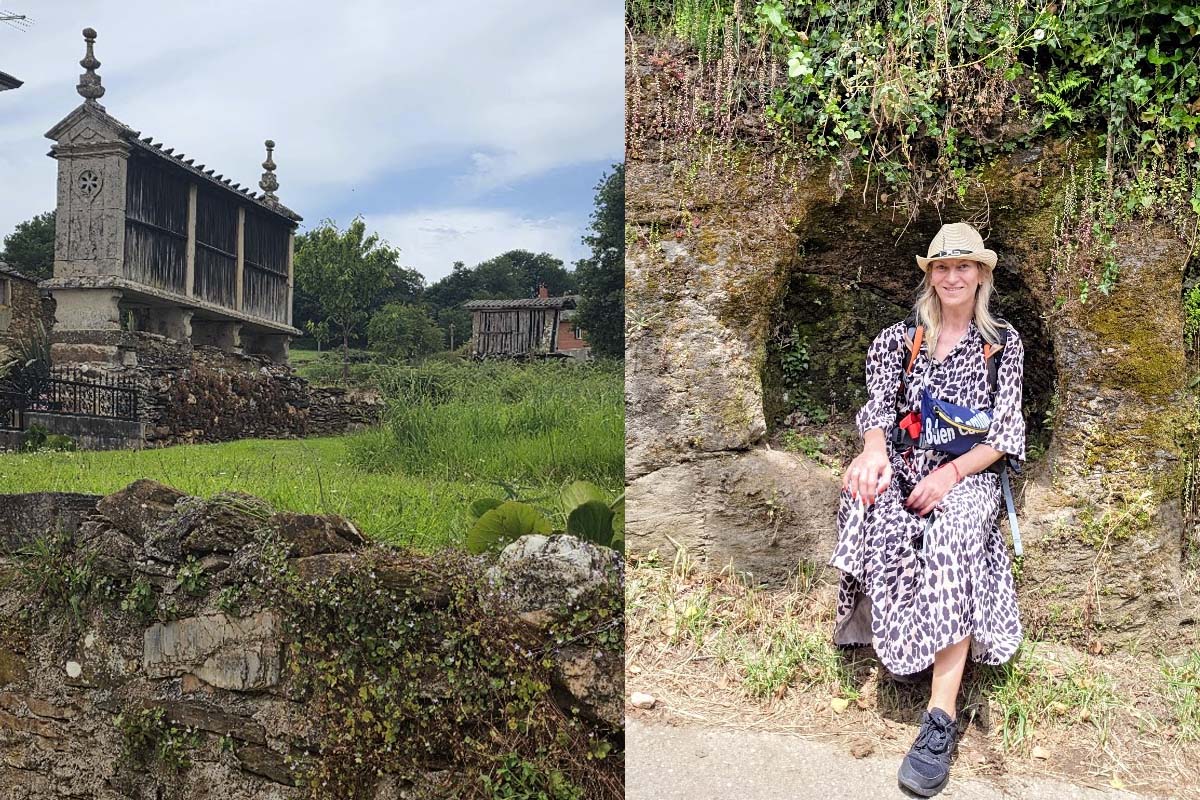
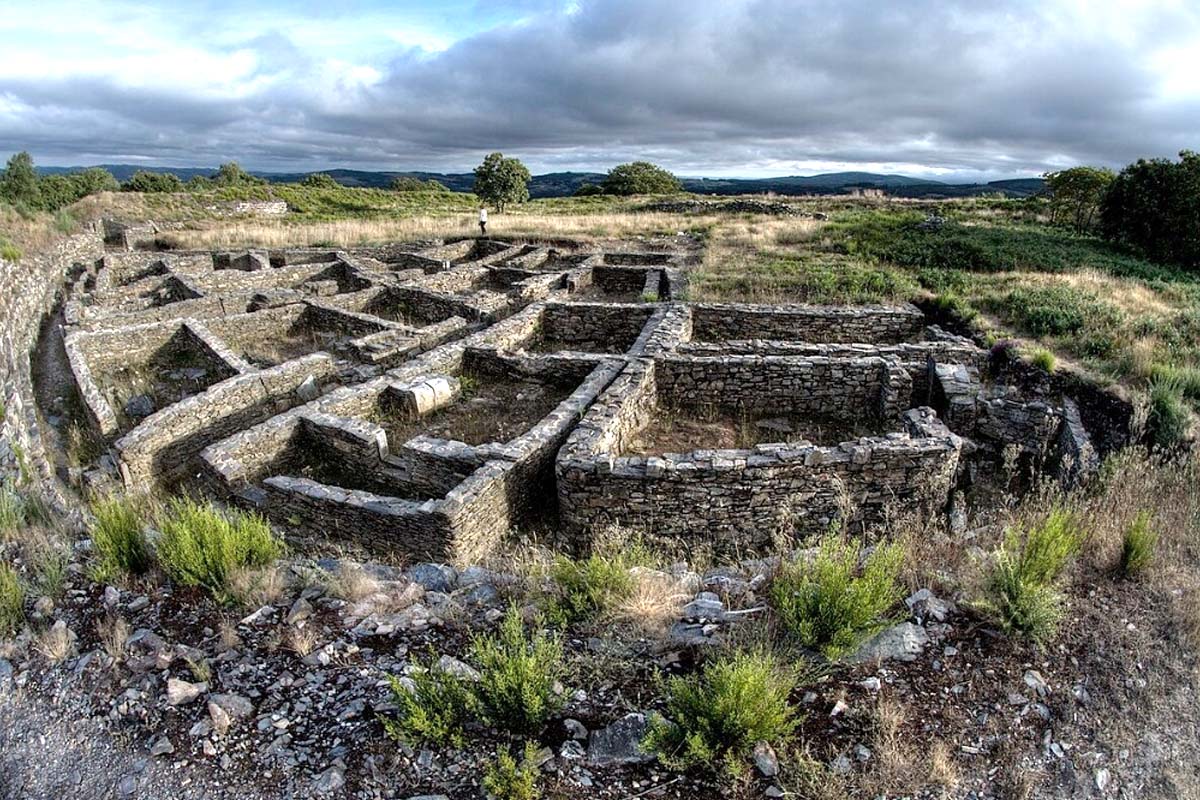
In the hilly landscape of Castromaior, the path winds under the open sky, leading you to a true historical treasure around the seventh kilometer of the stage. You shouldn't pass by one of the most popular archaeological sites on the Camino de Santiago, the Castro de Castromaior. The Camino Francés passes right at the foot of this Iron Age hillfort, where a signposted, two-minute detour takes you straight to the hilltop. Inhabited from the 4th century BC to the 1st century AD, visiting the settlement is completely free, with no fences or opening hours, allowing you to explore the site even at early dawn.
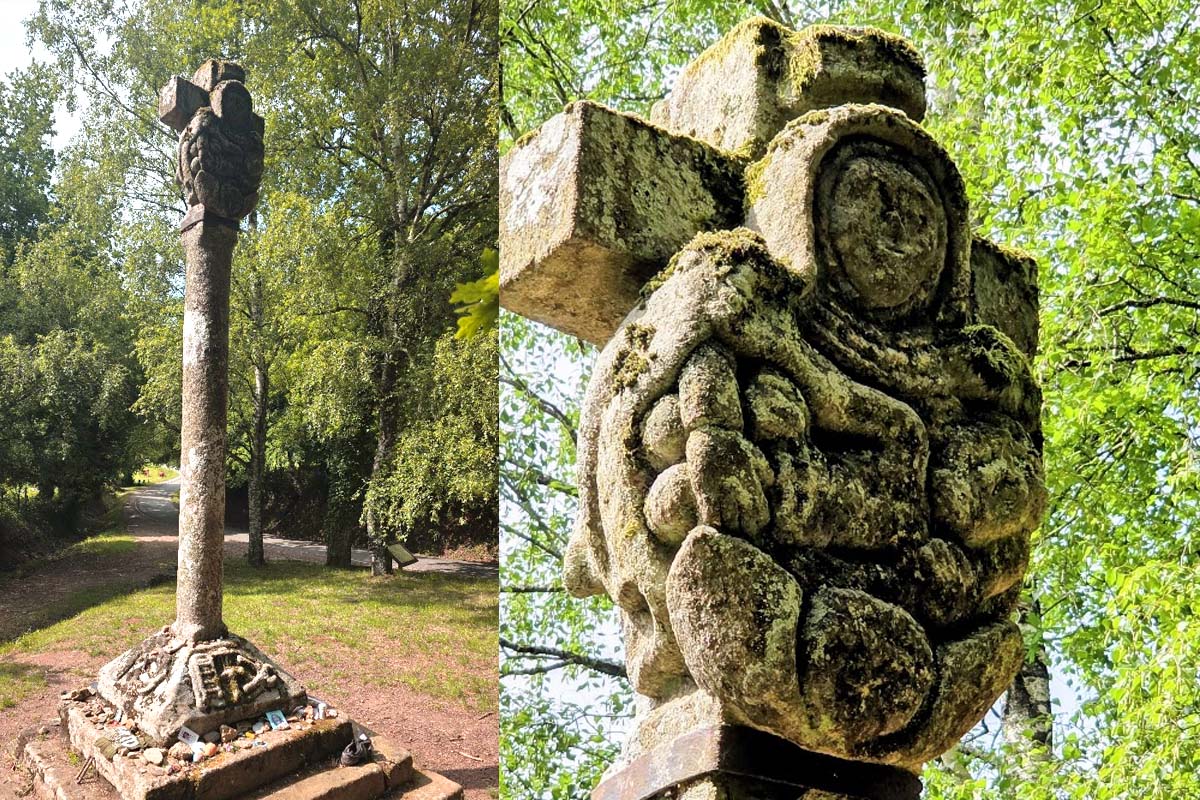
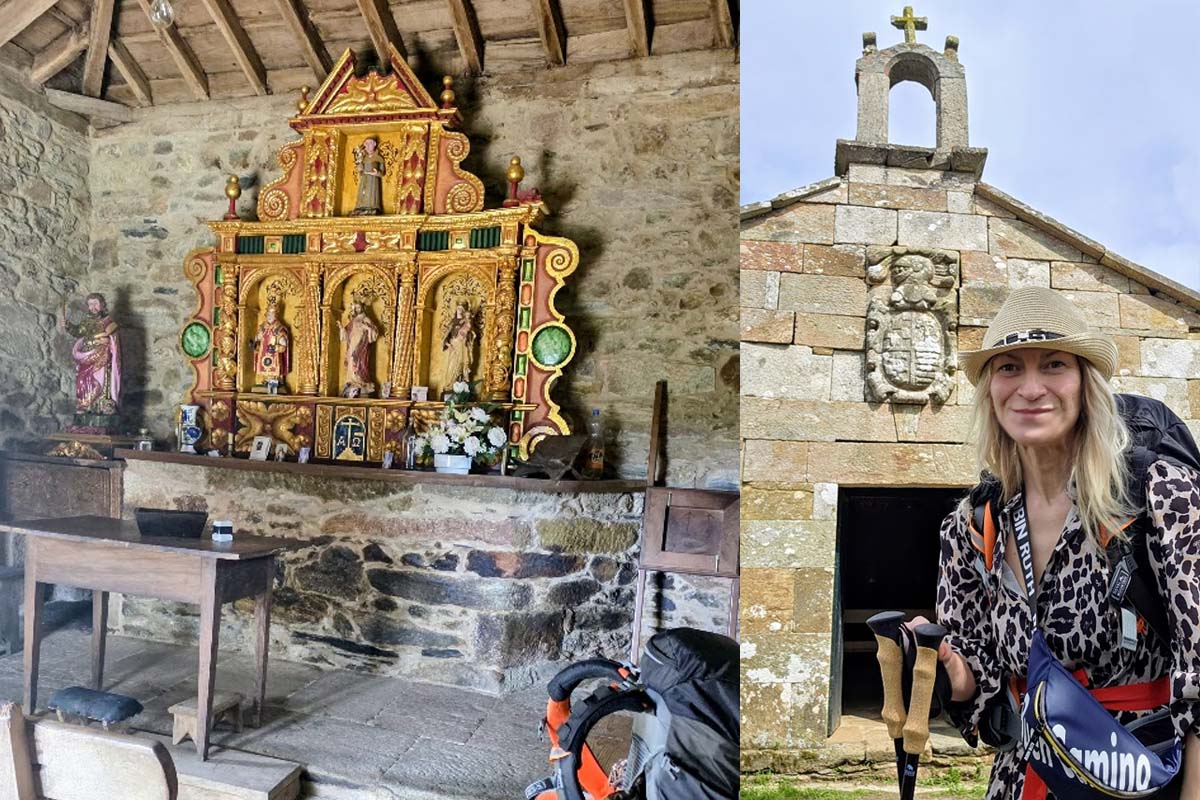
After the historic detour, paved roads follow through Hospital da Cruz and Ventas de Narón, where the rolling hills of the Sierra de Ligonde shape the horizon. Past Previsa, you reach the village of Lameiros, where the Capilla de San Marcos Os Lameiros—a popular rest spot for pilgrims—stands directly beside the trail. This small, solitary chapel sets a perfect reflective mood before you reach the famous 17th-century Baroque stone cross just beyond the village, the Cruceiro de Lameiros. After Ligonde, you press on between the houses of Airexe and Portos, accompanied by the rhythms of daily farm life, as traditional roadside wells offer excellent spots to fully replenish your water supply.
Palas de Rei is the perfect location to end the day—a true pilgrim hub where the classic Camino atmosphere comes alive in the afternoon hours. Although the town's architecture is more modern than that of earlier stops, its logistics and atmosphere make it one of the most comfortable bases before the final stages.
Route: Palas de Rei – San Xulián do Camiño – Pallota – Ponte Campaña – Casanova – Leboreiro – Furelos – Melide – Carballal – Boente – Castaneda – Ribadiso da Baixo – Arzúa – Taberna Vella
Leaving Palas de Rei, the day begins with the historic Romanesque church of San Xulián do Camiño. Past Pallota and Ponte Campaña, the trail leads through the tiny settlement of Casanova, where traditional Galician architecture shapes the landscape. Crossing the provincial border, you enter the historic village of Leboreiro, where cobblestone streets and a former pilgrim hospital showcase traces of the past. Before reaching Melide, you cross the medieval bridge of Furelos, which offers a prime photo spot over the river. Upon arriving in Melide, gastronomy takes center stage—this town is the absolute capital of Galician octopus, pulpo. In the local pulperías, the freshly sliced octopus dusted with paprika and drizzled with olive oil provides an instant burst of energy for the journey ahead.
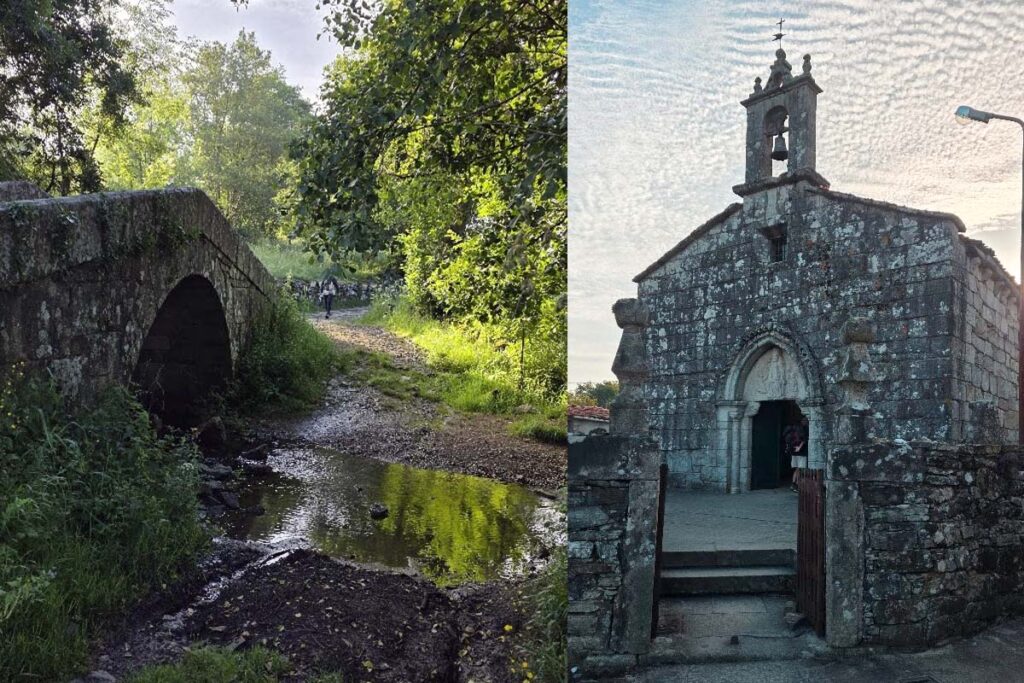
After Melide comes Carballal and Boente, where the rolling terrain keeps the landscape constantly shifting. Past the oak groves of Castaneda, the trail descends into the valley of Ribadiso da Baixo. With its cool waters and old stone houses, this riverside haven is the absolute ideal spot to rest your weary feet. From here, a demanding climb leads up into Arzúa, famous for its creamy cheeses. It is a good idea to check your water bottles and gear again here before pushing on.
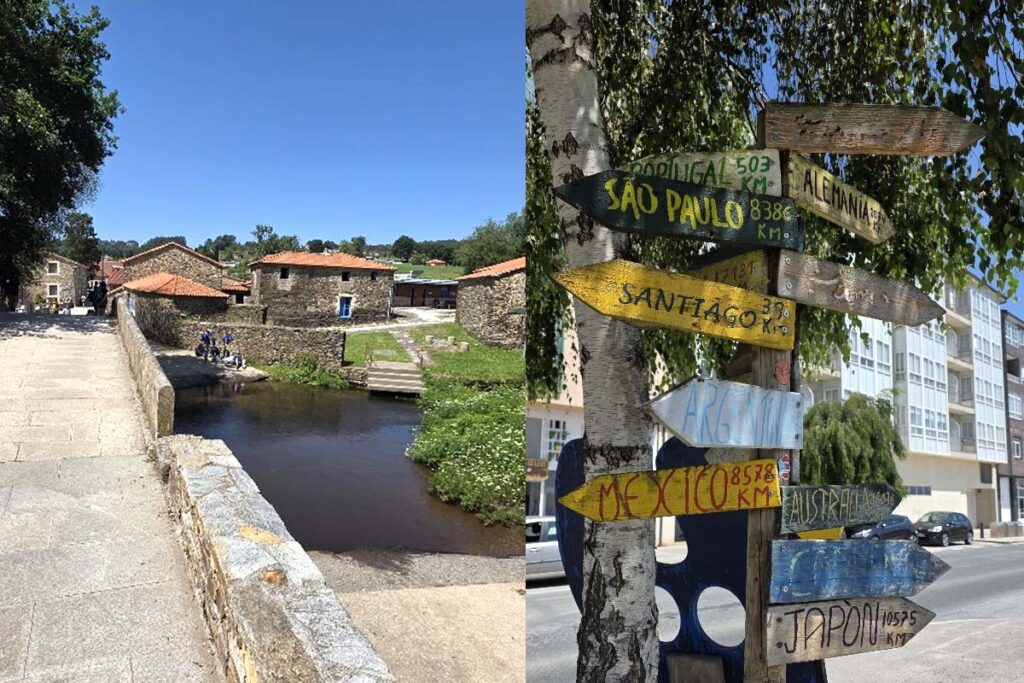
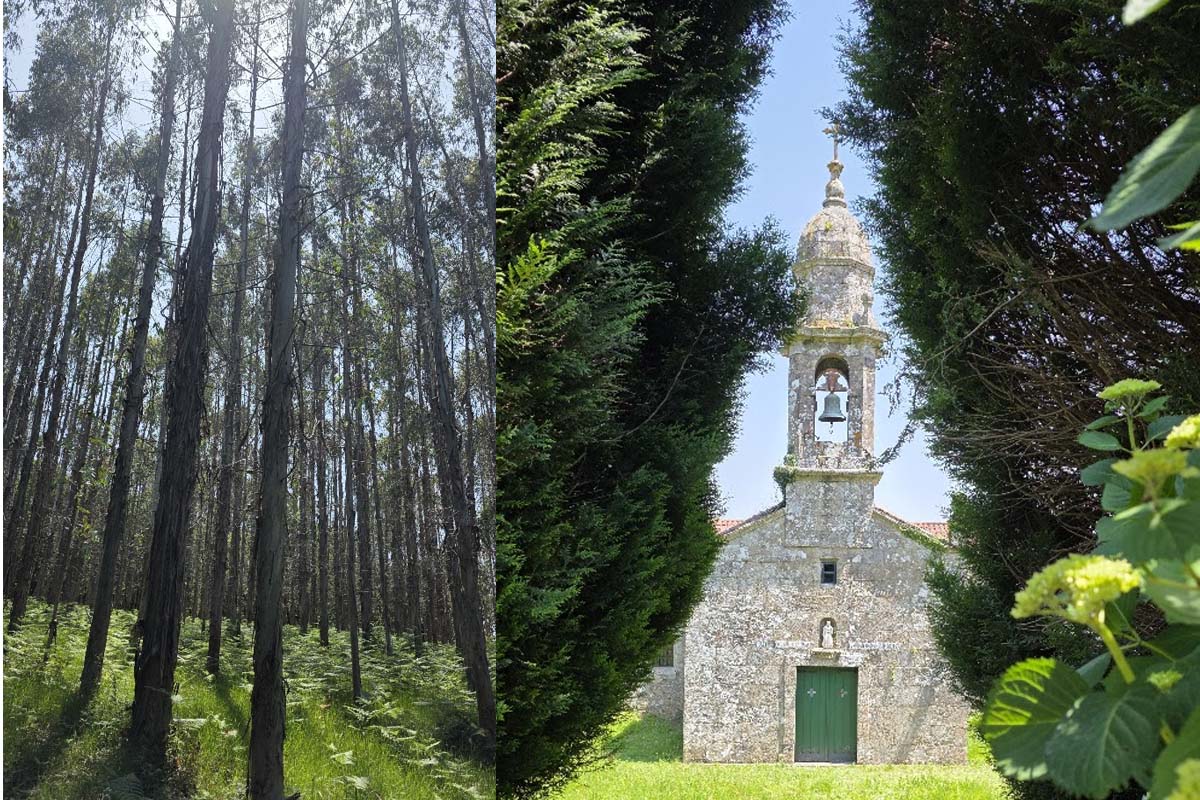
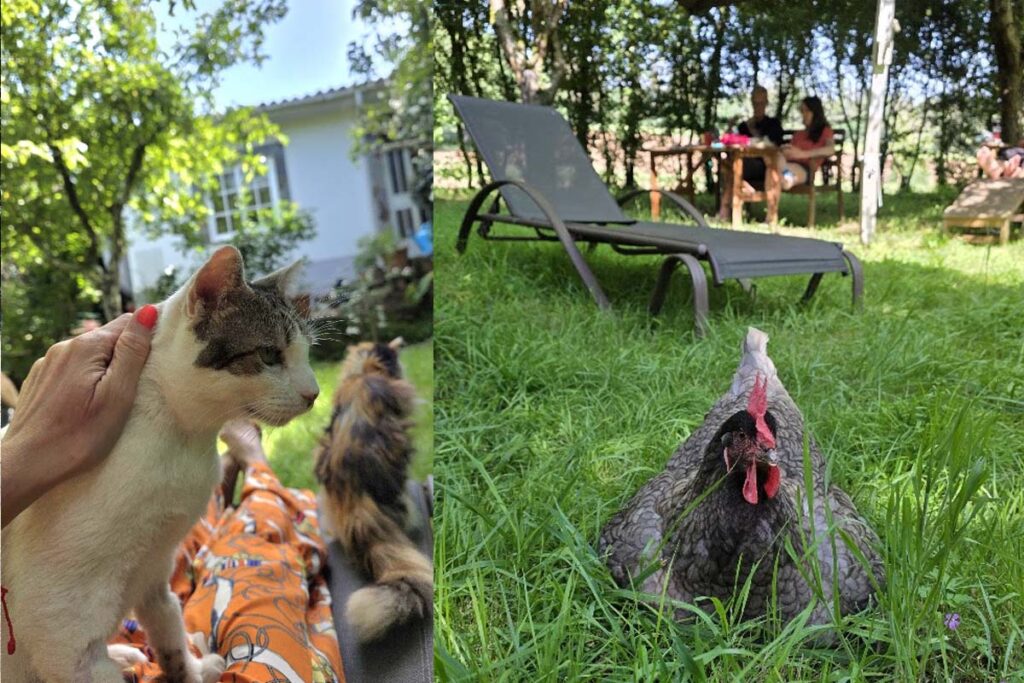
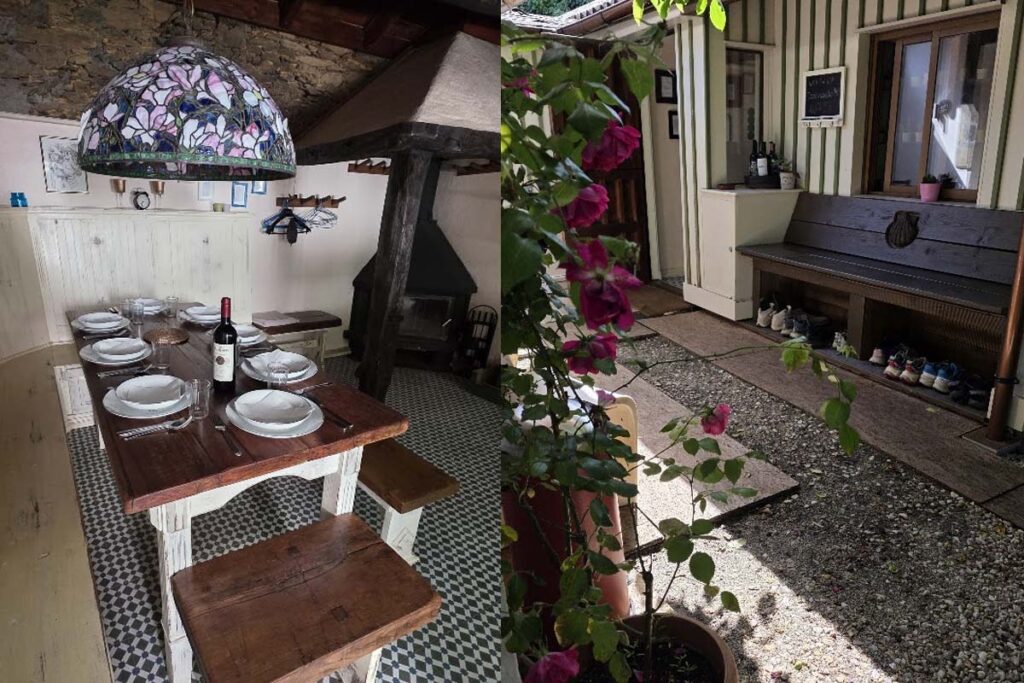
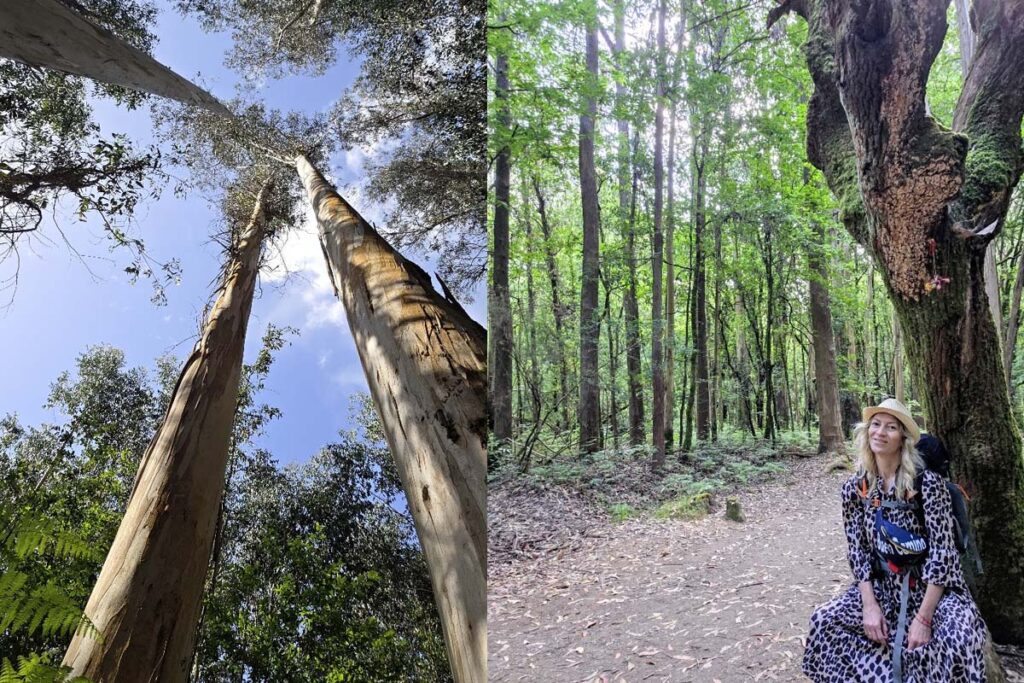
After Arzúa, the trail soon leads you into the first massive eucalyptus forests, where the intense, fresh scent of the trees gives the walk an entirely new character. Walking through this dense, shady woodland section, you reach the quiet, rural houses of Taberna Vella, which marks the end point of your stage. Since the number of pilgrims surges dramatically after Sarria, "completo" (fully booked) signs become much more common at accommodations, so it is wise to act early and secure your spot. In Taberna Vella, Heidi's accommodation is the kind of place where you instantly feel at home at the end of the day. The guesthouse is exceptionally warm and friendly, operating with just a few beds to guarantee a cozy, family-like atmosphere. The host's care is top-notch—she will even take laundry off your hands at the end of the day. Meanwhile, free-roaming chickens and cats wander around the garden, creating the ultimate village idyll for relaxation. The evening is crowned by home-cooked food and a communal dinner, where stories shared with fellow travelers make this a truly restful stop.
Útvonal: Taberna Vella – Salceda – Brea – Santa Irene – A Rua – Pedrouzo – Amenal – San Paio – Lavacolla – Vilamaior – San Marcos – Monte do Gozo – Santiago de Compostela
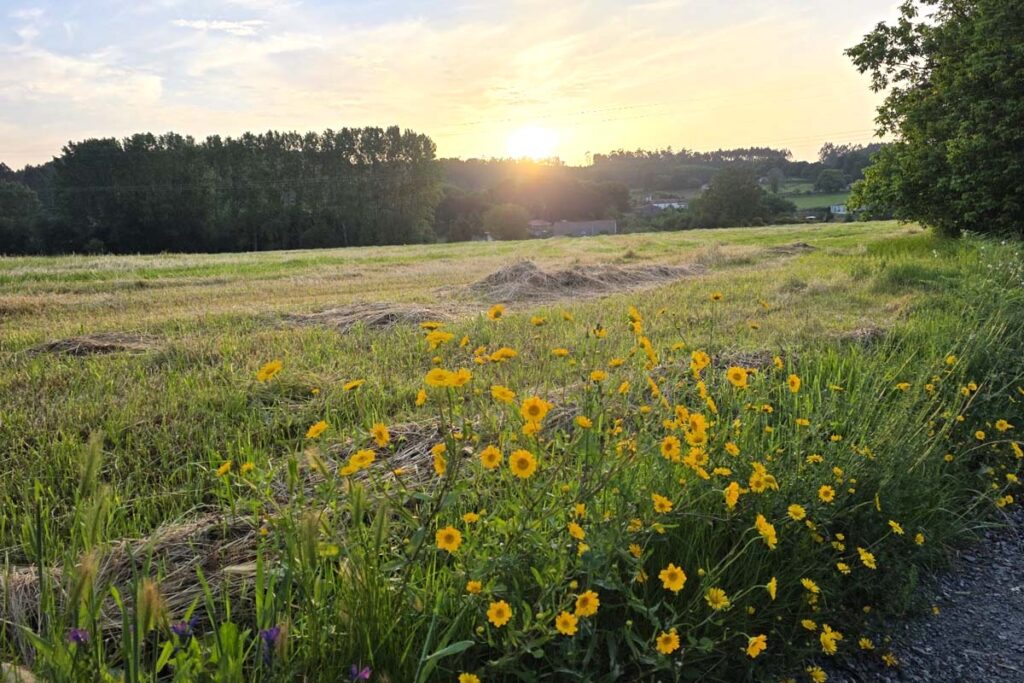
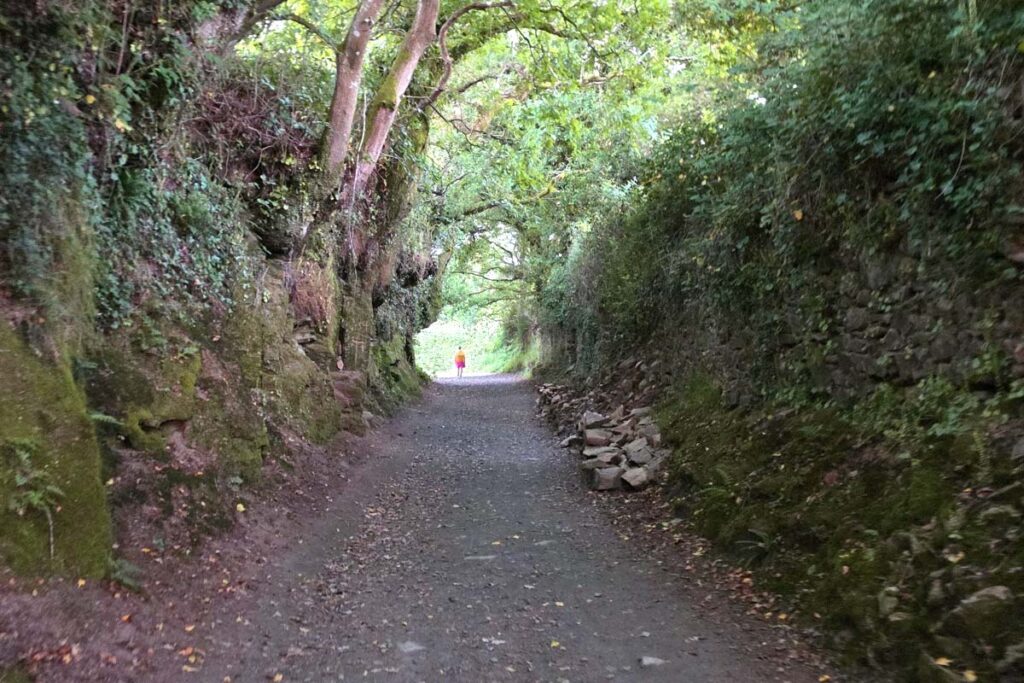
Leaving Taberna Vella behind, the final, emotion-filled countdown to Santiago de Compostela begins. The trail first leads through the tiny rural settlements of Calzada and Calle, where easy-to-walk dirt tracks continue to be flanked by everyday scenes of Galician farming life. Passing through Salceda and Brea, the path rolls continuously before entering the shady eucalyptus forests of Santa Irene, where the scent of the trees accompanies your steps through the green tunnels (corredoiras).
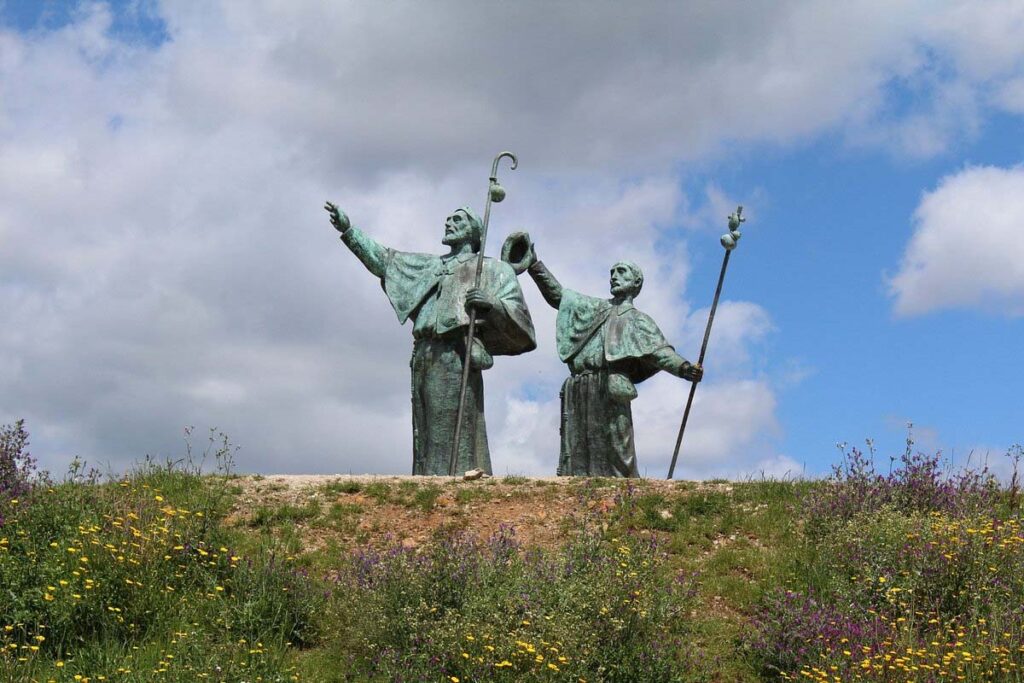
The next major logistics hub is O Pedrouzo (Arca), the final classic pilgrim base before the finish line. From here, the terrain winds through dense woods and oak groves, passing right alongside the runway of the Santiago airport, where airplanes roaring overhead signal the approaching modern world. After the village of San Paio, a determined climb leads you up to the summit of the famous Monte do Gozo (Mount of Joy). This is the iconic spot where pilgrims have caught their first distant glimpse of the cathedral's soaring towers for centuries. The monumental pilgrim statues atop the hill provide a perfect setting to pause and take it all in before you begin your final descent.
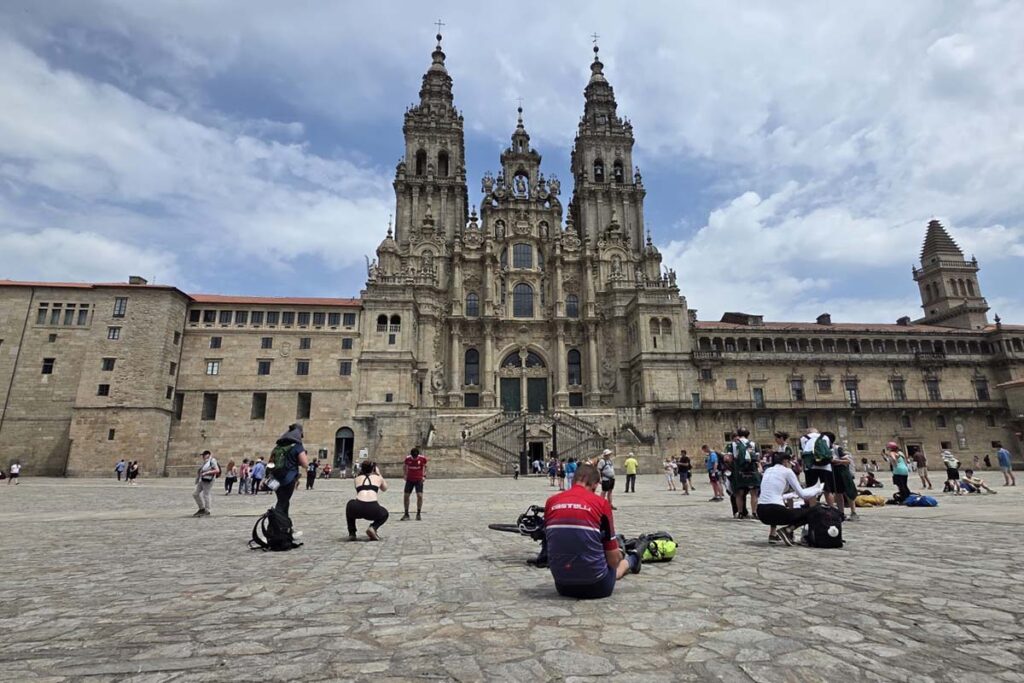
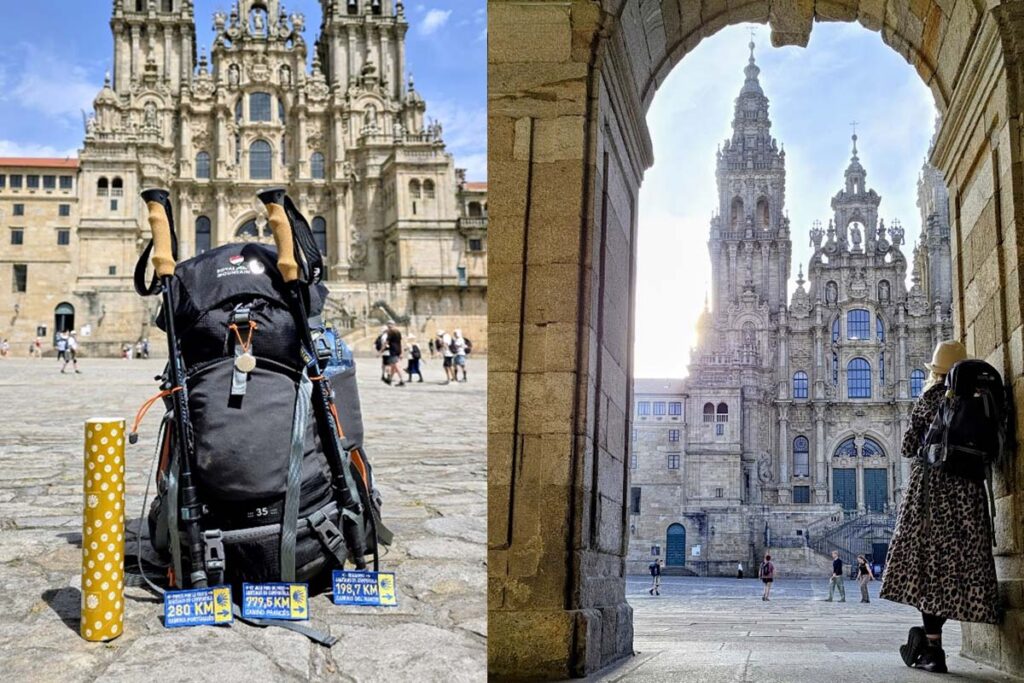
Stepping through the suburb of San Lázaro, you enter Santiago de Compostela. Beyond the streets of the modern neighborhoods, the narrow, cobblestone alleys of the medieval old town wrap around you, where the melodies of street musicians echo off neoclassical and baroque stone walls. Walking through the arched stone gateway of the Arco do Pazón, the music of bagpipes guides you to your ultimate destination. Arriving in the monumental Praza do Obradoiro before the majestic Cathedral of Santiago, sitting on the ground or leaning against your backpack, you can celebrate your arrival alongside fellow pilgrims from all over the world. Ultreia et suseia!
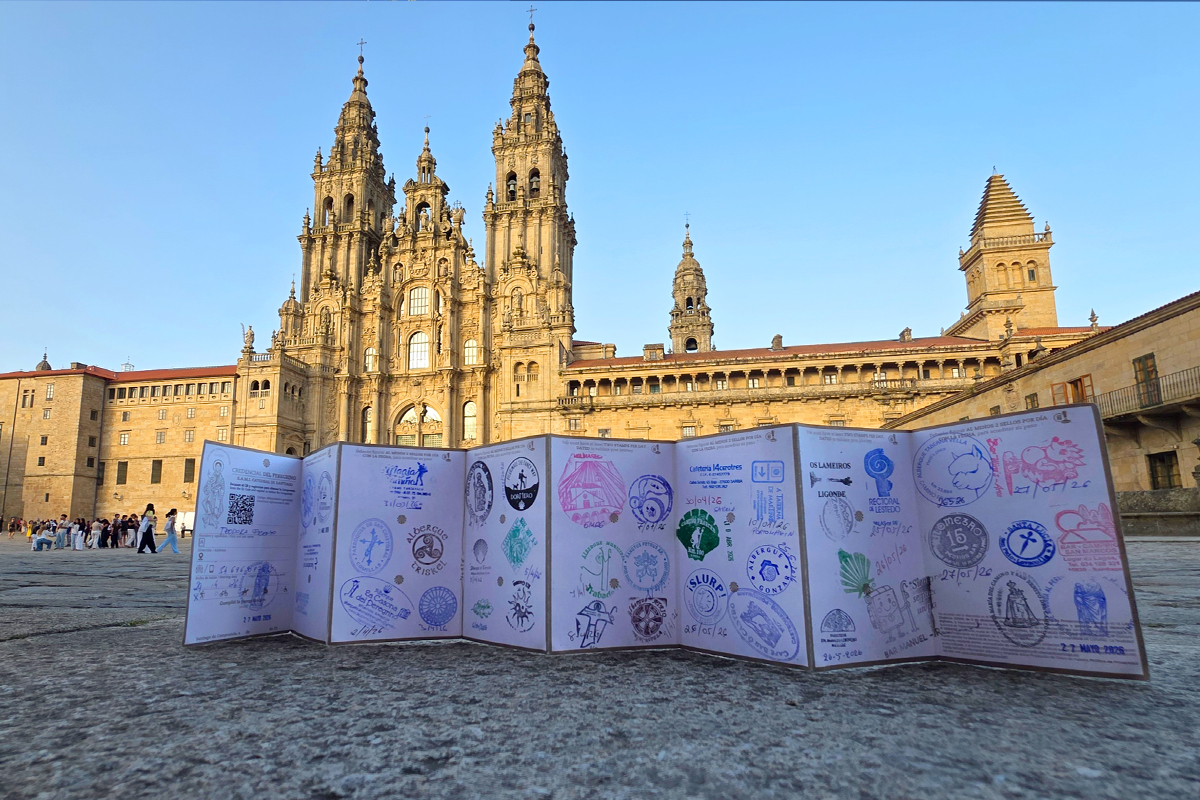
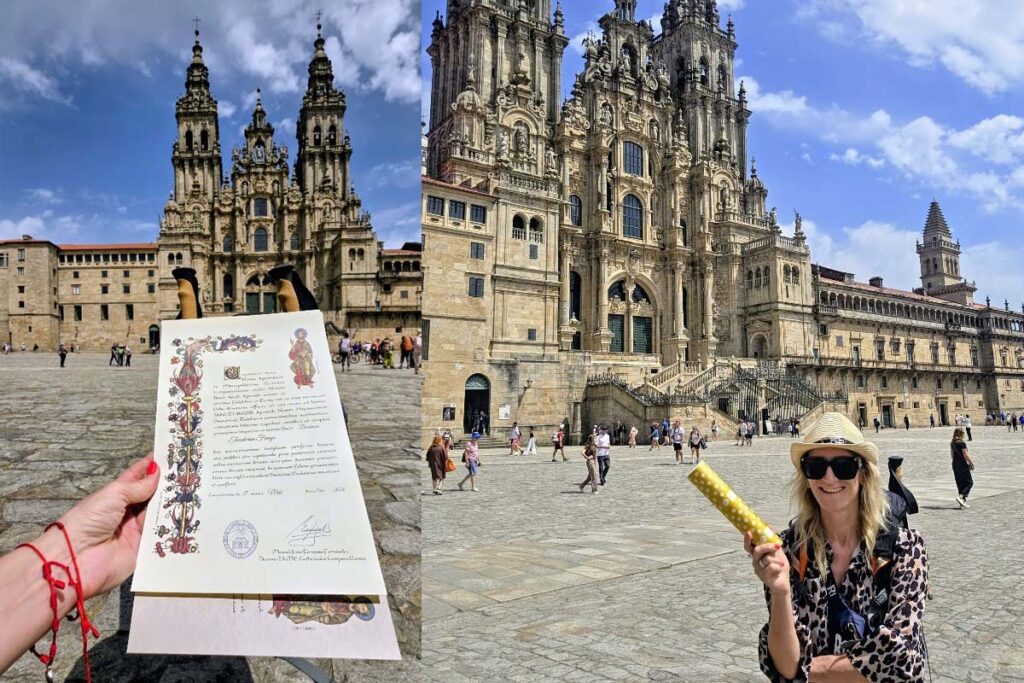
To hold your personalized certificate, the Compostela, in your hands, you need to visit the pilgrim office located near the cathedral, the Oficina de Acogida al Peregrino. The process is now extremely smooth and digitalized. Upon entering the office, or even as you walk into town, you use a QR code to register online in the official system, providing your personal details and the starting point of your pilgrimage. When your number appears on the screen, you step up to an available counter and hand over your passport filled with stamps collected faithfully along the way, the credential. The clerk carefully reviews the stamps, paying special attention to the last 100 kilometers completed since Sarria, where you had to collect at least two stamps a day from churches, albergues, or cafés. Once everything checks out, they print and proudly present you with the Latin-language Compostela certificate, which officially validates your achievement. If you like, for a minimal fee, you can also request a second certificate (Certificado de Distancia) that details the exact number of kilometers traveled and the duration of your journey.
Top Attractions/Essential Gear
Don't miss it
- Santa María de León katedrális (León)
- Palacio Gaudí (Astorga)
- Santa María katedrális (Astorga)
- Castillo de los Templarios (Ponferrada)
- Santa María la Real templom (O Cebreiro)
- San Julián de Samos kolostor (Samos)
- San Nicolás-erődtemplom (Portomarín)
- Szent Jakab katedrális (Santiago de Compostela)
What should you bring with you
- 1-1,5 l water
- Naptej, Kalap
- Hiking shoes
- Elsősegély, gyógyszerek
- Kitartás
Good to know
General
| Látnivaló | Felnőtt jegyár | Kedvezmény (Zarándok / Diák / Nyugdíjas) |
| Santa María de León katedrális (León) | 7,00 € | 6,00 € (Zarándokútlevéllel) |
| Palacio Gaudí (Astorga) | 6,00 € | 5,00 € (Zarándokútlevéllel) |
| Santa María katedrális (Astorga) | 6,00 € | 5,50 € (Zarándokútlevéllel) |
| Castillo de los Templarios (Ponferrada) | 6,00 € | 4,00 € (Zarándokútlevéllel) / Szerdánként ingyenes |
| Santa María la Real templom (O Cebreiro) | Ingyenes | Ingyenes |
| San Julián de Samos kolostor (Samos) | 5,00 € | Vezetett túrával együtt |
| San Nicolás-erődtemplom (Portomarín) | Ingyenes | Ingyenes (Adományt elfogadnak) |
| Szent Jakab katedrális (Santiago de Compostela) | Ingyenes | A főhajó ingyenes (A múzeum és a tetőtúra fizetős) |
A Francia út biztonsági tudnivalói és szabályai listajelek nélkül, könnyen másolható formában:
A Camino Francés Európa egyik legbiztonságosabb és legjobban kiépített zarándokútvonala, de a gondtalan utazáshoz érdemes betartani néhány alapvető biztonsági és íratlan szabályt.
Personal Safety and Handling of Valuables
Az albergue-ekben (zarándokszállásokon) nincs zárható szekrény mindenhol. A legfontosabb dolgaidat, mint az útlevél, Credential, bankkártya és telefon, mindig egy kis övtáskában vagy válltáskában tartsd magadnál, és éjszakára is tedd a párnád alá vagy a hálózsákodba. A szállásokon a fizikai erőszak rendkívül ritka, de az alkalmi lopások, például az őrizetlenül hagyott telefon a töltőn vagy a bakancsban felejtett pénztárca előfordulhatnak, különösen a nagyobb, zsúfoltabb városokban, mint León, Burgos vagy Sarria. Egyedül is teljesen biztonságos elindulni, a nők számára is. Az út annyira forgalmas, hogy szinte lehetetlen órákig úgy gyalogolni, hogy ne találkozz valakivel.
Health Precautions
Galíciában a párás meleg, Kasztíliában, a Meseta fennsíkon pedig a száraz, árnyékmentes forróság okozhat gondot. Mindig legyen nálad elegendő víz, és viselj fejfedőt. A vízhólyagok és az ínhüvelygyulladás a leggyakoribb problémák. Legyen nálad alapvető elsősegélycsomag, amely tartalmaz tűt, fertőtlenítőt, vízhólyagtapaszt és magnéziumot. Spanyolországban az általános segélyhívó szám a 112. Az úton a Guardia Civil csendőrség kifejezett figyelmet fordít a zarándokok biztonságára.
Albergue Rules and Pilgrim Etiquette
A szállások többsége délután nyit, és este 22:00-kor szigorúan lekapcsolják a villanyt, ekkor van a takarodó. Reggel általában 8:00-ig el kell hagyni az albergue-t. Ha korán, hajnali 5-6 órakor indulsz, a csomagodat még este készítsd össze. Ne zörögj nejlonzacskókkal a hálóteremben, amíg mások alszanak, inkább vigyél ki mindent a folyosóra vagy a konyhába, és ott pakolj be. A hálóteremben ne kapcsold fel a nagylámpát éjszaka vagy hajnalban, használj inkább gyenge fényű fejlámpát vagy a telefonod kijelzőjét. Az ágypoloska elleni védekezés miatt a hátizsákodat soha ne tedd közvetlenül az ágyra. Érdemes a földre vagy székre helyezni, a matracra pedig azonnal kiteríteni a saját hálózsákodat.
Way Rules
Ha sötétben vagy ködben indulsz el reggel, kötelező a hátizsákra szerelt fényvisszaverő elem vagy a bekapcsolt fejlámpa. Ahol az út aszfaltos autóút mellett vagy annak szélén vezet, mindig a bal oldalon, a forgalommal szemben kell haladni, hogy lásd a közeledő járműveket. Ha biciklivel teljesíted a Caminót, a gyalogosoknak mindig elsőbbségük van az ösvényeken. Mögülük érkezve időben jelezz csengővel vagy hanggal, hogy ne ijesszd meg őket.
A zarándokszállások árai a fenntartótól függően változnak ezen a frekventált részen. Az állami és önkormányzati albergue-ek a legolcsóbbak, itt 15–20 € között mozog egy éjszaka. Ha magán albergue-ben szállsz meg, egy szimpla emeletes ágyért egy közös hálóteremben simán 25–40 € közötti összeget kérnek éjszakánként.
Egy reggeli kávé egy szelet tortillával vagy croissant-nal kombinálva 3.50–6.50 €-ba kerül. Az ebédre kínált hagyományos Menu del Día, vagyis a napi menü, illetve a Menú del Peregrino (zarándokmenü) ára jelenleg 15–20 € között mozog. Ha este nem menüt választasz, hanem beülsz a'la carte vacsorázni, akkor egy tál helyi ételért és egy pohár borért fejenként 20–25 €-t fogsz fizetni.
A bolti bevásárlás és a frissítők árai szintén fontos részét képezik a napi büdzsének. Ha az Eroski, Dia vagy Mercadona üzleteiben magadnak rakod össze a napi hideg élelmet, amely tartalmaz egy bagettet, serrano sonkát, sajtot, paradicsomot és gyümölcsöt, az kényelmesen megáll napi 8–10 €-ból. Egy másfél literes ásványvíz a szupermarketben mindössze 0.60–0.90 €, viszont ugyanezért a bárokban vagy az út menti automatákból, kis üveges kiszerelésben simán elkérnek 2–2.50 €-t is.
- Pizza: A classic takeout or dine-in Margherita pizza costs €5.00 – €7.00 at most places. At historic institutions like Da Michele, the Margherita is a fixed price of €5.00. At trendier, new-wave pizzerias, artisanal versions with custom toppings range from €8.00 – €12.00.
- Pizza: A klasszikus elviteles vagy sima beülős Margherita pizza a legtöbb helyen 5,00 € – 7,00 €. Az olyan történelmi alapintézményekben, mint a Da Michele, a Margherita fixen 5,00 €. A felkapottabb, újhullámos pizzeriákban a kézműves feltétes verziók 8,00 € – 12,00 € között vannak.
- Street food: A portafoglio (a folded-in-half pocket pizza sold on the street) €2.50 – €3.50. Plates of fried seafood served in paper cones (cuoppo) €6.00 – €9.00.
- Transportation: A one-way ticket for the subway or bus costs €1.30 – €1.50. The price of an Alibus ticket to the airport is a flat rate of €5.00.
León Albergue LeonHostel
Hospital de Órbigo DORMERO Albergue Hidalgos Hospital de Órbigo
El Ganso Albergue Gabino
Molinaseca Albergue de peregrinos Compostela
Ambasmestas Casa Cantadora
Triacastela Albergue Berce do Camiño
Portomarín Albergue de peregrinos de Portomarín
Palas de Rei Albergue Freixo
Taberna Vella Heidi
Santiago de Compostela Albergue Seminario Menor
Site map
Send Us A Message!
Similar trips you might be interested in